Are Rivers People Too?
What’s Wrong With the “Rights of Nature”


Cite this article
Landon Frim, “Are Rivers People Too? What’s Wrong With the ‘Rights of Nature,’” April 27, 2026, https://www.landonfrim.org/are-rivers-people-too-whats-wrong-with-the-rights-of-nature/.
Lakes, mountains, orangutans, and orcas are going to court to defend their rights. Among these are the right “to exist, persist, maintain and regenerate” themselves, free from human exploitation. [1] The Rights of Nature movement (RoN) has made serious advances in protecting threatened species and vulnerable ecosystems. If a river can legally be considered a person (and not just a “thing”), then its interests matter as such. Polluting that river, damming it, killing off its fish, are not only injuries done to the human community living downstream. These are, first and foremost, grave offenses to the river itself. And so, this river can sue — typically with the help of litigious Homo sapiens.
An uncomfortable question then presents itself: Is any of this real? Are non-humans (and even non-animals) truly “persons” with rights? That’s an uncomfortable question for at least two reasons:
First, the strategy of legal personhood seems to be working. And so, asking “but is it true?” can feel obnoxious. The examples of the effectiveness of RoN are myriad. Just in 2024, an indigenous-led women’s group in Peru successfully petitioned courts to recognize the intrinsic rights of the Marañón river, a tributary of the Amazon. This includes its right “to exist, flow, and be free from pollution.”[2] Now that the Marañón is considered a legal person with rights, indigenous groups, alongside state agencies, can act as the river’s legal guardian. They can seek damages on its behalf.
Similar victories have been seen around the world, from the Americas to New Zealand. On a burning planet, facing the prospect of mass extinction, why not embrace these all-too rare victories? And so, to the philosophical question, “Are rivers really people?” many will blithely respond “who cares?” As long as it forces oil companies to clean up their act, that’s good enough. After all, there’s already a long history of “artificial persons” under the law – everything from ships to corporations. There’s no need to get into abstract, metaphysical debates about any of this. Shut up and rejoice.
Questioning the “personhood of nature” is uncomfortable for a second reason as well. Very often, the belief in personhood is tied to indigenous culture and spirituality. In the case of the Marañón River, that connection was made explicit. The river is a holy place for the Kukama people. Their ancestors’ spirits are said to dwell on the river floor.[3] And so, quite the opposite of mere indifference, or practical legal maneuvering, many are moved by a feeling of deep reverence.
This is rarely a first-person confession of faith. Few non-Peruvians have ever heard of this river, let alone commune with its spirits directly. What we see instead is a kind of second-hand piety; a polite reluctance to question the beliefs of others, particularly those who have suffered the most egregious harms from industrial pollution and worsening climate change, not to mention centuries of colonization, slavery, and cultural erasure. Now that indigenous peoples are fighting back, using their sincerely held beliefs to protect Earth’s fragile ecosystems, who are we (the ostensible beneficiaries of industrialization and extraction) to second guess them?
Such reluctance to raise questions is understandable. It may even make short-term political sense. There are certainly times to close ranks, support allies, and push back against a rapacious, well-funded enemy, especially when what is at stake is nothing less than our collective survival. That said, a long-term refusal to ask the truly difficult questions — whether out of piety or mere “pragmatism” — will have its corrosive effects.
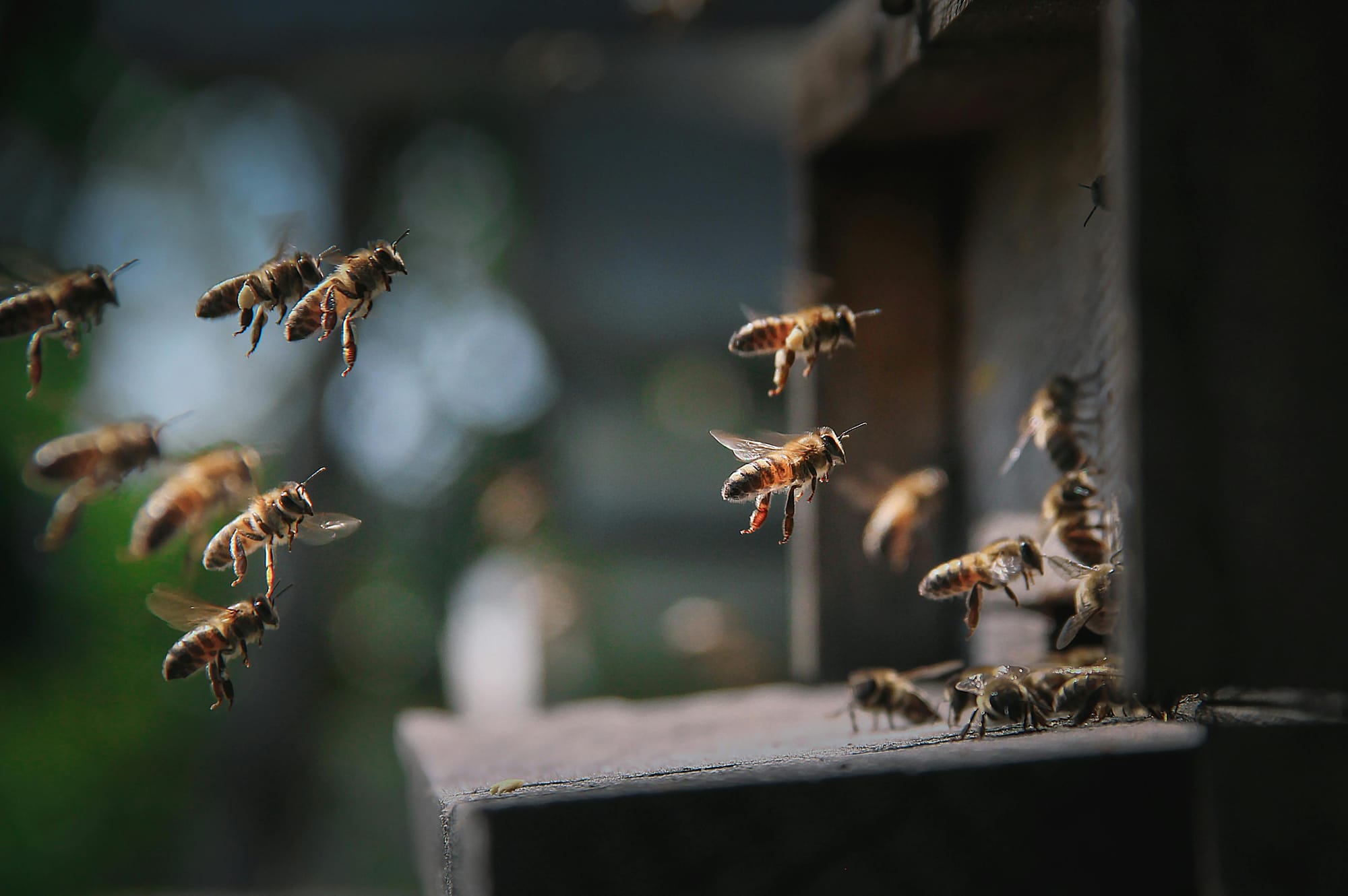
Humans, like honeybees, are capable of massively coordinated action. Like bees, we are capable of heroic self-sacrifice for a greater cause. Yet unlike honeybees (as far as we know), we often demand reasons for the actions we take. And the greater the sacrifice, the more reasons we tend to demand. Sure, in an acute crisis, it’s “everyone to their posts!” and questions of theory recede into the far background. But in the long run, unthinking urgency just isn’t enough. To build a viable, multi-generational movement, you need a solid worldview and a value system; one that you can communicate convincingly to others. And it ought to be a worldview that you, yourself, have good reasons to accept in the first place. In a word, you need philosophy.
Therefore, the question at hand must not casually (or even reverently) be ignored: Are non-humans people too? And, if so, then precisely why do we think this is true? Supporters of environmental personhood have generally proposed three sorts of answers:
(1) Non-humans are people because they are sentient (i.e., they have a mind or spirit).
(2) Non-humans are people because they are alive, even though they aren’t sentient.
(3) Non-humans are people because traditional belief systems say so.
In what follows, I will consider each of these arguments in turn — and refute them. It is my contention that at least some non-humans (in fact, the vast majority of non-humans) are not persons. They are not persons precisely because they lack personality; a conscious concern for their own welfare and continued existence. Simply put, they lack a sense of self.
Without this indispensable moral feature, most non-human entities (whether plants, rivers, or mountains) also lack any intrinsic moral worth. They do not matter as such. We should often protect them anyway, even at great expense and effort to ourselves. But this is only because they matter to other lifeforms. Their continued existence and thriving is indispensable for sentient creatures like us. Ultimately, only sentient lives matter. The flourishing of thinking animals alone, (human and not) is the real basis for protecting our environment.
I. Personhood because of Sentience
But what if I’m wrong? What if, despite appearances, the tomato plant on my back patio really can think? The Swiss biologist Florianne Koechlin seems to think so, and she’s hardly alone. According to this view, ordinary plants “can perceive about twenty environmental signals (more than we humans)…They can respond to smell, touch, taste, sight, [and] sounds.” Plants, moreover, demonstrate “a strong feeling of being connected” to the intricate web of life all around us.[4]
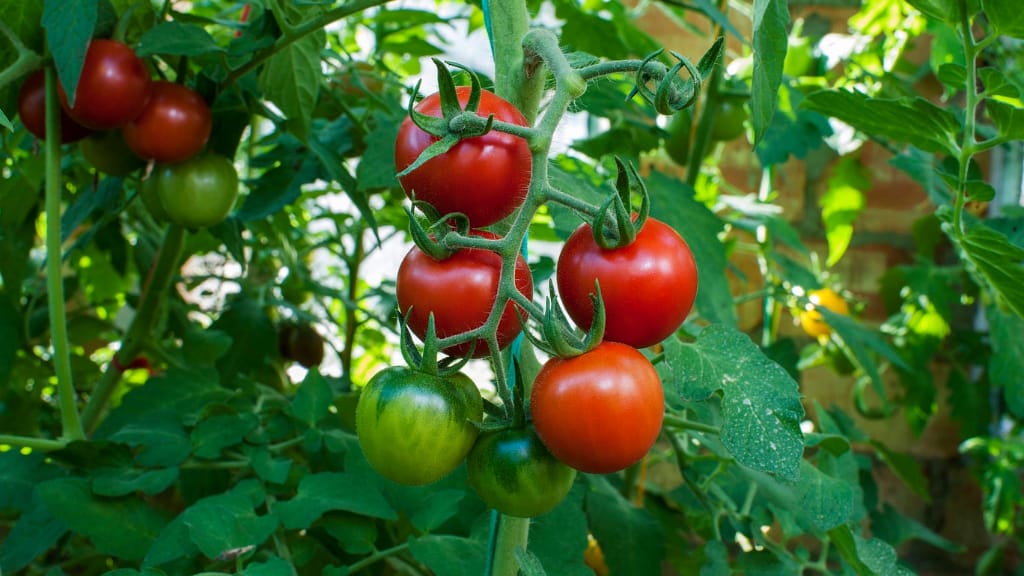
It is on this basis of supposed plant intelligence that many argue plants have an inherent dignity that must be protected. The Rheinauer Thesis on the Rights of Plants, for instance, proclaims that flora have the “right to independence,” and “evolution,” the “right to survival as a species,” and even “reproductive rights.”[5]
While this is a very specific debate that does not capture the entirety of Rights of Nature discourse, it is a good object lesson: Like other parts of nature, the claim is that we might not readily perceive the personhood of plant-life; but that is our failure, not theirs. It comes down to our own ignorance, a self-serving, human-centric bigotry. This preference for one’s own biological kin is often condemned as speciesism (a close analog to racism). We are thus commanded to do better. Recognizing the “Rights of Nature” begins with a recognition of how non-humans (and even non-animals) possess a remarkable spirit and personality all their own. It is a spirit worth protecting for its own sake.
Hence, there has been a steady stream of writing, from botanists and biochemists to philosophers and journalists, showcasing the alleged intelligence of non-animals. When it comes to plant life, the claims usually center on behavior and structure:
Plants use electrical signals to respond to their environment, similarly to how animal brains communicate via neurons and synapses.[6] This is particularly true of the plant’s phloem which is made of living cells and helps distribute vital nutrients at just the right times to just the right places. Rapid electric signals within the phloem integrate the whole plant, rendering it a genuine individual with both “agency and cognition.”[7] A plant’s root tips supposedly act as the “brain-like command center” for this whole process, sensing environmental changes in the soil and so coordinating growth.[8] Besides, plants use many of the same chemicals as do sentient animals in their neural activities (acetylcholine, dopamine, histamine, noradrenalin, and serotonin, to name but a few).[9]
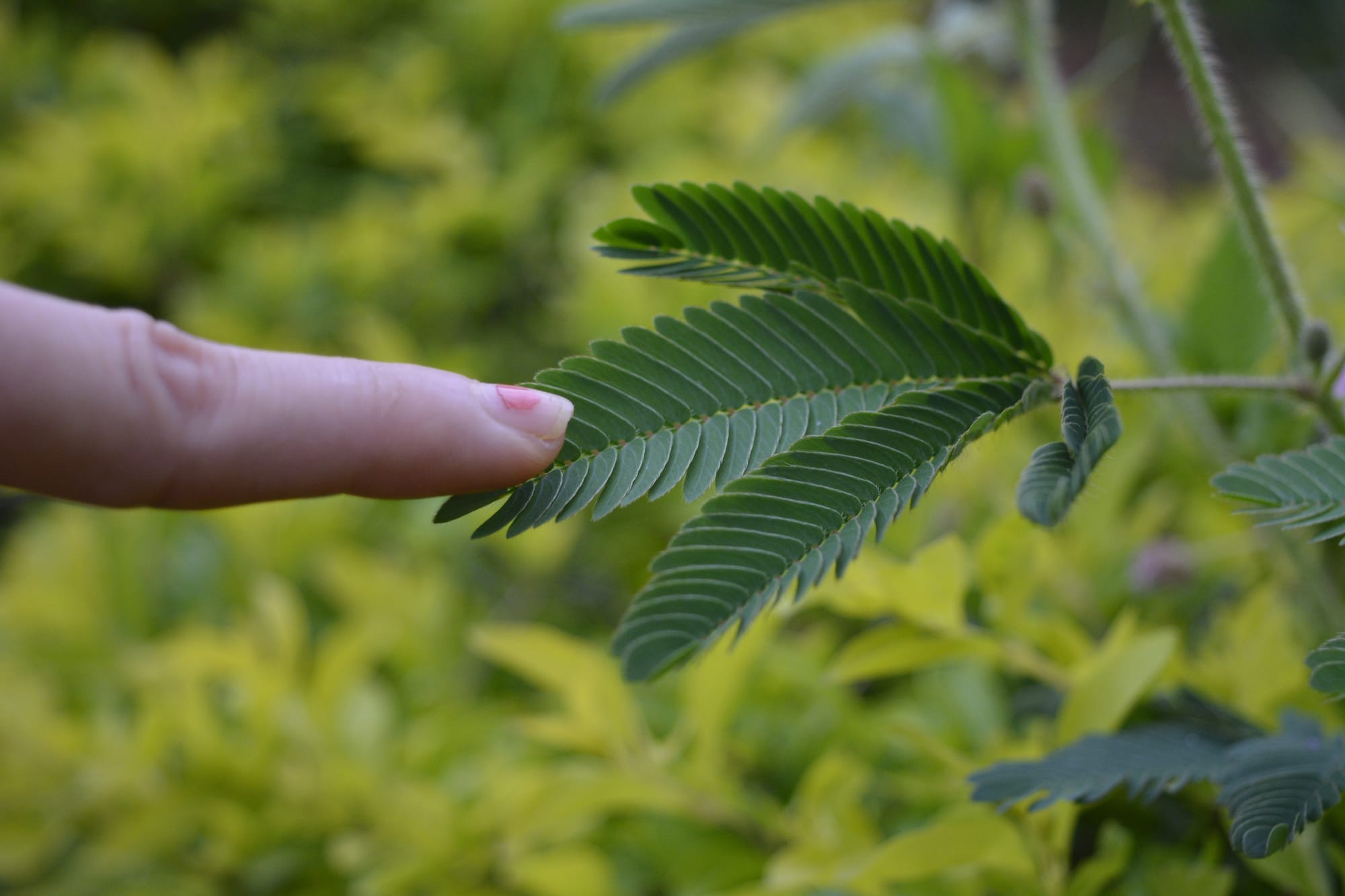
In terms of behavior, plants are far from inert things, they simply “live in the slow lane.”[10] Plants actively grow toward the light (phototropism) and release volatile, unpleasant chemicals when attacked by predators.[11] Some of these chemicals carry a scent, and these make up the plant’s vocabulary — used to warn nearby comrades of the present danger. Roots behave like foraging animals, making intentional decisions about which directions to grow so as to “optimize the gathering of food resources.”[12] And nearly all plants make critical decisions based on past evidence. The Mimosa pudica (commonly called the “touch-me-not”) instinctively closes its leaves when hit by a water droplet. But it eventually “learns” to stop this defensive behavior once it realizes the impacts are harmless.[13]
One bombshell study even showed classical conditioning in pea plants. Just as Pavlov’s dogs were trained to salivate at the sound of a bell, so pea plants were “trained” to grow toward a blowing fan, since it was paired with a vital light source.[14] In each case, the organism didn’t really care about the conditioned stimulus (bells or fans), but they learned to associate these signals with their desired object (food or light). So even when the light was taken away, the pea plants amazingly “learned” to grow toward the blowing fan anyway. All this without neurons! But if plants can be trained just like hungry dogs, then perhaps they really can think. And if they can think and learn, associate signals, and make complex decisions, then maybe they should be considered “people” after all.
II. Plant Sentience Denied
The problem is, each of these claims is either false or grossly misleading. To start, there is no evidence that plants actually communicate with one another. “Communication,” if the word means anything at all, involves having intentions. You communicate when you intend to send someone a signal, and to produce in them a particular idea or mental state. I might call you on the phone and ask to get a coffee. Why? Because I intend for you to understand that message, and meet me at the cafe at 5:00 PM.
Yet what plants actually do is quite different from this. They mechanically release volatile organic compounds (VOCs) when put under stress, say from a hungry herbivore chewing on their leaves. These VOCs are then picked up by other plants in the area who mechanically activate their own defense mechanisms. Nothing in this points toward intentional communication from one being to another, nor even sentience. All it shows are a series of stimuli and reactions.
If responding to stimuli was enough to prove consciousness, then we would be in real trouble. For then, nearly all living things (and many non-living things besides) would be counted among the class of thoughtful creatures. Famously, bacteria detect concentrations of chemicals in their immediate environment; they move toward concentrations of helpful chemicals and away from harmful ones. This happens because their protein receptors have evolved to detect these cues, and so automatically switch on or off its flagellum (the “tail” that provides movement). In no case are anything like brains or neurons at work, nor are neuron-like structures involved — just environmental cues and responses.
Likewise slime molds can “navigate” mazes by automatically avoiding light and growing toward food sources. And even our own immune system, quite apart from any conscious effort, “detects” and “remembers” pathogens, and “distinguishes” itself from foreign invaders, though each of these terms misleadingly implies mental states and thoughts. Even basic thermostats, for that matter, “react” to their environments and “adapt” to falling temperatures by switching on a heating mechanism. For all that, few would call thermostats thoughtful, sensitive creatures worthy of our respect.
Nor are the structures in plants truly similar to the neurological structures of animals. Genuine consciousness seems to require, at minimum, (1) a stable, centrally controlled nervous system, and (2) a lot of interconnectivity between neuron-like structures. Plants lack both of these. Put plainly, plants lack a brain. The hypothesis that root tips can act as a brain-like command center doesn’t work. This is for the simple reason that root tips, unlike brains, are a dynamic growth zone. They are constantly changing, their cells constantly being moved about, altered, and replaced. This is all very different from cortical neurons (such as in humans) which are often never replaced for your entire lifetime. The changeability in root tips means that they cannot develop the stable circuitry appropriate for a thinking “command center.”[15]
Neither do the supposedly “neuron-like” structures of plants have the kind of deep integration with one another as do actual, animal neurons. The average neuron in the human brain branches out and contacts about 10,000 other neurons (allowing for all sorts of recurrent feedback loops and internal, back-and-forth communications). Plant structures in the phloem, by contrast, are mostly unbranched and move in a straight line. Internal “communication” in plants often travels from root-to-shoot (or vice versa), but there is no evidence that this simpler structure can support conscious thoughts about itself and others. Certainly not in the ways readily observed in many animals.[16]
For this reason, biologists have suggested that the living phloem of plants are less like our nervous system and a lot more like our vascular system of veins and arteries. Both move vital nutrients through the use of pressure. But even here, it must be noted that plants are far simpler. Instead of a closed circulatory system, there is only an osmosis-driven, one directional movement “from source to sink.” Of course, plants also lack a pumping heart.
Finally, experiments that purport to show plant intelligence, memory, and learning often ignore far simpler explanations for the observed phenomena. If touch-me-nots eventually stop closing their leaves after repeated drops of water, this may be the result of conscious learning. But then, a more parsimonious explanation would be simple motor fatigue. The mechanism in charge of closing the leaves becomes temporarily weaker because of overuse. No “learning” or central nervous system is required.
Likewise, pea plants might be “trained” to grow toward a signal, like a blowing fan (since this is paired with a desired light source). This may be because these plants really do possess thoughts and memories and can associate distinct ideas (the fan with light). But a far simpler explanation is that the pea plant is simply habituated to grow in one direction versus another, and so even when the light is removed, will mechanically continue growing toward the fan. In any case, this 2016 study has not been successfully replicated. An attempt was made in 2020 under stricter conditions with an even larger sample size and fully blind scoring, and the results showed no evidence whatsoever of associative learning.[17] In other words, the plants grew randomly. Unfortunately, failures to replicate the results of an allegedly “groundbreaking” study often produce far fewer headlines than the original, dubious claims.

I could go on, but there is no need. In matters of empirical science, one should generally follow the consensus of scientists. And here there can be little doubt: the vast majority of biologists deny that there is any compelling evidence in favor of plant sentience (or non-animal sentience more generally). To be sure, there is nothing a priori impossible about the idea that non-animals can think. Perhaps they really can. And if that were proven true, we really would have to consider their dignity and, yes, even their personhood. But, in the immortal words of Carl Sagan, “Extraordinary claims require extraordinary evidence.”
This is what is truly shocking about pro-sentience crusaders like Florianne Koechlin. She ultimately admits that “We do not know if plants are capable of subjective sensation….[that the] claims that plants have no subjective sensations are as speculative as the
opposite.” In other words, “we simply do not know.”[18] With apologies, that’s not good enough. “We simply do not know” a lot of things — like whether a stapler is sentient, or whether my mug feels pain when I fill it with hot coffee. By their very nature, no empirical claims are absolutely certain. Yet lacking any solid evidence in their favor, we are justified in dismissing them. And we do, in fact, lack credible evidence of plant sentience today.
The problem is even greater for the Rights of Nature (RoN) movement at large. For here, the claim is not only that birch trees and pea plants can think, but that mountains and rivers are persons as well. In that case, all of the sophisticated (if faulty) analogies between phloem tissues and neurons, and between root tips and brains, really goes out the window. A mountain made of solid granite has no such structure that, even in a highly speculative way, can be compared to the animal nervous system. The supposed personhood — and rights — of Nature would thus have to be defended on a different basis entirely.
III. Personhood without Sentience
What if we don’t need sentience at all? What if the personhood of nature, and by extension, a natural thing’s “right” to exist and thrive, has nothing to do with thinking? “Biocentrism” is the idea that what matters, from an ethical perspective, is just being alive, plain and simple. It’s not whether an organism can feel joy or pain that counts, but only that it is a living organism — or at least, that it is part of a living ecosystem.
Every such being, in the words of Paul W. Taylor, is equally a “teleological center of life.”[19] This is a sophisticated way of saying that it has real interests. Trees seek sunlight and rich soil. They aim to grow, unencumbered by parasites and herbivores (or lumberjacks). True, a plant might not care about those interests, nor even be aware of them. But for all that, it has an identifiable good and welfare all its own. And so, we conscious human beings, can act to further or harm those very clear goals (teloi). In Taylor’s words:
I take it that trees, for example, have no knowledge or desires or feelings. Yet it is undoubtedly the case that trees can be harmed or benefited by our actions. We can crush their roots by running a bulldozer too close to them. We can see to it that they get adequate nourishment and moisture by fertilizing and watering the soil around them. Thus we can help or hinder them in the realization of their good. It is the good of trees themselves that is thereby affected.[20]

For biocentrists like Taylor, the mere fact that an organism is alive, and can either flourish or die, should spark in us an “ultimate commitment” to protect their welfare. And while he never quite calls unthinking plants “persons,” he does come awfully close. Careful observations of trees over extended periods of time, he says, can reveal their “unique personalities.”[21] Such observations should then elicit feelings of personal respect and care, and ultimately, a transformation of public policy — their “legal entitlement to be protected.”[22] In other words, we don’t have to prove an organism’s sentience to establish its personhood (or at least its “personality”). And apparently, a living thing doesn’t need to have a mind to possess legal rights either.
Some go even further. The sociologist Bruno Latour seems to think that anything that moves and impacts its environment might be a genuine “actor.” Even the trait of being “social” is, for him, no special privilege of living, thinking things. It is only a physical phenomenon; Sociality is nothing more than “a very peculiar movement of re-association and reassembling.”[23] Latour thereby obliterates any strict wall between humans and non-humans, and even between humans and inanimate objects. All complex systems, if sufficiently dynamic and well organized, can qualify as “agents.”
And so, for Latour, the mighty Mississippi is quite a formidable “actor” — always threatening to divert its course and drown American towns in the delta region. He even imagined a mock version of the COP21 climate conference, where instead of delegates from the United States, Brazil, or China, the parties would include non-human actors, like “Ocean,” “Forest,” and “Atmosphere.” Each would be respected as a unique, political agent with their own particular interests and agenda.[24] There is no pretense here that rivers actually think, suffer pains, or feel joy. To the contrary, the notion of personal agency is boldly applied even to those things, like the air, which are emphatically not organisms at all, and can hardly be said to be “alive” in any biological sense.

In a similar vein, the philosopher Michael Marder sees plants as agents — not merely as “whats” but also “whos.” Each such agent, striving toward sunlight and nutrients, possesses its own “intrinsic value” and its own “version of the good.”[25] Yet he makes these moral claims while forcefully denying that plants are in any way conscious.
Plants, he accurately maintains, have no central nervous system, and are incapable of even basic learning.[26] Consciousness, here, does not make the agent. Instead, an agent is merely one who “has a world” in the sense of physically “working on” and “modifying” the environment around them.[27] Again, no thoughts are necessary.
The ethical implications, says Marder, are clear: If we are to care about the non-conscious plant, it must be on their terms and not ours. “Empathy,” commonly understood, is out of the question. After all, this term implies an alignment of feelings. Yet plants have no feelings. Instead, we should humbly “de-distance” ourselves from the world of plants, all without “collapsing the space” between us, or, in Marder’s colorful phrase, without “devouring” them.[28]
For these theorists, all attempts to draw analogies between plant phloem and neurons, roots and brains, the release of volatile chemicals and human language, are mere narcissism on our part. Well-intentioned as these demonstrations of “plant sentience” might be, they are really imperialistic — nothing more than ham-fisted impositions of our human lifeworld, our human consciousness, and our human values onto the world of flora. Plants, Marder asserts, should rather serve as a stubborn, living barrier to such humanism. For humanism assumed an “underlying sameness of the ethical actor and the object.”[29] Plants serve, instead, as a constant reminder of the opposite: to respect irreducible differences, and to avoid the arrogance of loving the other as oneself.
At his most provocative, Marder even suggests that we might learn to see ourselves as plants, or at least, to “recognize in ourselves certain features of vegetal life.”[30] Instead of projecting the human ego onto plant life, perhaps we could embrace the very shallowness and passivity of flora. Plants, he says, “live without psychic interiority,” and so lack any distinction between “inside” and “outside,” self and environment. They are unimaginably passive in ways that vex and challenge the human ego.[31] In encountering the world of plants on its terms, we might reacquaint ourselves with our own “nonconscious” intentions, recalling that we are bodies and not only minds. We may even rediscover the “essential superficiality” of the human mind itself.[32]
IV. Sentience is Essential
That’s a lot to take on. But the question at the end of the day is — why bother? Why any of this? What is the point of approaching the world of plants in all of its supposed “otherness” and “superficiality”? If plant life (or any other facet of nature) truly lacks consciousness, then precisely why should we care about its interests to begin with. Why should we care about the interests of organisms that are not even interested in themselves?
Perhaps the better question is: Can non-conscious nature really be said to have “interests” at all? In a casual sense, it seems plausible enough. Taylor sounds convincing when he says that a tree is “harmed” when its roots are crushed, and a tree is “benefited” when nourished by soil and fresh water. Are these not its obvious interests?
Actually, no. They are not. The tree, supposing it does not feel or think, does not really have interests of its own. To pretend otherwise is only to commit the same error, the same “original sin,” that these very theorists constantly warn against: imposing human values upon the nonhuman world. If Marder is correct, that plants neither think, nor consciously strive, nor feel joy or suffer pain — if in other words they have no mental interiority — then they are essentially physical structures. True, they may be amazing, adaptive physical structures; but they are mere structures nonetheless. Which is all to say, trees are complex objects (and not subjects).
In this, a plant (though living) might be compared to a brick building or a toaster oven. Do these inanimate structures have a purpose, a goal, a telos? Some might jump at the chance to say “yes!” The “goal” of a building is to shelter its inhabitants from the elements; that of a toaster to toast bread. Good buildings withstand weather; bad ones fall down. Good toasters toast; bad ones burn bread to a crisp or simply shut off. But upon even a moment’s reflection, we realize that this is the silliest kind of anthropomorphizing, and deeply unscientific to boot. When we make claims like this, we are imposing human wants and desires upon an object that has no such goals for itself.
This is obvious enough once we realize that a primitive hammer, whose clear “goal” is to hammer in nails, suddenly changes its “telos” once put in the hands of a soldier, or a musician, instead. Inanimate, unthinking objects do not ever have any intrinsic goals or interests. These are only imposed on them from without.
That includes the goal of continued existence. If the structure of a brick house is dismantled, and the rubble then reordered to make a new structure — then this is neither good nor bad in any intrinsic sense. It is only good or bad from the perspective of those sentient beings that may benefit (or be harmed) from this new structure. (Is the new structure a hospital or a prison? A school or a slaughterhouse?) The building itself does not care; every sentient creature around the building just might.
Structures do, of course, exist. And by their nature, they also resist change from without. That’s basic Newtonian physics — objects at rest (or motion) remain that way unless acted upon by an outside force. Organic structures might also maintain their form through adaptation to their environment. But if such physical resistance is not conscious, if it involves no quantum of pleasure or pain, desire or distress, then it is neither good nor bad as such.
A typical thought experiment I give to my undergraduate students is this: Is it bad that the polar ice caps are melting? Well yes, they say. This is catastrophic. It leads to rising sea levels, immediate harm to polar bears, and eventual harm to us all. Fine, but imagine an exoplanet somewhere in the distant reaches of outer space. Imagine that this planet too has polar ice caps, but no sentient life — neither humanoids, nor polar bear-like creatures, nor even fish or insects. Nor, because of extreme isolation, can any sentient being ever observe this planet from a distance. Would it matter if a giant comet struck this planet, superheated its atmosphere, and melted these ice caps? It seems impossible to say “yes.” For who would possibly care?
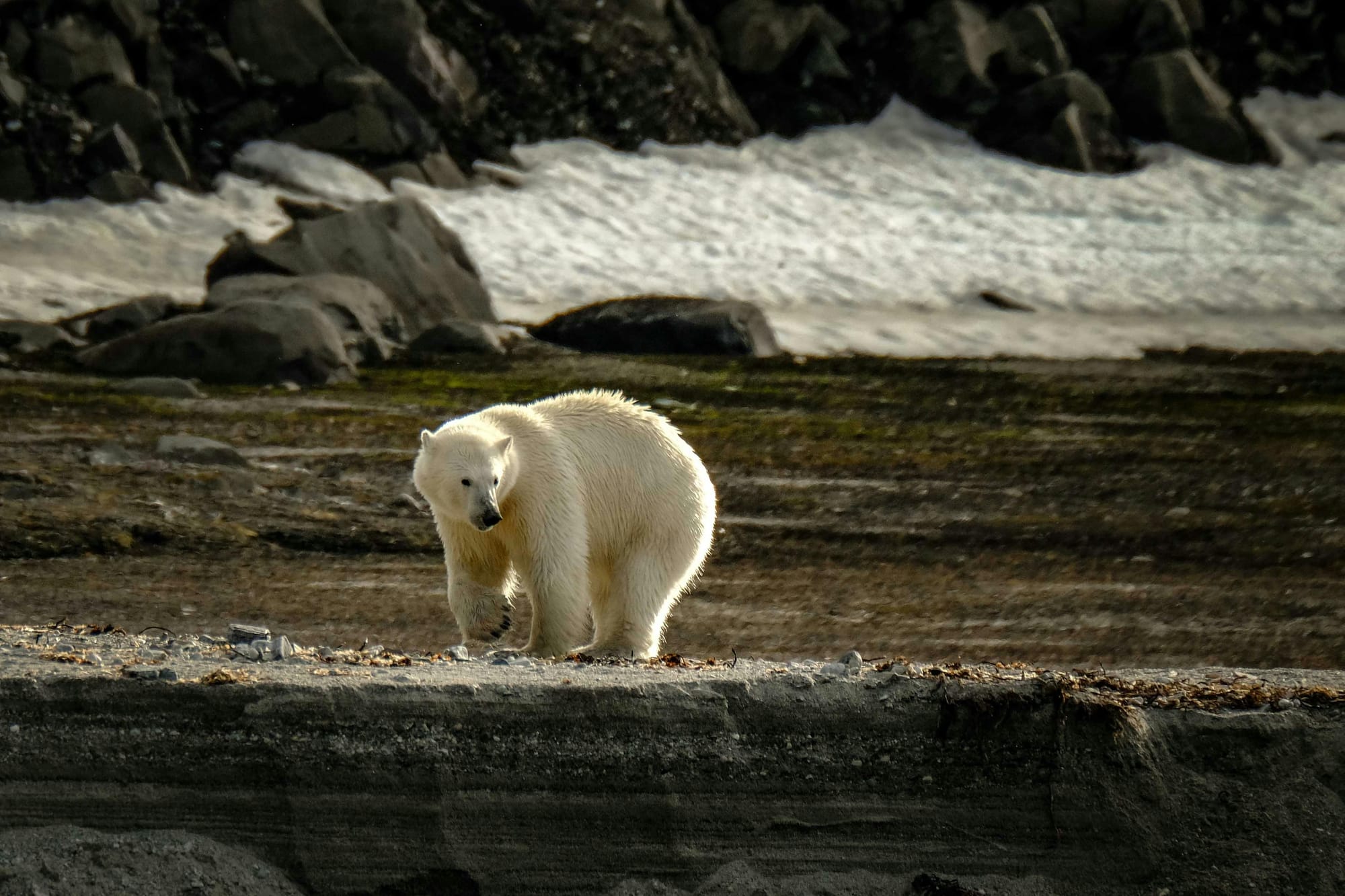
If we then imagine that this planet was now full of life, vibrant alien trees and bushes, colorful lichens and glowing fungi, all without any whiff of consciousness or the possibility of ever developing it; Could we be justified in changing our answer? Would it matter if these same ice caps melted, ending this dazzling array of life once and for all? Again, the answer must still be “no.” This is counterintuitive for sure. But the underlying question always reasserts itself: “Who would care?” “Who would even know?” And if the answer is “no one,” then any claim that this is a genuinely moral question goes straight out the window.
Likewise, the word “person” cannot apply to those natural things (plants, rivers, mountains) that lack thought and feeling. When we do this, we are merely playing with words. If theorists like Bruno Latour wish to redefine the word person or “actor” as, not a conscious being, but merely an “assemblage” of parts, then that is their right. Language is a public utility after all. But they have no right to expect others to follow them in their eccentric redefining. And wordplay aside, changing the meaning of a term, whether “person,” “agent,” or “actor,” does nothing at all to change the actual moral value of that entity — or the total absence of moral value. Simply put, unless conscious feelings are involved, nothing truly matters.
V. Respecting Traditional Beliefs
Not everyone will be convinced. They will see this argument as too strident and bold, even arrogant. Who am I to deprive whole classes of beings (sentient or not) of “their” personhood? Yet failing to prove their case with reasons, some invoke the authority of sacred tradition instead.
Here one must be careful. Certainly, it is pigheaded to reject claims of personhood merely because these have their origin in traditional sources, i.e., indigenous practices and beliefs. The simple word for such kneejerk rejection is “bigotry.” Any belief system, from whatever region or culture, is perfectly capable of generating both true and false claims. So-called “Western civilization” is no privileged exception.
And we should be especially respectful of indigenous discourse since, all too often, these are the very people suffering the most immediate harms from industrialized economies, global warming, and extractive industry. There is, too, an undeniable legacy of violent racism which has worked assiduously to subordinate, marginalize, and exterminate outright these very voices — often in the name of profit and power.
At the same time, respect and cultural sensitivity is not the same thing as first-person belief. Barring concrete evidence, I have no more reason to believe in the personhood of a river or a mountain than I do in the “personhood” of Christ within a communion wafer. Which is to say, I have no reason to believe in either. These, it seems to me, are articles of faith rather than demonstrable knowledge.
Nor is there just one faith to choose from. However one defines an “indigenous” or “traditional” culture, what we in fact see is a great diversity of opinion — about nature, sentience, spirit, and personhood. The Ojibwe of North America are famous for their belief in “other-than-human-persons.”[33] These include the sun, moon, and winds, and some (but perhaps not all) plants and stones. It seems what (or who) counts as a person is deeply relational and depends on the particular viewer. The Māori of New Zealand (Aotearoa) similarly conceive of some rivers and mountains as persons, especially those deemed to be ancestors and kin.
By contrast, the Inuit (internally very diverse in their cosmology) are less likely to personify landforms and bodies of water. There is, to be sure, the goddess of the sea (Sedna) and the woman who resides at the bottom of the sea (Takanakapsaluk); but this is not the same as full animism. It is not the personification of nature itself. After all, even the ancient Greeks had their Poseidon and Judaism’s Yahweh was originally a Canaanite storm god.

The Inuit, as well, draw a critical distinction between inua, or the vital force that animates all things, and tarneq, which is far closer to an active spirit and conscious soul. Typically, only animals (and not plants or mountains), are said to possess tarneq.
This explains Inuit rituals of contrition when killing an animal for food since these, unlike plants, share a soul in common with human beings. Strong feelings of guilt (and a fear of personal revenge), are not universal but apply to fauna alone. “We fear the souls of dead human beings and of the animals we have killed.” These have “souls that do not perish with the body, and which must therefore be propitiated lest they should revenge themselves on us.”[34]
Then again, the Yoruba of West Africa take a middle position: Rivers, medicinal plants, and sacred groves may not themselves count as sentient beings; yet they are inhabited by person-like spirits (Òrìṣàs) with whom one can communicate and call on for aid. And the Yoruba draw their own distinction between mere life-force (Àṣẹ) and full personhood (Ènìyàn). In short, not everything is equally a person, nor even equally alive. This is in contrast to the Navajo (Diné) of the American West with their Four Sacred Mountains. These boundary markers of the Navajo nation are not mere abodes of spirits, as with the Yoruba, but are themselves considered powerful deities.
Finally, we see an even greater contrast in the Indian subcontinent. Theravada Buddhism (the “school of the elders”) is a tradition going back more than two and a half millennia. It teaches that only some beings possess consciousness (viññāṇa). While humans and non-human animals are sentient, can suffer, and have moral weight, plants do not. They are merely alive but have no karma (moral agency or consequences) of their own. There is thus a wide moral gulf between killing animals and humans as opposed to destroying plant life.

The Jain agree, at least in part, claiming that plants are not persons, but do possess minimal consciousness. Therefore, they mustn’t needlessly be harmed, even while violence against animals is far worse. Meanwhile, the materialist school of Hinduism (Cārvāka) — also quite ancient at about 2,600 years old — totally rejects any notion of souls, karma, or reincarnation. All minds are simply the product of material combinations, which is to say, of bodies. But plant bodies cannot support consciousness (since no central nervous system), so these are material organisms alone. They therefore lack any ethical status whatsoever.
The point is that one cannot use so-called “traditional beliefs” as an all-purpose cudgel to demand consent. The call to just “believe indigenous peoples” is, strictly speaking, impossible. This is for the simple reason that not all “traditional” or “indigenous” worldviews agree. To claim otherwise means lapsing into a bad exoticism, whereby all “non-Western” cultures are conceived as pre-industrial, but also pre-rational, intuitive, and innocent, whereas so-called “Western civilization” is rational, materialist, and aggressive. But this is just a warmed-over racism, a legacy of colonial thinking and propaganda. It doesn’t matter if these stereotypes are now painted in the soothing colors of the latest Avatar movie. They are base stereotypes all the same.
Believing in the personhood (and rights) of nature requires an actual argument. The mere “authority” of traditional belief is not enough. Even if all traditional peoples could agree on the sentience of plants, mountains, and rivers (and, again, they do not agree), this wouldn’t settle the matter. We would still have to wonder whether this agreement was, itself, correct in some objective way. Or, to paraphrase Socrates:
Is the personhood of nature correct because indigenous beliefs say so, or do indigenous beliefs affirm nature’s personhood because this is objectively true?[35]
If the former, then this is blind obedience to authority. On that account, anything that traditional societies happen to affirm must be true (merely because they say so). Few would be willing to go that far. It makes nonsense of ethics and eviscerates the very concept of the “truth.”
So instead, the idea is that there is some wisdom, some underlying truth, that traditional societies are getting at when they invoke the personhood (and rights) of nature. But if that’s the case, then this personhood is an objective fact. It is not merely the pronouncement of a particular culture, willed into existence by fiat, but rather a genuine discovery about the world. And if that is the case, then we are indeed back in the realm of truth claims, reasons, and evidence. We are back to making arguments.
Unfortunately, these arguments do not appear to succeed. Sentience-based arguments (Koechlin, Wohlleben, Hall) at least have the right method. They argue that non-animals, such as plant life, really can think, feel, and suffer. If that were true, then it would seem to follow that these beings should have moral standing and rights of their own. As we have shown above, however, the facts do not seem to be on their side. There is no compelling evidence that non-animals think.
Non-sentience-based arguments are far worse. They get the facts right (plants, rivers, and mountains do not think). Yet they try to conclude that these are persons, agents, or “actors” nonetheless. Again, this is mere semantics. Redefining a “person” as merely something that is alive, or a complex structure, does nothing to alter the moral universe. If a given structure cannot think, feel, or suffer, then there is no conceivable reason why its welfare should matter as such. Therefore, neither major strategy for proving natural personhood is, in the end, compelling.
VI. Political Solidarity without Metaphysical Concessions
Of course, even if we are not convinced of the actual personhood of nature, we should still ally with those people who fervently hold such beliefs. Political solidarity does not always require unity of thought. When the Lakota fight against uranium mining in the Black Hills (Paha Sapa), because this is their sacred land, we should fight alongside them. It’s not necessary to agree that these hills are literally the center of the universe, or the “heart of everything that is.” It is more than enough to believe that this land is sacred to the Lakota. It is enough to understand that uranium mining will suck up thousands of gallons of water per minute, and has a morbid history of spiking cancer rates.
One can believe in protecting sacred spaces because we care about the people who hold them sacred, even if these spaces might not be sacred to us. This is no different from being outraged by racist bombings of Black Churches in the South, or government surveillance of a New York mosque. It is immaterial whether we are, ourselves, confessing Christians or members of the ummah. Our solidarity is with the people, not always with their particular beliefs.
At the same time, ultimate beliefs still matter. Knowing why one acts, why one forges certain alliances and not others, why one fights for certain policy goals and not others, is crucial. Our ultimate beliefs (about the good, nature, and our place in it), will inevitably shape our activism. These ultimate beliefs help us define the scope, and also the potential limits, of our alliances. They help us negotiate the difficult test cases, such as when indigenous hunting practices are pitted against the suffering of intelligent animals. (See, for instance, the Makah tribe’s longstanding petition to hunt gray whales.)[36]
More than this, a well-founded philosophy makes one a steady and dependable ally. Those who always seek to do what is “practical” or freely outsource their convictions to others, may appear open, tolerant, and reasonable. In fact, these are among the most dangerous sorts of people. In lacking a solid foundation for their activism, they are apt to change their “beliefs” (and their politics) at the drop of a hat. Only those with solid convictions, rationally understood, can be depended upon to pursue their convictions under any number of changing, unexpected circumstances.
In this, I find it important to defend the primacy of sentience when it comes to personhood. We owe our solidarity to all those beings who think, feel, and suffer along with us. And so, an expansion of rights to include sentient, non-humans, is certainly in order. This is especially true of highly intelligent animals such as orangutans and orcas. Anything less is indeed a bad “speciesism,” an unwarranted elevation of our species and our rights above all others. Non-conscious nature is different story. While often impressive in its powers of adaptation and self-regulation, insentient nature does not inherently possess rights of its own. Still, we can (and often should) stand in solidarity with those who hold such beliefs. For their happiness and flourishing matters all the same.
FOOTNOTES
[1] Lough, “Captive Orangutan Has Human Right to Freedom, Court Rules”; Takacs, “Standing for Rivers, Mountains—and Trees—in the Anthropocene”; Quinn, What Are the Rights of Nature?
[2] Surma, “Landmark Peruvian Court Ruling Says the Marañón River Has Legal Rights To Exist, Flow and Be Free From Pollution.”
[3] Lewis, “This 1,000-Mile River Suffered Decades of Oil Spills. Now It’s a Legal Person, Things Could Change.”
[4] TEDx Talks, Tomatoes Talk, Birch Trees Learn – Do Plants Have Dignity?
[5] “Rheinauer Theses on the Rights of Plants | Blauen Institut.”
[6] Hansen, “A Critical Review of Plant Sentience: Moving beyond Traditional Approaches,” 10–11.
[7] Hansen, “A Critical Review of Plant Sentience: Moving beyond Traditional Approaches,” 12.
[8] Mallatt et al., “Debunking a Myth: Plant Consciousness,” 464–65.
[9] Hansen, “A Critical Review of Plant Sentience: Moving beyond Traditional Approaches,” 12.
[10] Wohlleben, The Hidden Life of Trees: What They Feel, How They Communicate, 8.
[11] Hansen, “A Critical Review of Plant Sentience: Moving beyond Traditional Approaches,” 11–12.
[12] Hall, Plants as Persons: A Philosophical Botany, 245.
[13] Wohlleben, The Hidden Life of Trees: What They Feel, How They Communicate, 47–48.
[14] Hansen, “A Critical Review of Plant Sentience: Moving beyond Traditional Approaches,” 5.
[15] Mallatt et al., “Debunking a Myth: Plant Consciousness,” 465.
[16] Mallatt et al., “Debunking a Myth: Plant Consciousness,” 464.
[17] Hansen, “A Critical Review of Plant Sentience: Moving beyond Traditional Approaches,” 5.
[18] Koechlin, “The Dignity of Plants,” 78.
[19] Taylor, “The Ethics of Respect for Nature,” 207.
[20] Taylor, “The Ethics of Respect for Nature,” 200.
[21] Taylor, “The Ethics of Respect for Nature,” 210.
[22] Taylor, “The Ethics of Respect for Nature,” 218.
[23] Latour, Reassembling the Social: An Introduction to Actor-Network-Theory, 7.
[24] Fluss and Frim, Prometheus and Gaia: Technology, Ecology, and Anti-Humanism, 259.
[25] Marder, “Is It Ethical to Eat Plants?,” 30.
[26] Marder, “Is It Ethical to Eat Plants?,” 29.
[27] Marder, “The Life of Plants and the Limits of Empathy,” 264.
[28] Marder, “Is It Ethical to Eat Plants?,” 35 Here, Marder is drawing on Heidegger’s notion of de-distancing or “Ent-fernung.”
[29] Marder, “The Life of Plants and the Limits of Empathy,” 260–61.
[30] Marder, “The Life of Plants and the Limits of Empathy,” 265.
[31] Marder, “The Life of Plants and the Limits of Empathy,” 263.
[32] Marder, “The Life of Plants and the Limits of Empathy,” 265.
[33] Black, “Ojibwa Taxonomy and Percept Ambiguity,” 95–97.
[34] Rasmussen, Intellectual Culture of the Iglulik Eskimos, 56.
[35] Socrates’ original question cut to the heart of religious ethics, highlighting its basic ambiguity: “The point which I should first wish to understand is whether the pious or holy is beloved by the gods because it is holy, or holy because it is beloved of the gods.” Plato, “Euthyphro.”
[36] Pailthorp/KNKX and Reyna/KNKX, “Makah Tribe’s Treaty-Protected Whaling Rights Remain Blocked after More than 25 Years.”