The Prequel vs Free Will
Better Call Saul & Philosophy

Cite this article
Landon Frim, “The Prequel versus Free Will,” in Better Call Saul and Philosophy, ed. Joshua Heter and Brett Coppenger (Carus Books, 2022).
This essay was originally published in Better Call Saul and Philosophy (Carus Books, 2022). [Read the original PDF]
“If I had to do it all over again, I would maybe do some things differently. I just thought you should know that.” — Jimmy McGill
What can a fictional TV show tell us about free will? Can it demonstrate this essay’s bold claim that free will is a nonsensical concept? Perhaps that’s asking too much. But while works of fiction can’t demonstrate a philosophical point, they may illustrate one. Here, the hit series Better Call Saul is uniquely qualified for the task. And that’s because it’s a prequel. A prequel is, by its very nature, an earlier story that explains a later one—in this case, the events of Vince Gilligan’s Breaking Bad universe. A prequel illustrates the point that, however surprising or dramatic a situation may be, there’s always some causal explanation behind it. As such, prequels embody that logical doctrine known as the “principle of sufficient reason.” Broadly stated: For every event there is some cause.
It doesn’t matter if “the event” in question is a drug war, a plane crash, or that you ordered tequila instead of a Moscow Mule at lunch; there has to be some causal story about why that event (and not any other) came to pass. Otherwise, we lapse into an unscientific, unintelligible world where some things happen for literally no reason at all. So, we might ask, how does a frustrated schoolteacher come to operate a crystal meth empire? Why did he partner with a “criminal” lawyer named Saul Goodman? And how did Goodman position himself as a flashy consultant-to-criminals in the first place?
The benefit of the principle of sufficient reason is that there are always answers to these questions; It’s just a matter of tracing the story—the intricate pattern of causes and effects—back ever further. There’s always a story behind the story, a prequel to the prequel to the prequel, ad infinitum. In Mike Ehrmantraut’s words, “We all make our choices. And those choices...they put us on a road. Sometimes those choices seem small, but they put you on the road.” (“Bad Choice Road”) The principle of sufficient reason agrees, but adds that there are reasons why you made those choices in the first place. There’s no beginning or end to this road; It’s infinitely long, and we’re always, already on it.

The Better Call Saul universe tells us that, as with any deal, there’s a price that must be paid. The cost of buying into the principle of sufficient reason is the shocking realization that things could not have been otherwise. We may protest all we like, and with Saul Goodman (then called Jimmy McGill), insist that, “If I had to do it all over again, I would maybe do some things differently.” (“Lantern”) But in a universe governed by the principle of sufficient reason, what philosophers call a “deterministic” universe, that is mere fantasy. There are no do-overs and no “could-have-beens,” but equally, there is no room for regret. What did happen had to happen.
In the face of such a reality, most people recoil in horror. Their condemnation of the deterministic universe typically boils down to three basic complaints: (1) it makes the world boring, (2) it casts life as amoral, and (3) it degrades human beings as mindless. Determinism, so it is argued, transforms us all into thoughtless, irresponsible puppets, passively jostled here or there by strings that stretch back millennia. But these complaints miss the mark, and in fact, are nothing more than myths. A closer look at Better Call Saul—as a prequel—can help us to demolish these myths. The deterministic universe, one free of “free will,” can be a fascinating, morally significant place where people’s decisions and life projects really matter.
But First... Heisenberg!
You can hardly mention the debate between determinism and free will without someone piping up three seconds later with the epiphany, “But quantum mechanics says…” And it doesn’t matter if the interloper is a theoretical physicist, or a self-help guru, or if they even bother to finish their sentence. Everybody knows that quantum mechanics disproves, once and for all, a deterministic universe of cause-and-effect. Randomness is at the very foundation of things. Therefore, they surmise, free will must be real.

Within quantum mechanics, “Heisenberg's uncertainty principle” expresses the idea that there are fundamental limits to how much we can know about the world. That’s why Walter White takes on the persona “Heisenberg” in the Breaking Bad series. He’s transformed from a brow-beaten teacher who always follows the rules, to a dangerous, unpredictable meth kingpin.
The problem with simply invoking “quantum mechanics” is that it confuses a mathematical model with reality itself. The model suggests that the qualities of particles (their position and momentum) can only be known “stochastically,” or in other words, as a matter of probability. Therefore, there’s no such thing as certainty when it comes to the fundamental building blocks of the universe.
But does this mean that the world, itself, is uncertain or indeterminate? Are there no “hard facts” with definite causes, but only spontaneous, indeterminate happenings (at least at the level of individual particles)? Many physicists think so, while others disagree. Serious scientists have developed nearly a dozen, mutually-conflicting interpretations of quantum mechanics with differing stances on the “determinism” question.[1] Which of these theories makes the most sense is a topic which far exceeds our discussion here. What is clear, however, is that simply uttering the phrase “quantum mechanics”—as though it were some kind of magical spell—is insufficient to settle any philosophical debates in a serious way.
But let’s get to the point: Does quantum indeterminacy (supposing it’s real) prove the existence of free will? Heisenberg himself (the uncertainty principle’s namesake, and not the fictional drug lord) thought that it did. The contemporary physicist, Michio Kaku, takes a similar line, proclaiming that, “No one can determine your future events given your past history. There is always the wildcard.”[2]
Yet here, again, we see a basic confusion. That’s because randomness (i.e., “the wildcard”) in no way equals “free will.” Free will is the idea that we supposedly make rational, deliberate decisions without being caused to do so. Mere randomness or spontaneity simply doesn’t get you there. An uncaused spasm or convulsion is not the stuff of meaningful choice. Thus, even if quantum indeterminacy were true, and even if it applied to people just as well as particles, this picture does nothing for the cause of free will. Indeterminism suggests the presence, not of “free choice,” but rather of a mindless, erratic flux.
So much for Heisenberg. With mere “uncertainty” set aside, we can move on to the three most popular myths levied against the deterministic universe.
Myth 1: Determinism is Boring
What makes for a good story? According to some partisans of free will, it's the unpredictability of unforced choices and the idea that the future is radically “open.” Anything could happen. By contrast, a world governed by mechanical cause-and-effect is a terribly dull place. If everything is explicable in light of what came before it, then there can be no real novelty or drama. The adventurous life of the protagonist is replaced by the dull, monotonous grind of the cosmic machine. In that case, even the most valiant hero or dastardly villain is but a cog within this clockwork universe. This, at least, is the common claim.
Now, obviously, it's sloppy reasoning to say that the universe must be a certain way because that would make things more interesting for us humans. So what if a universe full of free will is more intriguing than a “dull” determinism? A universe populated by technicolor jackalopes might also be more exciting, but that’s no reason to believe in them. Oddly, such wishful thinking is not limited to the daydreams of “lay people,” but can be found within the works of some of the most esteemed philosophical minds.
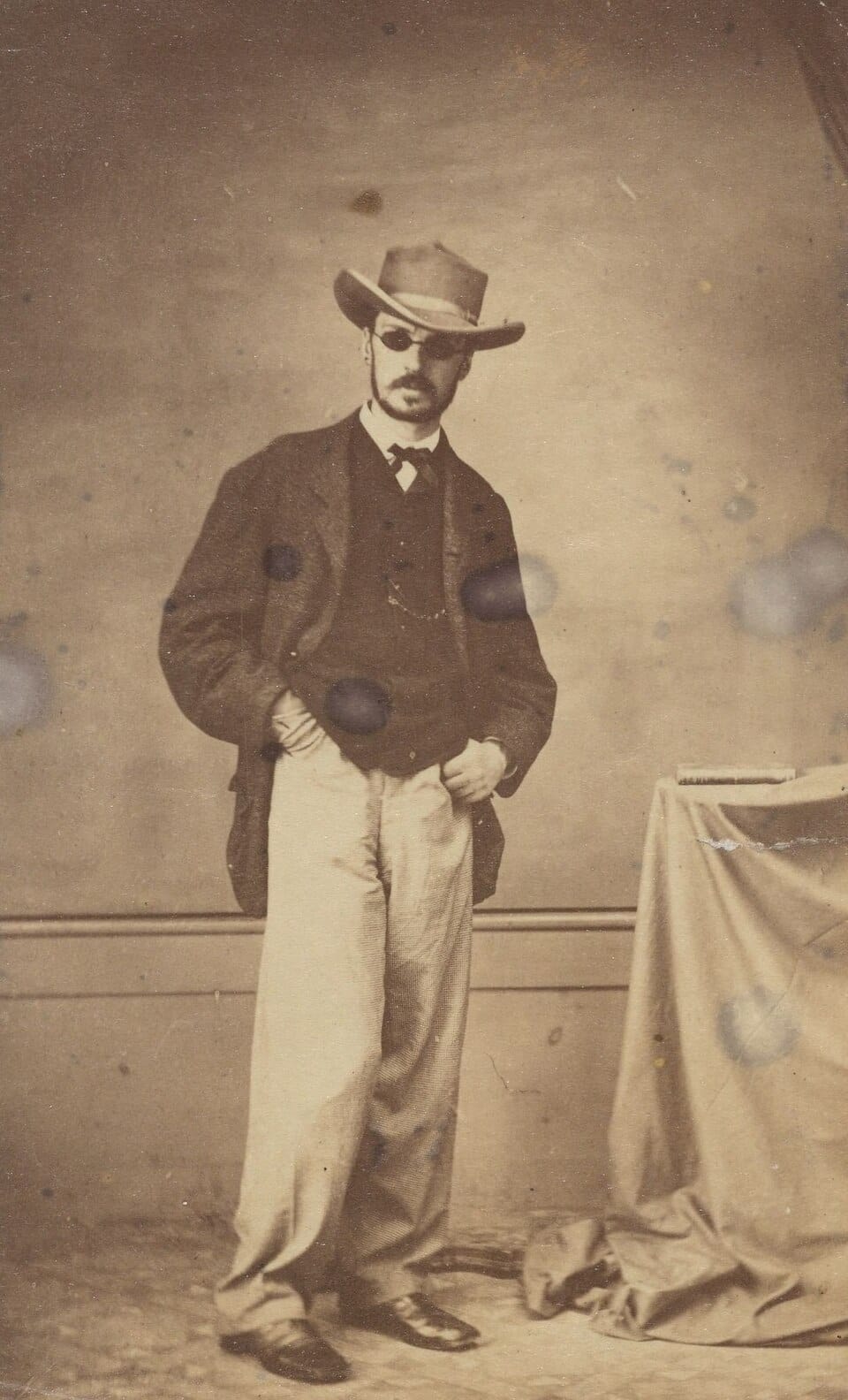
The philosopher William James defended free will, at least partly, because it provides more “subjective satisfaction” than does determinism. After all, he says, “What interest, zest, or excitement can there be in achieving the right way, unless we are enabled to feel that the wrong way” is also possible?[3] Similarly, the French theorist Bruno Latour complained that determinism went against the “narrativity” that made worldly events meaningful for us humans.[4]
But even if wishful thinking is a poor way to do philosophy, there’s a more basic problem with the claim, “Determinism is boring.” Simply put, it’s just not true. Determinism—the intelligible connections between events—is the only thing that makes for a compelling narrative. To make this perfectly clear, consider the following two stories:
Story One
Walter White, a high school chemistry teacher, becomes an unlikely producer and distributor of crystal meth in the Albuquerque, New Mexico area. Why? Because White was diagnosed with terminal lung cancer and is anxious to provide for his family after his demise. In danger of being exposed by the DEA, White hires a local lawyer, “Saul Goodman” as his advisor and consigliere. Why choose Goodman? White finds Goodman because he actively markets himself to Albuquerque’s criminal class. He dresses in ostentatious, flashy clothing, and even changed his name from Jimmy McGill to Saul Goodman (a play on the phrase “S’all Good Man”) to match this new persona. Why did he do that? Goodman (aka., McGill) developed this unsavory client base when he sold untraceable burner phones in a seedy restaurant parking lot. Why did McGill sell burner phones? Because his law license was suspended. And why did this happen? Because he was caught breaking into his brother’s house to falsify some legal documents. Why? Because his brother, Chuck (also a lawyer), stole a client away from Jimmy’s then girlfriend, Kim Wexler. Besides, Jimmy and Chuck had a long-standing rivalry owing to their diametrically opposed personalities. Chuck is the consummate rule-follower, if rather pretentious. Jimmy is a longtime cynic when it comes to the law. And why did they develop such different personalities? Well, there are reasons. These reasons stretch back to their childhood in Cicero, Illinois, but at this point you should just watch the series!
Story Two
Walter White, a high school chemistry teacher, decides to produce and distribute crystal meth. He does so on his own free will. Period. No streaming subscription necessary.
Which story is more intriguing? There’s really no contest. It’s precisely the circumstances, personalities, and agendas behind a character’s choices that make for a meaningful storyline. The ubiquitous “because…” (i.e., the explanatory cause) is the very essence of telling a tale. These causes may be external to a character’s mind, like a cancer diagnosis, a DEA investigation, or a suspended law license. Or, they may be internal features of a character’s psyche, such as romantic love, fraternal jealousy, fear, ambition, or greed. Either way, the thing that explains a character’s decisions is exactly what makes those choices at all meaningful, and thus, potentially exciting. And, of course, even our inner states (emotions, intentions, and desires), don’t come about spontaneously. We are bold or meek, principled or cynical, passionate or unfeeling for some reason.
To be fair, the proponents of free will never claim that our decisions are totally independent of causes and influences. Not believing in pure randomness, they soberly agree that both “nature” and “nurture” matter when it comes to how we behave and the choices we make. Their reasonable-sounding claim is only that there is some small element of freedom, some wiggle room, when it comes to our actions. And this, they claim, is where all the drama in life is to be found—within that small, unaccountable domain of unforced decision.
But then, the advocates of free will are faced with a stark dilemma: Within that small space supposedly left for free choice, do we choose for some reason or not? If we do choose for some reason, then their arguments truly amount to nothing; the “wiggle room” disappears entirely and they reveal themselves, in the end, to have been good determinists all along. Yet if they answer the other way—if, within our range of possibilities, we choose for literally no reason at all—then this lands us back in the meaningless (and thus boring) world of indeterminacy. Heisenberg comes knocking again, as it were. Our vaunted “free will” is nothing more than a random spasm (albeit one occurring within some limited framework).
Either response to this dilemma critically undermines the free will position. What remains clear is that the drama in real life, as in fiction, is to be found in its intricate patterns and connections, not in their (total or partial) absence.
Myth 2: Determinism is Amoral
Perhaps the deterministic world can be exciting, but is it moral? Can one be ethical in a universe that lacks free will? Tellingly, Better Call Saul follows the exploits of a criminal defense attorney. The whole series is an extended meditation on guilt and the question, “How did it come to this?”
When it comes to the law, “mitigating circumstances” are those factors that lessen the seriousness or culpability of a criminal act. The thinking goes that we deserve less blame if we committed a crime while suffering from an emotional breakdown, a cognitive disability, or some other burden on our judgment. Crimes done in the “heat of passion” or by persons suffering “diminished capacity” may be treated with more leniency as opposed to, say, a premeditated murder done “in cold blood” by a fully competent adult.

But all this raises the question: What counts as a “fully responsible” criminal act? A skillful lawyer might explain away even the most depraved misdeeds if they can point to sufficiently mitigating circumstances. That’s what McGill attempts in the episode “Uno” when defending three young men who broke into a funeral home. His closing argument stretches the notion of mitigating circumstances to the max:
“Think back. Your brain—It's just not all there yet. If we were all held responsible for what we did when we were nineteen...Let me tell you. The juices are flowing. The red corpuscles are corpuscling, the grass is green, and it's soft, and summer's gonna last forever. ...But if you're being honest, I mean, well, really honest, you'll recall that you also had an underdeveloped nineteen-year-old brain. Me, personally...If I were held accountable for some of the stupid decisions I made when I was nineteen...Oh, boy, wow.” (S1E1: “Uno”)
It turns out that the three defendants didn’t just break into a funeral home, but also removed a head from one of the corpses before having sex with the body. Needless to say, this wasn’t a simple case of criminal trespass. Jimmy’s closing argument fails, and the three young men are sent to prison. He can’t get the jury to believe that “underdeveloped nineteen-year-old brains” and “corpuscling corpuscles” excuse sexually violating a corpse.
Fair enough. But the question remains: Is anybody truly responsible for their misdeeds, however disgusting or violent? If everything happens for some reason, and if those reasons—those causes and effects—stretch back from before you were born, then does the category of “guilt” even make sense? Maybe the deterministic universe is amoral after all?
On the other hand, perhaps what we really need to do is to rethink our definition of morality. The conventional view of ethics is that people are good or bad because they choose to be. That’s supposedly why premeditated murderers deserve to go to jail, to say nothing of corpse desecrators. “Just deserts” and “free will” appear to be inextricably linked; You can’t have the one without the other.
But then, why not discard both concepts together? We don’t need either to do ethics. A murder is devastating because it ends a life, causes pain and suffering in the victim, and extended emotional trauma for their loved ones. Stipulating that the murder was intentional, but also that these intentions were totally spontaneous, only confuses matters. Murder is bad because its effects are bad. That’s enough to pass moral judgment.
We can naturalize our ethics to include words like “suffering,” “joy,” and “wellbeing,” but leave out concepts like “sin,” “blame” and “guilt.” The former list are merely subjective states that can be experienced by living, breathing human beings. They are desirable or undesirable according to our ordinary human natures. The latter list is made up of confused pseudo-concepts. Words like “blame” and “guilt” spring from an essentially supernatural idea of evil. One imagines a mysterious, dark desire to do wrong—just because.
Yet the problem with the notion of willful “evil” is that the more premeditated a misdeed is, the clearer it becomes that it was done for reasons. That’s what “premeditated” means after all. It's a crime done, not just out of momentary passion, but from some planned, deliberate intention. The question then becomes, were our so-called “reasons” reasonable, or were they confused?
In season one of Better Call Saul, we meet perhaps the two most comically self-deluded criminals in the entire series. Craig and Betsy Kettleman embezzle $1.6 million dollars from Bernalillo County where Craig was treasurer. This is clearly a premeditated, white-collar crime, and not some spontaneous act of passion. It required planning, and math, and subterfuge. But in the episode “Hero,” when Jimmy suggests they give the money back, their rationale for the crime lurches wildly from “it wasn’t illegal” to “it was illegal, but fair.”
Betsy Kettleman: “We are not giving this back. We are not guilty. This money belongs to us. We are—well, I mean, Craig earned it.”
Craig Kettleman: “I worked very hard. You know, weekends, holidays…”
Betsy Kettleman: “All unpaid, always. And really, just because you're salaried, doesn't mean you don't deserve overtime. I think that's only fair.”
Craig Kettleman: “I mean, really, that's what this is about, right?”
Betsy Kettleman, Craig Kettleman: “Fairness, right.”
Betsy Kettleman: “I mean, not just what's legal. If you want to talk about legal...slavery, that used to be legal. Human slavery. So…”
(S1E4: “Hero”)
Do Craig and Betsy believe their own defense? Who knows? Maybe they realize, deep down, that stealing the money was wrong, but that this knowledge was overwhelmed by the irresistible impulse to get rich. Or perhaps they’re truly as deluded as they seem, and they actually believe that embezzling $1.6 million is a fair remedy to not being paid overtime. Either way, what we have here is a disorder of proper reasoning. The fact that the crime took a long time to commit, and was planned in advance, in no way changes the fact that it was born of some mixture of delusion, ignorance, or impulsivity.
Any criminal deed, supposing it’s truly wrong, will be the same. In the words of Socrates, “No one goes willingly toward the bad.”[5] If a person clearly understands that doing X is wrong, then they will not do it. That’s counterintuitive because we can imagine all sorts of people (including ourselves) doing selfish, violent things because it makes us feel good, even though we know it to be wrong. But what’s really occurring here is a kind of self-delusion or a breakdown in reason. In the split-second where we steal, lie, or harm another, we convince ourselves that it is, in fact, the right thing to do. We tell ourselves all sorts of self-exculpatory tales, such as “they had it coming,” or that “everyone bends the rules sometimes,” or simply that “it’s time I got mine.” But no one truly thinks they are doing an unjustifiably bad thing at the very moment of action. (That’s indeed why the action can occur in the first place!)
A crime of passion is one where our thinking is distorted or overwhelmed all at once. A premeditated crime is one where our reasoning breaks down over a longer stretch of time. But how this question of timing makes certain crimes more “willful” than others is terribly unclear. Disordered thinking is disordered thinking, no matter how subtle or gradual our confusion. And no one chooses, out of the blue, to think poorly. At any rate, we don’t need to pretend that harmful acts are done voluntarily to call them harmful. The effects speak for themselves.
Myth 3: Determinism is Mindless
If ethics is ultimately about the effects of our behavior, then doesn’t this discount things like intentions, motivations, and inner beliefs altogether? Determinism assigns a causal explanation for even the most heinous criminal trespasses, but in so doing, it seems to set up a universe which is essentially “mindless.” Our inner states don’t matter because they, like everything else, are merely the result of previous circumstances.
However, this too is a myth. The deterministic universe is one which fully recognizes the existence of minds, along with all the things that minds do: weighing alternatives, anticipating consequences, and judging results. What’s more, just as we can judge some actions as better than others, so too can we perceive that some minds function better than others. That’s a controversial-sounding claim, but one well-illustrated within the Better Call Saul series.
Nacho Varga and Tuco Salamanca both worked for the Juárez Cartel, and at one time, Tuco was Nacho’s immediate boss. But the similarities really end there. The personalities of the two are drawn in high-relief so as to accentuate their starkly opposite natures. Nacho is calm and collected, even in the face of extreme violence. Tuco, by contrast, is a bundle of impulses, emotions, and paranoia. His mood swerves erratically from maniacal laughter to unfettered rage. Tuco’s long-standing drug habit (at first “biker crank” and then crystal meth) doesn’t help matters. (“Gloves Off”)
And because of this, he is easily manipulated. In “Mijo” (S1E2), Jimmy convinces Tuco not to kill his two associates by appealing to Tuco’s outsized sense of pride. “Now you have to decide, what's the right sentence? Like a judge.” Being compared to a judge? That’s exactly the thing to kick Tuco’s egomania into overdrive, and it works.
A mind can be judged functionally—according to whether it follows its own, logical rules (Nacho), or if it’s constantly compelled from the outside (Tuco). In the latter case, it’s immaterial whether the mind is overcome by a chemical substance, delusions of grandeur, or simple ignorance. In each instance, something gets in the way of its own, logical deliberation.
Still, if proper reasoning is something objective (logic is logic after all), then it seems to deprive the mind of genuinely free choice. Either we clearly perceive what’s rational, and act accordingly, or we are overwhelmed by other stimuli (drugs, paranoia, flattery, etc.), and our thinking breaks down. We necessarily choose what’s right, or we are caused to choose what’s wrong.
But this doesn’t mean that the mind is a non-entity. By way of analogy, a machine may not freely design itself nor does it choose how well it operates; it nonetheless exists, and one can judge how efficiently it functions all the same. So too are minds more or less active or passive, autonomous or enslaved by external passions. They exist, even if they don’t spontaneously choose to exist.

Besides, “knowing what is right” (especially in the moral sense), often presents itself to the mind as an unwelcome, but nonetheless irresistible fact. In “Lantern” (S3E10), Jimmy has a sudden realization: He can help his elderly client, Mrs. Landry, but only if he thoroughly discredits himself in front of the whole retirement community. Sitting with his girlfriend, Kim Wexler, this realization hits Jimmy like a ton of bricks.
Jimmy: “No. Oh, shit.”
Kim: “What? What is it?”
Jimmy: [Chuckles] “Mrs. Landry.”
Kim: “You figured it out.”
Jimmy: “Yeah. But I really, really don't wanna do it.”
Jimmy says he doesn’t want to do it. Who wants to purposefully invite the hatred of a crowd of adorable seniors? But really, it's no choice at all. Jimmy sees all too clearly that it’s within his power to help Mrs. Landry, and what’s more, it’s the right thing to do. He is moved by the sheer force of his own good reasons. We might say that Jimmy is “powerless” to resist this force, but that’s not quite right either. For “reason” is that very quality by which we judge the power (i.e., the functionality) of a mind. He has to help Ms. Landry, but this necessity springs from his own thinking, and not from some outside manipulation.
Acting Lessons
Within the deterministic universe, there may be no “free choices,” but there are such things as power, morality, and reason. These qualities are enough to make for a dramatic story and a meaningful existence. That every life (fictional or real) can be explained by some prequel takes nothing at all away from it.
Whatever circumstances got us to this point, we are here now, in the middle of things; We are actors in this story, and not mere observers of it. And actors act, for they cannot do otherwise. Criminal or pillar of society; showman or recluse—these are all ways of acting and shaping our future. The life-decisions we make aren’t free, but regardless, they are genuine decisions with real effects. And since we do possess a mind, then we will necessarily seek out what we believe is best, and act on it, to the best of our abilities. In this, we have no choice.
REFERENCES
[1] An example of a deterministic interpretation of quantum mechanics, currently held by some physicists and philosophers, is the so-called “pilot-wave theory” which was first proposed by Louis de Broglie and later developed by David Bohm. Myrvold, Wayne, “Philosophical Issues in Quantum Theory”, The Stanford Encyclopedia of Philosophy (Fall 2018 Edition), Edward N. Zalta (ed.), https://plato.stanford.edu/archives/fall2018/entries/qt-issues/.
[2] Michio Kaku, “Why Physics Ends the Free Will Debate”, Big Think (accessed November 11, 2021), https://www.youtube.com/watch?v=Jint5kjoy6I
[3] William James, “The Dilemma of Determinism” in The Will to Believe, Human Immortality, and Other Essays in Popular Philosophy (New York: Dover Publications: 2015), pp. 145-183.
[4] Bruno Latour, Facing Gaia: Eight Lectures on the New Climatic Regime, translated by Catherine Porter (Cambridge, UK: Polity Press: 2017), p. 72.
[5] Plato, Protagoras, translated by Stanley Lombardo and Karen Bell, (Indianapolis, IN: Hackett Publishing Company: 1992), 358d.