Rethinking "The Jewish Question"
Marxism, Emancipation, and Identity

Cite this article
Landon Frim, “Rethinking 'The Jewish Question': Marxism, Emancipation, and Identity,” Symposion 13, no. 1 (2026): 35–60.
This essay was originally published in the journal Symposion (2026). [Read the original PDF]
Introduction: A Rorschach Test
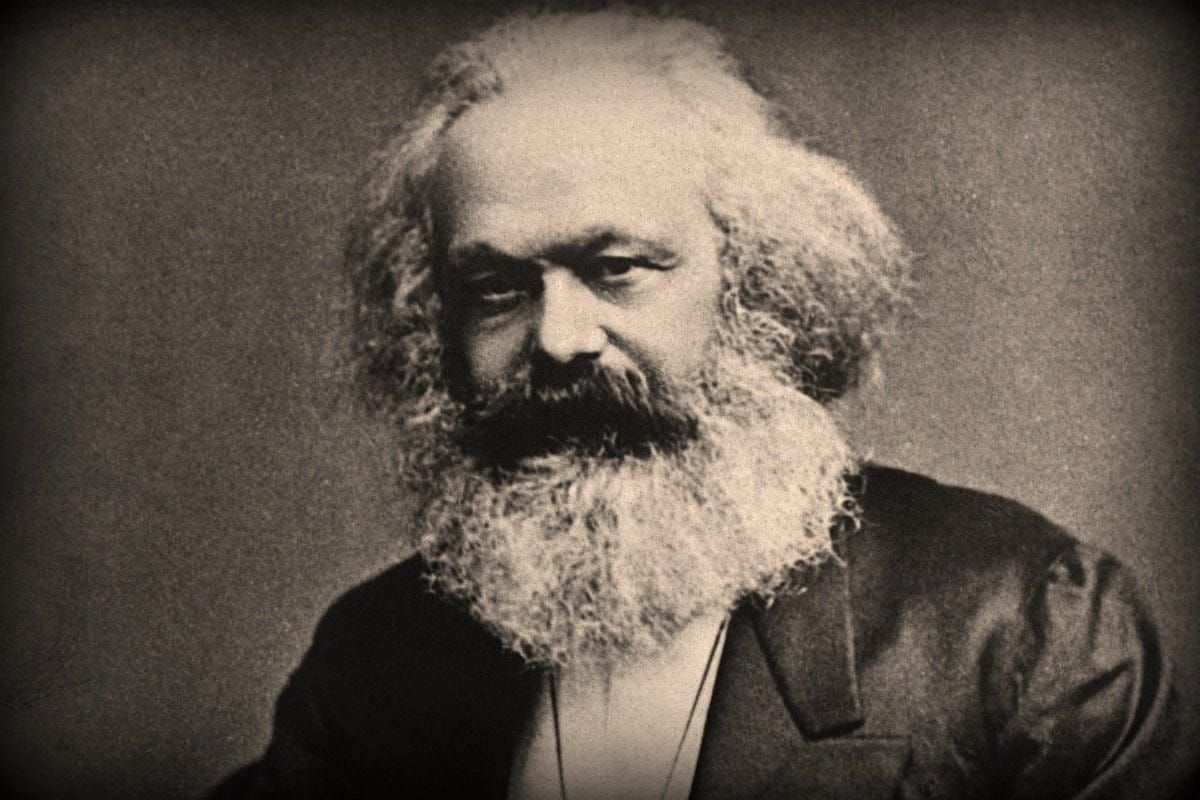
Critics have long accused Karl Marx of anti-Semitism. This is especially true with reference to his controversial 1843 work, On the Jewish Question (Zur Judenfrage). In one sense, this is eminently surprising. Marx was himself of Jewish extraction (his father only converted to Lutheran Protestantism to practice law in Prussia, and his mother followed suit). Marx’s essay is likewise a sustained defense of Jewish emancipation, and freedom from the kind of civil discrimination that plagued his own family. In it, he boldly demands equal political rights for all, regardless of faith or cultural background.
On the other hand, the charge of anti-Jewish bigotry is not surprising at all. The language that Marx employs in On the Jewish Question is shot through with anti-Semitic rhetoric and themes, undeniably shocking to 21st century ears. Such language is particularly flagrant in part two of the essay: “Money is the jealous God of Israel…” (Marx [1843] 1992, 239) “What is the secular cult of the Jew? Haggling. What is his secular God? Money.” (Marx [1843] 1992, 236)
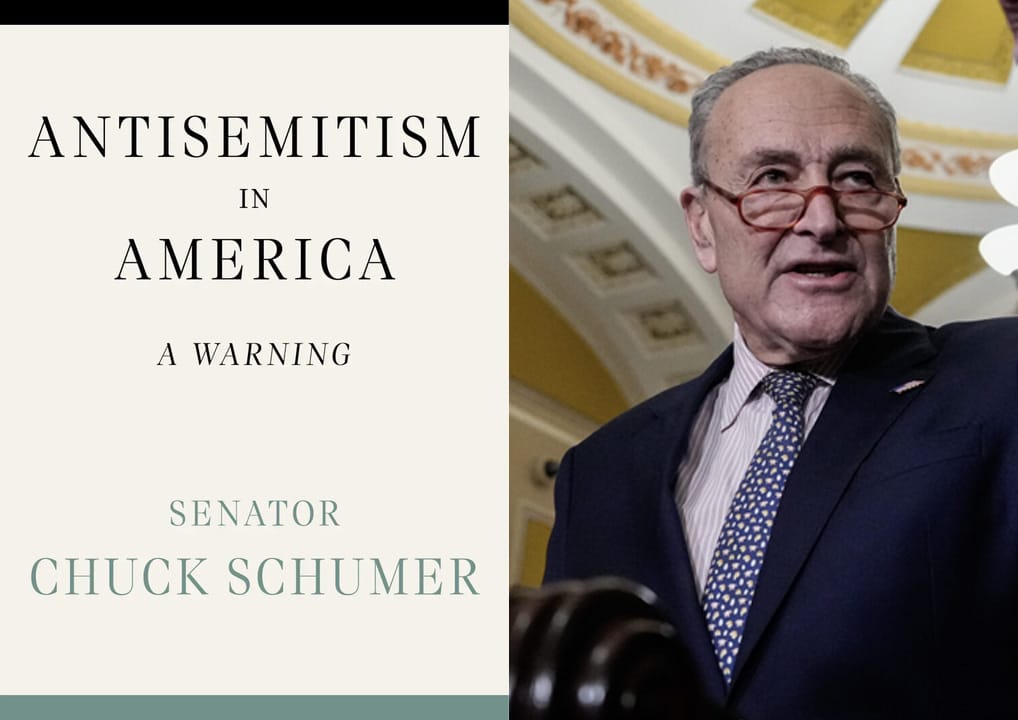
The result of this apparent contradiction (between the essay’s substance and its form) is something of a Rorschach test. Those already hostile to Marxism see in Zur Judenfrage a tepid embrace of Jewish political emancipation. Yet this progressive element is supposedly motivated by an underlying hostility to Jewish culture and religion. Scholars like Robert Misrahi and Pierre Birnbaum have accused Marx of promoting wholesale assimilation and even of stoking popular anti-Semitism. In Birnbaum’s words, one cannot calmly ignore “the violence of the attack against the Jews and Judaism.” (Misrahi 1972; Birnbaum 2008, 61) The historian Hyam Maccoby went so far as to list Marx’s anti-Semitism alongside that of Hitler (Maccoby 2006, 25, 52). And even Chuck Schumer, the highest-ranking Jewish member of the US Congress, recently drew a straight line from Marx’s language in On the Jewish Question, to Stalin’s persecution of Soviet Jewry in the 1940s and 50s (Schumer and Molofsky 2025, 135).
Those friendlier to Marxism, by contrast, tend to emphasize the substance of Marx’s argument and his overall political agenda. They will often concede that the language he uses is problematic and outdated. Nonetheless, Marx’s aim was clearly the civil emancipation of the Jews, not their continued persecution. The American socialist Hal Draper was emblematic of this approach. Writing in 1977, Draper reminded his audience that the use of national epithets as insults was entirely commonplace in European ‘polite society’ throughout the 1840s (Draper 1977, 591-592).
In Germany, for example, the term ‘Judentum’ referred not only to Jews in particular, but also to commerce or haggling generally. This is similar to how, in English, the words ‘gypsy’ or ‘bohemian’ came to denote those who wander or flout social conventions. None of this is to excuse the derogatory use of national names or stereotypes. Only, as Draper points out, such use was nearly ubiquitous across the political spectrum and was typically employed by Jews and non-Jews alike. It is therefore odd to pick out Marx, specifically, for committing such linguistic ‘sins.’ (Draper 1977, 591-592)
So, what is the truth? Many scholars have already litigated the claim that Karl Marx was, personally, an anti-Semite or racist. They have weighed the available evidence including, but not limited to, Marx’s own family background, his hostile rhetoric about fellow Jewish socialists, and his ambiguous comments about his mixed-race son-in-law, Paul Lafargue (Marx [1866] 2010f, 303-304). Such analyses are of interest, not least, to scholars of Marx who also claim a Jewish identity (the author of this article included).
Yet this essay will attempt something different. Rather than interrogate Marx’s personal beliefs, the aim here is to determine whether Marxism, as a worldview and political philosophy, is inherently hostile to continued Jewish existence. Put simply: “Can Judaism survive Marxism?” Are the critics correct when they accuse Marxism of promoting an ideal of ‘human emancipation’ that is, at bottom, assimilationist?
To answer these difficult questions, it is vital that we clarify our terms and overcome certain equivocations. When considering the phrase: ‘The emancipation of the Jews,’ one must first ask, What is emancipation? and secondly, Who are the Jews? The former question is already central to Marx’s Zur Judenfrage. In that essay, he takes special care to distinguish between two sorts of emancipation – political and human. Full human emancipation denotes an improvement of the soul, a conscious advance beyond superstition and ignorance, and the cosmopolitan embrace of humanity beyond parochial, ethnic ties. This is accomplished through a socialization of the economy, and the turn toward rational production to meet universal human needs. It broadly anticipates what Marx, in later works, would call socialism. [1] Political emancipation is something else entirely. For Marx, political emancipation is merely negative. It is nothing more than the absence of religious privileges and civil disabilities before the law.
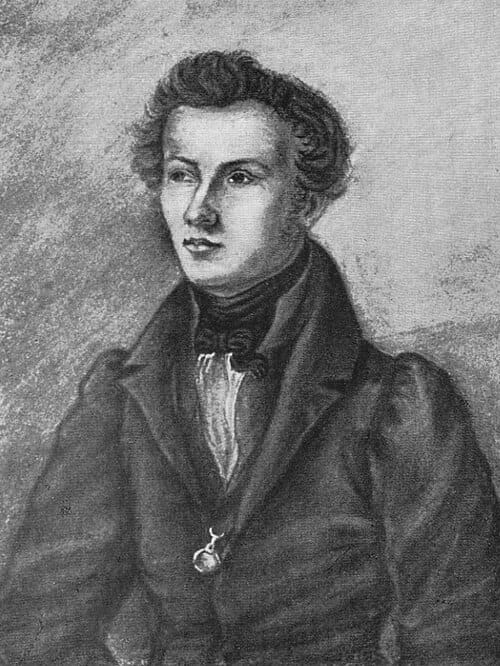
Marx’s On the Jewish Question was a response to his former mentor Bruno Bauer. The latter opposed Jewish civil rights precisely because he confused these two senses of the word ‘emancipation.’ Bauer’s position was that the Christian state (especially in Prussia) has no ability to emancipate the Jews because the state, itself, remains mired in superstition. It is not yet secular. The Jews cannot be emancipated because they likewise remain enthralled to their own religious forms and insular culture. As Bauer put it, “We have to be free ourselves before we can think of inviting others to freedom… Only a free world can liberate the slaves of prejudice.” (1999, 197)
Marx’s rejoinder, now well-rehearsed in Leftist circles, is that full human emancipation is no prerequisite for political freedom. We don’t have to ‘free ourselves’ first, or attain a secular, enlightened disposition in order to grant basic political rights to all. Even a society entirely suffused with religious fervor (here, Marx references the United States), can offer formal equality to its citizens, whatever their religion (Marx [1843] 1992, 217). Political freedom is an ‘incomplete’ form of emancipation to be sure. Yet for all that, it is still possible and desirable now.
Therefore we do not tell the Jews that they cannot be emancipated politically without radically emancipating themselves from Judaism, which is what Bauer tells them. We say instead: the fact that you can be politically emancipated without completely and absolutely renouncing Judaism shows that political emancipation by itself is not human emancipation. If you Jews want to be politically emancipated without emancipating yourselves as humans, the incompleteness and the contradiction lies not only in you but in the nature and the category of political emancipation. (Marx [1843] 1992, 226-227)
This is hardly an uncontroversial resolution to our original question, “Can Judaism survive Marxism?” For political emancipation is just one ‘big step forward’ in a much longer and more radical process (Marx [1843] 1992, 221). It consists, as Marx writes in a letter to Arnold Ruge, of making “as many breaches as possible in the Christian state and to smuggle in as much as we can of what is rational.” (Marx [1843] 2010c, 400) These strategic ‘breaches’ are but a means to an end. The ultimate goal remains full human emancipation – a secular enlightenment that transforms all of humanity into a cooperative whole.
This is unlikely to comfort many who claim a sincere Jewish identity. In Marx’s triumphant vision of human emancipation (where we do free ourselves from old superstitions and national exclusivity), will Judaism still have a place under the sun? If political emancipation frees the Jews from unjust laws, will human emancipation eventually free them from Judaism itself? Just here, it is necessary to clarify yet another term. In the phrase ‘the emancipation of the Jews,’ we must not only distinguish between the different senses of the word ‘emancipation,’ but also of the word ‘Judaism.’
Marx begins this crucial task as well. In Zur Judenfrage, he draws a critical line between (1) so-called ‘practical’ Judaism and (2) pious Judaism. The former indicates the perceived roles of Jews within the broader economy, while the latter signifies the beliefs and rituals of Jewish religion. We may add to this list two other senses of the word ‘Judaism’ that Marx neglects. These are (3) popular Judaism, and (4) political Judaism. Here, ‘popular Judaism’ denotes all those cultural expressions of Jewish life that are not religious (everything from Yiddish theatre to Ladino poetry and beyond). Political Judaism, meanwhile, describes the various projects of Jewish political autonomy – either territorial, as with political Zionism, or non-territorial, as with Bundism.
Only once we distinguish between these four, highly distinct senses of Jewish identity (practical, pious, popular, and political) might we begin to answer our original question: Can Judaism survive Marxism? Or, put more accurately, which senses of Judaism are consistent with the Marxist ideal of full, human emancipation? [2]
I. ‘Practical’ Judaism
“What is the secular basis of Judaism? Practical need, self-interest.” (Marx [1843] 1992, 236; emphasis is mine) The most jarring passages in Marx’s Zur Judenfrage target the so-called ‘practical Jew’ rather than any Jewish belief system or culture. But what is this practical Judaism, precisely? For one thing, it is an ethnic stereotype of the Jewish person as a shrewd, calculating money-maker – typically a merchant, a middleman, or a banker. For another thing, it is a stereotype that was virtually ubiquitous throughout mid-19th century Europe.
The image of the Jewish ‘Geldmensch’ (money-man) was indeed commonplace at this time, and well-represented across the political spectrum. The main difference was that conservative Judeophobia tended to be ethnic or theologically-centered, and sometimes verged on biological racism. The Jews are acquisitive by nature; it’s literally in their blood. Meanwhile, Left-wing Judeophobia often stuck more closely to an economic critique (however stereotyped). [3]
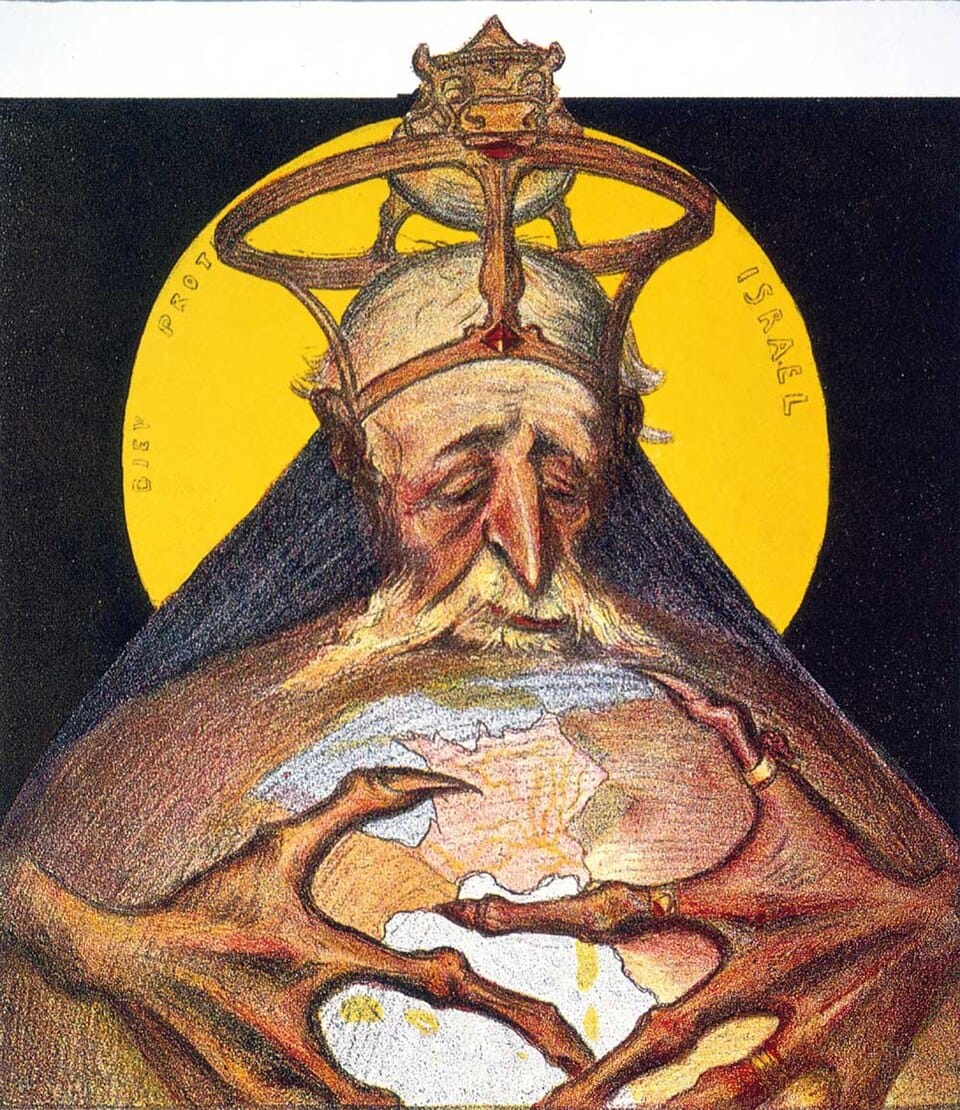
For example, Moses Hess was a prominent Jewish Leftist and is even credited for introducing Friedrich Engels to the socialist cause. Hess would later go on to embrace his own Jewish faith, and be recognized as the father of modern Labor Zionism, praising orthodox forms of Judaism in the process (Hess 2019). Yet from the 1830s through the 1850s, Hess was a notable proponent of the Jewish Geldmensch idea, berating Jewish people for their selfish, commercial spirit. This was part of a broader criticism of modern society as a ‘huckster world,’ thoroughly ‘egoistic,’ and dominated by selfish financial interests (Draper 1977, 591-594). Such traits were, according to Hess, all part of a ‘Judeo-Christian’ project. In this, he connected themes of ‘Jewish blood-worship’ (in-group bias) with the Christian ‘mystery of the blood of Christ.’
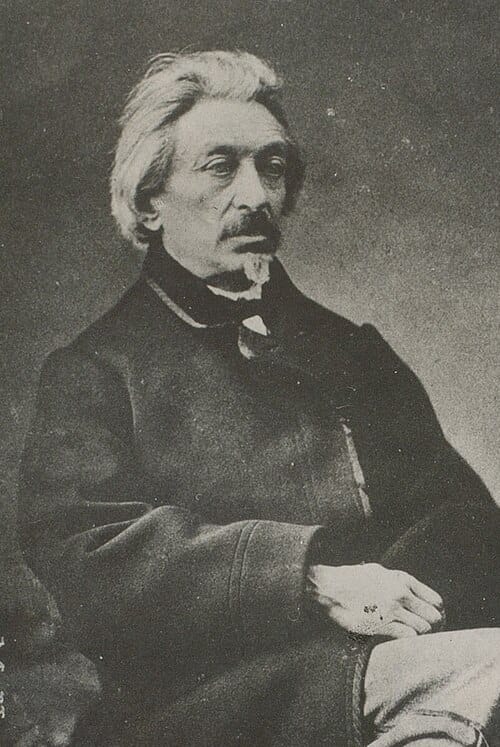
While these phrases sound occult, this only conceals their eminently practical meaning: Priests spiritualize capitalist predation upon the working class. They counsel workers to wait for their reward in Heaven, and to obey their worldly masters. Hess thus likens Christian clerics, along with Jewish merchants, to ‘hyenas’ and other scavengers. They all share, in his words, a “common quality as beasts of prey, as bloodsuckers, as Jews, as financial wolves.” (Moses Hess in Philosophische und Sozialistische Schriften, as quoted in Draper 1977, 591-594; emphasis is mine).
The association of Jews with ‘blood-worship’ is upsetting in the extreme. But to confuse this rhetoric with medieval accusations of ‘blood-libel’ (Jewish ritual murder of Christians) is simply inaccurate. Moses Hess certainly did not embrace the latter conspiracy theory and was, instead, employing the provocative jargon of his day. His aim was not to provoke another pogrom against his own Jewish community, but rather to indict the ‘Judeo-Christian huckster world’ that was the broader national economy. What may sound to 21st century ears like a theological critique of the Jews (or worse, a racialist one), was in fact a criticism of the practical world of economics at large. The very same can be said for Marx’s invocation of ‘practical Judaism’ in Zur Judenfrage.
As Draper capably points out, this ‘economic-Jew’ stereotype was employed by a long line of Left-wing writers who were, themselves, Jewish. Marx and Hess are only the most famous examples, but the list includes figures such as Ferdinand Lassalle and Heinrich Heine as well. To illustrate what this looks like in context, we can reference Heine’s response to the Damascus affair of 1840 (which involved an actual blood libel against local Jews by Syrian Christians, resulting in their collective imprisonment and torture).
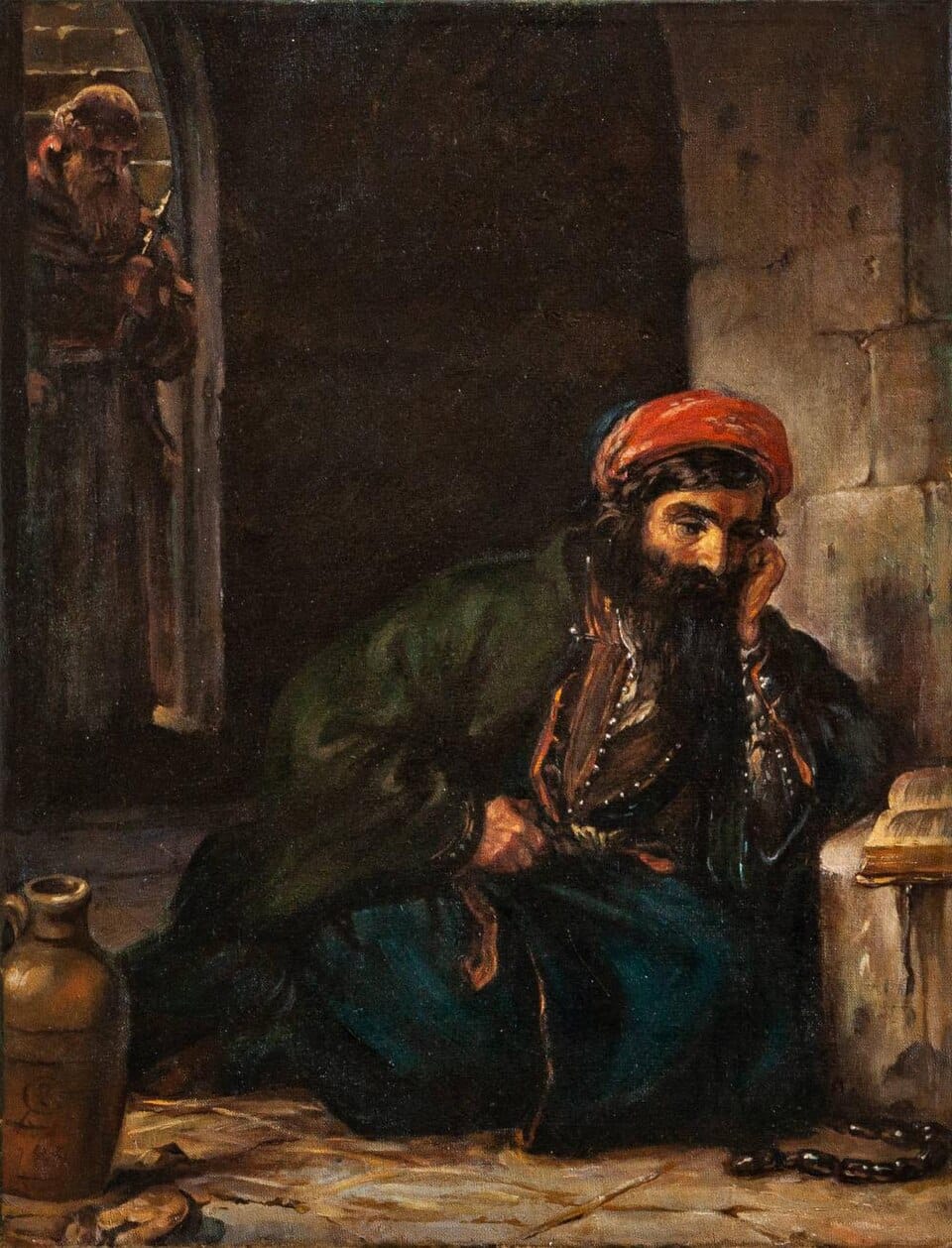
Heine indignantly railed against wealthy French Jews who refused to give financial aid to their co-religionists in their time of need. “Among the French Jews, as with other Frenchmen,” Heine inveighed, “gold is the god of the time, and industry is the prevailing religion.” Of the Jewish bankers Rothschild and Fould, he sarcastically dubbed them “two distinguished rabbis of finance,” adding later that “I do not believe that Israel [i.e., the Jews] ever gave money, save when its teeth were drawn by force.” (Draper 1977, 591-593)
Once more, this language grates against contemporary sensibilities (as perhaps it should). However, if we are not to be anachronistic, we must keep in mind that these are the words of a Jewish writer, complaining that wealthy Jewish plutocrats refused to give sufficient aid to his fellow Jews, suffering an anti-Semitic attack in Damascus. This is simply not an instance of racial anti-Semitism.
Marx in the 1840s undeniably belongs to this same tradition of radical, intellectual Jews criticizing the monied Jewish establishment of their day. He similarly uses Jewish economic stereotypes to critique capitalism as such. Once more, this may be distasteful; but it is not the same thing as racial or biologistic anti-Semitism. This becomes quite evident once one analyzes his polemical strategy in Zur Judenfrage.
While Bauer opposes Jewish emancipation on religious and cultural grounds, Marx counters this by establishing two points: First, the ‘real’ Jews are not the pious minority who pray in temple or keep the sabbath; they are rather the everyday, ‘practical’ Jews of the economic stereotype. They are merchants and traders. Second, and crucially, Marx asserts that everyone is today such a ‘practical Jew.’ Huckstering and haggling are not unique to any one people, nor to a specifically Jewish style of commerce. These are rather features of the modern economy as such. In making this two-step case, Marx seeks to rob the ‘economic Jew’ stereotype of its power. Precisely by generalizing it to include everyone, the stereotype is neutralized as a barrier to Jewish emancipation.
The pattern is highly consistent. In his notorious essay, The Jewish Problem (1843), Bauer accuses the Jews of being an un-historical (ungeschichtlich) people. He complains about the monotony of their religious practices, and their blind fidelity to their invisible Lord, as opposed to critical Reason and world-historical progress. While Christianity, itself, remains superstitious, at least it has the virtue of interior reflection on morality and the soul. The Jews only have their mechanical, mindless performance of the Law. Christianity, concludes Bauer, is just one step away from realizing true enlightenment and secularism. Judaism, by contrast, is ‘a mere appendix’ to this more advanced faith, doomed to follow Christianity “on its path of conquest around the world.” (Bauer 1999, 197) In refusing all change and self-criticism, the Jews are destined to be crushed by ‘the wheel of history.’ (Bauer 1999, 190) This stiff-necked people, proclaims Bauer, is woefully ‘oriental.’ (Bauer 1999, 194-195) Their tenacity is just a symptom of their ‘Asiatic’ obedience to authority, and thus to be lamented rather than praised. The Jews’ stubborn faith makes them wholly unfit for civic emancipation.
Bauer then connects the supposedly unhistorical, monotonous nature of Jewish religion to their materialism. These are two sides of the same coin; lacking an inner, critical conscience, every day is the same as the last. There is no progress, moral or otherwise. What remains is only the repetitious discharge of religious duties and, once these are complete, the equally repetitious accumulation of money. As Bauer put it, “the industry of the Jews is of such a kind that it has nothing to do with the interests of history.” (1999, 193) This is why, he claims, the Jews consistently lack any “interest in general human affairs.” (Bauer 1999, 195) How, then, can they be proper subjects of political emancipation when their own concerns are so narrow, apolitical, and egoistic?
Marx never directly confronts Bauer’s assertion that the Jews are greedy egoists. Instead, he retorts that the Jews (the real, ‘practical’ Jews of the economic stereotype) are in fact the most historically advanced people of all. This is a clever reversal which undermines the economic stereotype from within. In Marx’s own words, “[Practical] Judaism has managed to survive not despite history but through it.” ([1843] 1992, 238; emphases are mine) For what is modern civil society, with its markets and contracts, but the height of individual self-interest! Far from the Jews being unable to assimilate to modern society, modern society really is ‘Jewish’ through and through.
The Christian, with their emphases on love and moral interiority, has always been, according to Marx, ‘the theorizing Jew.’ Likewise, the Jew (with their mechanical focus on the Law) is simply the ‘practical Christian.’ (Marx [1843] 1992, 240) Yet Christianity is so spiritualized, so ethereal and refined, that it ends up relegating its moral vision to pulpit sermons and political theory alone. What is left down here, in the ‘real world,’ is precisely the egoism of commerce. And Marx reminds us that this egoism, of individuals facing one another in the marketplace, was originally perfected under Christian rule.
…civil society first reaches its completion in the Christian world. Only under the rule of Christianity, which makes all national, natural, moral and theoretical relationships external to man, could civil society separate itself completely from political life, tear apart all the species-bonds of man, substitute egoism and selfish need for those bonds and dissolve the human world into a world of atomistic individuals confronting each other in enmity. ( [1843] 1992, 240)
This is why Marx claims that “Christianity sprang from Judaism,” but that it “has now dissolved back into Judaism.” ([1843] 1992, 240) With the advent of European markets and finance, Christianity is ‘practical’ once again. Civil society is ‘Jewish’ in this stereotyped, practical sense. Yet this means that actual, individual Jews cannot be called out for being especially egoistic as compared to their secular and Christian neighbors (as Bauer insists). The rise of trade and commodification, the general domination of money over man, was not a project of the tiny Jewish minority alone. It rather occurred, as Marx says, “through him and apart from him.” ([1843] 1992, 237; emphasis is mine) Markets are a general feature of modern, Christian Europe and the secular North American states.

“The Jew … is only the particular manifestation of the Judaism of civil society.” (Marx [1843] 1992, 238) The very same can be said of the Christian or the atheist. Truly everyone (regardless of their confession or ethnicity) is a ‘Jew’ in this idiosyncratic, polemical sense. This is how Marx steers into, rather than litigates, the economic stereotype. In his words, “Civil society ceaselessly begets the Jew from its own entrails.” (Marx [1843] 1992, 238) This clearly cannot mean that capitalism literally produces individuals of Jewish descent. Nor is it an anthropological point, that the Jews are really more egoistic than anyone else. The language is rather figurative (and acerbically ironic). It lampoons the hypocritical values of modern, Christian society: “The god of the Jews has been secularized and become the god of the world.” No one is an exception. Even the preaching of the Gospel “has become a commercial object.” (Marx [1843] 1992, 238-239)
In this way, Bauer’s anti-Semitism is overturned. Bauer complains that Jewish political emancipation cannot be genuine, since pious Jewish individuals will remain superstitious and insular even after claiming equal political rights. Their bond with fellow citizens will be a formalistic lie, mere ‘sophistry and jesuitism.’ (Bauer 1999, 196) Marx’s retort is that civil society is itself disingenuous. The ideals of political equality and fraternity are, under modern conditions, themselves sophistic and two-faced.
Where the political state has attained its full degree of development man leads a double life, a life in heaven and a life on earth, not only in his mind, in his consciousness, but in reality. He lives in the political community, where he regards himself as a communal being, and in civil society, where he is active as a private individual, regards other men as means, debases himself to a means and becomes a plaything of alien powers. The relationship of the political state to civil society is just as spiritual as the relationship of heaven to earth. (Marx [1843] 1992, 220)
For Marx, there is no sense in pretending that the Jews are incapable of being citizens since they may privately retain their religion, their exclusive communal ties, or their acquisitiveness. For this alleged duplicity is precisely the nature of modern political life itself: a formal ideal of unity and equality resting upon the real material base of private acquisition, private belief, and mutual predation.
Thus, declares Marx, the Jewish citizen is no more sophistical than any other bourgeois citizen. “This sophistry is not personal. It is the sophistry of the political state itself.” (Marx [1843] 1992, 220-221) A dualism always obtains “between the religious man and the citizen…between the tradesmen and the citizen, between the day-laborer and the citizen, between the landowner and the citizen, between the living individual and the citizen.” (Marx [1843] 1992, 220-221) This double-faced existence is not a special feature of the Jewish people or their religion, but rather of bourgeois society. Denying the Jews political emancipation is therefore entirely unjustified.
Matters stand differently, however, when it comes to full human emancipation. This ultimate form of freedom, according to Marx, involves a re-politicization of the economy. This anticipates socialism; erasing the artificial barrier between ‘markets’ and ‘democracy.’ Society takes collective, democratic control over the means of production. It directs these awesome forces toward satisfying human needs rather than private profits. In much the same way, the illusory distinction between private ‘individual’ and public ‘citizen’ is abolished. Individual decisions are made with an eye toward the common good, and toward a common human nature or ‘species-being.’
Only when real, individual man resumes the abstract citizen into himself and as an individual man has become a species-being in his empirical life, his individual work and his individual relationships, only when man has recognized and organized his forces propres as social forces so that social force is no longer separated from him in the form of political force, only then will human emancipation be completed. (Marx [1843] 1992, 234)
Therefore, Chuck Schumer was, in a very narrow sense, correct. He accused Marx of claiming that “human emancipation from capitalism could not occur unless Jews were emancipated from Judaism.” (Schumer and Molofsky 2025, 135) In fact, he could have gone further. From a Marxian perspective, human emancipation requires everyone to be emancipated from ‘Judaism.’
Only now, we understand that by Judaism (or specifically ‘practical Judaism’), Marx in no way denotes a specific people, a particular religious faith, let alone a particular ethnicity or race as compared to others. For him, ‘practical Judaism’ is a polemical term only, identical to ‘bourgeois society’ (what Marx would later call ‘capitalism.’) We are all equally ‘practical Jews’ insofar as we are citizens of a bourgeois state and participants in a profit-driven economy.
For better or worse, Marx uses this ironic phrase ‘practical Judaism’ to outflank his racist opponent, Bruno Bauer. He uses it to turn Bauer’s own anti- Semitic arguments (against Jewish emancipation) on their head. This is why ‘practical Judaism’ cannot survive human emancipation. Describing neither a religion nor an ethnicity, it is merely a code word for modern, egoistic trade. For Marx, the incompatibility of ‘practical Judaism’ with full, human emancipation is thus true by definition. Yet this is a semantic point only, rather than an anti- Semitic one.
II. Pious Judaism
Jewish religion is largely absent from Marx’s analysis. He wants only to “consider the real secular Jew – not the sabbath Jew … but the everyday Jew.” (Marx [1843] 1992, 236) Pious Judaism is thus demoted as functionally ‘unreal,’ or in any case, of secondary import. This contrasts sharply with Bauer who pays grudging respect toward Jewish piety. He confronts those who argue for Jewish emancipation on the basis of the Jews’ supposed ‘innocence.’ The Jewish people are not innocent, Bauer replies. Instead, they should be regarded as the brave and stubborn martyrs of their peculiar faith.
One usually says of martyrs that they were killed, though innocent – this is really the greatest insult. Was what they did and for what they died nothing?… Of the Jews it will at least be admitted that they suffered for their Law, for their way of life and for their nationality, that they were martyrs. They were thus themselves to blame for their oppression they suffered, because they provoked it by their adherence to their law, their language, to their whole way of life. A nothing cannot be oppressed. (Bauer [1843] 1999, 189)
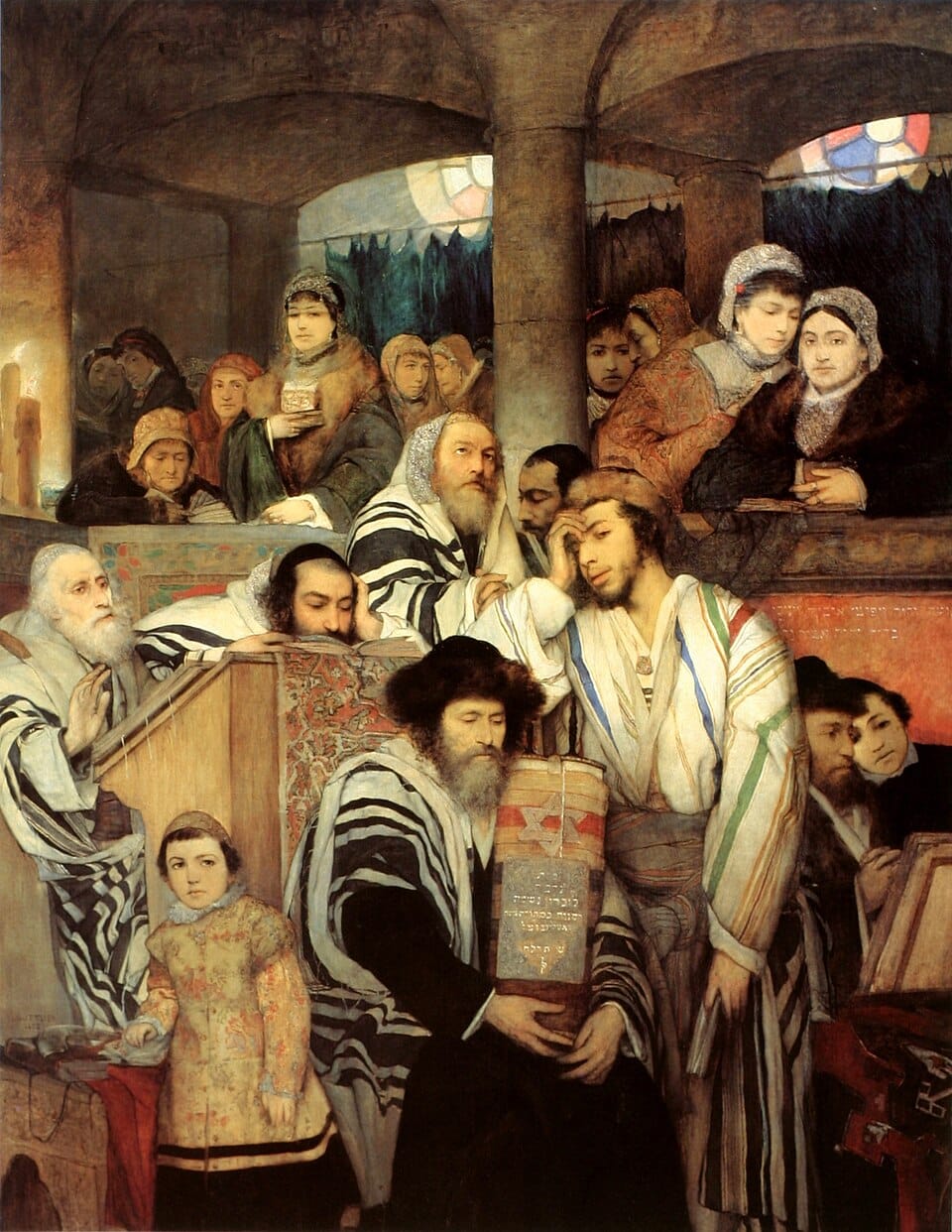
It is for this reason that later authors, including Pierre Birnbaum, have occasionally praised Bauer for his “surprising sensitivity to the most concrete history” of the Jews (Birnbaum 2008, 53). Bauer at least recognizes Jewish spirituality, their fidelity to Torah and halachah (i.e., Jewish law). This approbation comes despite Bauer’s own pronounced anti-Semitism and his constant railing against Jewish emancipation in Europe. For, in his mind, it is precisely the Jews’ clinging to a backward, clannish, and anti-historical religion that makes them unsuitable citizens. Emancipation will always be a lie, because the Jewish individual will always be Jewish first, rather than a Frenchman, a Prussian, etc. “His Jewish and restricted nature always triumphs in the long run over his human and political obligations.” (Bauer, “The Capacity of Present-day Jews and Christians to Become Free” 1843, as quoted in Marx [1843] 1992, 214).
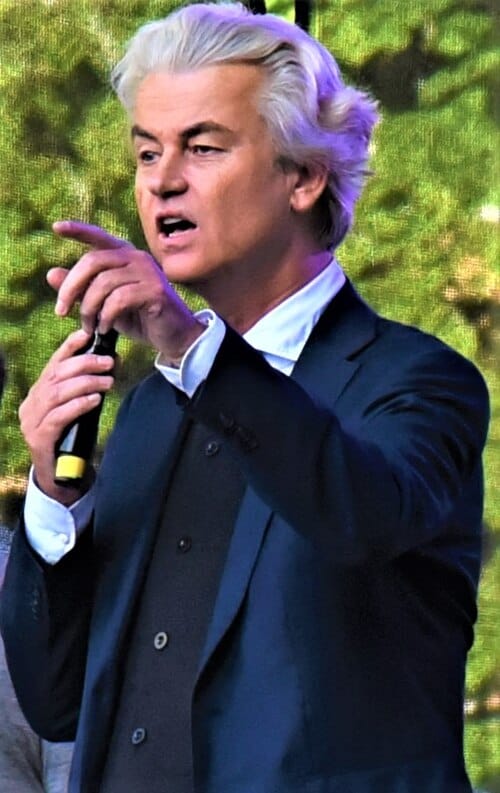
Bauer’s theological criticism is nearly identical to contemporary, Islamophobic claims that Islam is inherently ‘anti-Western’ and that Muslim participation in Western democracies is deceptive. The Dutch politician Geert Wilders, for instance, invokes the Muslim concept of taqiyya wherein Muslims are allowed to engage in limited deception in order to protect themselves from persecution, especially when living under hostile rule (Mariuma 2014, 100). Muslims, Wilders implies, are thus untrustworthy citizens. Yet a nearly identical charge has historically been brought against Jewish communities, by anti-Semites, for their Kol Nidrei service. This includes a similar-sounding provision, namely, the freeing of oneself from past vows before God. (In each case, the bigoted reading misunderstands – likely on purpose – the actual theological intent.)
By contrast, Marx does not claim that the Jewish faith is inherently deceptive. He is distinctly uninterested in determining, as with Bauer, whether or not the Jews’ ‘essence’ is “compatible with freedom were freedom to be granted to them.” (Bauer [1843] 1999, 187) To Marx’s eyes, that is a theological debate not worth having.
Political emancipation has nothing whatsoever to do with possessing the right spiritual ideas. Again, it is merely negative – the separation of private beliefs (whatever those may be) from official political life. Far from overcoming a ‘twofaced’ deception, political freedom is the very culmination of this split existence. In Marx’s words: “The dissolution of man into Jew and citizen, Protestant and citizen, religious man and citizen, is not a denial of citizenship or an avoidance of political emancipation: it is political emancipation itself, it is the political way of emancipating oneself from religion.” ([1843] 1992, 222) Bauer is thus confused when he demands the Jews stop being Jewish to become full citizens. For modern, bourgeois society just is the separation of private belief from public life.
It is true that, for Marx, no religion (including pious Judaism) can survive full human emancipation. He maintains that religion always involves a kind of self-alienation. This is particularly the case when it embraces the supernatural – a pious belief in some perfect, transcendent God. In such a worldview, all of the virtuous human qualities are hypostatized and transposed onto this imaginary deity – rather than us trying to realize them here on earth. The tragedy of religion is precisely that “the world has long dreamed of possessing something of which it has only to be conscious in order to possess it in reality.” (Marx [1843] 2010e, 144)
Marx, in following the radical philosopher Ludwig Feuerbach, argues that theological notions are always really social. They mirror human conditions, frustrated ideals, and all-too-human thought processes. If you want to criticize or even understand theological Judaism, then forget Scripture; study the Jews as they really are.
Yet going beyond Feuerbach, Marx insists on discovering the material (and not merely subjective) basis of religion. He denies that the essence of man is some abstract thing, “inherent in each single individual,” but is rather an “ensemble of the social relations.” (Marx [1845] 2010g, 4-5) Religion reflects, in mythic form, not individual consciousness but material conditions. Hence Marx’s repetition in Zur Judenfrage that one must avoid purely spiritual debates:
“Let us not look for the Jew’s secret in his religion: rather let us look for the secret of religion in the real Jew.” ([1843] 1992, 236-37)
“We do not turn secular questions into theological questions. We turn theological questions into secular questions.” (Marx [1843] 1992, 217)
Jewish religion is (as with all religion) a mere reflection of the socio-economic systems from which they emerge.
It is for this reason that Jewish piety cannot, on the Marxist view, survive full human emancipation. For such theological ‘self-estrangement,’ the transferring of all human virtues onto an imaginary Being, is only the reflection of our alienated times. It is wholly dependent on our systems of trade and usury, generalized scarcity and exploitation, what Marx calls the “universal and contemporary anti-social element.” ([1843] 1992, 237) Only because we live in such a degraded condition are we compelled to imagine something infinitely better, and more just, in Heaven. Yet this economic system will inevitably disintegrate. With this, Marx predicts Jewish piety will “vanish like an insipid haze in the vital air of society.” ([1843] 1992, 237) The same is true of all faiths. [4]
Consistently, Marx is careful neither to deny Jewish involvement in financial exploitation, nor to assign the Jewish community any special guilt as compared to others. He explicitly leaves open the possibility that individual Jews may work to ‘abolish’ these horrific material conditions, and so move “in the direction of general human emancipation.” (Marx [1843] 1992, 236-237) Likewise, when Bauer critiques Jewish religion for being transactional, the mere performance of duties without regard to inner conviction or love – Marx does not deign to pick a fight. He only points out that this alleged feature of Judaism “is the actual and conscious standpoint” of the man of money, whatever his faith (Marx [1843] 1992, 239). Every aspect of modern life has become a crass calculation.
The supposed Jewish contempt for inner belief, for ‘theory, for art, for history, for man as an end in himself’ is not wholly unique to this (or any) one religion, but is instead the reflection of a world where absolutely everything is for sale, where even women are put on the market as a ‘commercial object’ with a price tag (Marx [1843] 1992, 239). To borrow a famous line from Oscar Wilde, the modern bourgeois ‘knows the price of everything and the value of nothing.’ This is hardly a feature of Jewish piety alone.
Finally, if Jewish religious law seems ungrounded and arbitrary to the likes of Bauer, this is but a ‘religious caricature’ of the real, material conditions of the modern era. For secular law is no less ‘unfounded’ or abstract. We live, says Marx, in a society governed by ‘purely formal rights’ which defend the sanctity of contracts and property for all ([1843] 1992, 239). Yet these laws take on a totally abstract, otherworldly appearance since, in the real world, property is hardly equal and contracts most often favor the rich. If the Jewish religion fetishizes the sterile ‘Law’ abstracted from sincere bonds of personal love, (as Bauer and many Christians charge), then this is nothing but a reflection of material conditions at large.
All this means that, for Marx, the Jewish religion need not be ‘abolished’ as a prerequisite for human emancipation. This is a key difference between the Marxist outlook and that of Bauer. Both agree that a fully enlightened, emancipated society will be free of mass belief in the supernatural. Yet for Bauer, this shedding of traditional faith must come first. The Jews must actively “sacrifice antiquated traditions before they win liberty.” (Bauer [1843] 1999, 189) It is a matter of the Jewish community deserving their political freedom.
For Marx, the opposite is true. The eventual decline of religion is the inevitable effect of human emancipation, not its precondition. Religion is not actively abolished as with the abolition of private property (Aufhebung des Privateigentums). Instead, supernatural belief merely withers away when it has nothing left to reflect in the world – when there is no social alienation to excuse, and no frustrated human potential to mythologize. Religion, that persistent “sigh of the oppressed,” need not be stamped out; it will simply dissipate once deprived of its social function (Marx [1844] 2010a, 175).
It is for this reason that Marx sometimes balked at the label ‘atheist.’ This is not because he held out hope that supernatural faith could be redeemed or may be true. As he once put it, criticism of religion is the very premise of all criticism (Marx [1844] 2010a, 175). Only, Marx complained that centering one’s identity on an opposition to religion was far too negative, and actually gave religion undue power. It is like a child “assuring everyone who is ready to listen to them that they are not afraid of the bogy man.” (Marx [1842] 2010d, 395)
In place of such immaturity, Marx demanded that “philosophy should be brought to the people.” ([1842] 2010d, 395) That is, the theory of socialism as ‘man’s positive self-consciousness’ must be thoroughly developed, and needn’t be “mediated through the abolition of religion.” (Marx [1844] 2010b, 306) One can first understand what is true before going on to criticize what is false. Likewise, one can work to build a just, emancipated world before demanding everyone possess the correct ideas in their head.
In this, there is remarkable consistency between Marx in the mid-19th century, and the leading revolutionary socialists of the early 20th. This is true whether we examine the writings of Vladimir Lenin, Leon Trotsky, or Rosa Luxemburg. With few exceptions, the message remains the same: Materialism and atheism are philosophically correct; yet socialists should not fight on the level of dogma alone. Religion needn’t be actively ‘abolished’ in every individual mind in order to build socialism. Rather, organized religion will naturally decline with the end of scarcity, and the building of a just society.
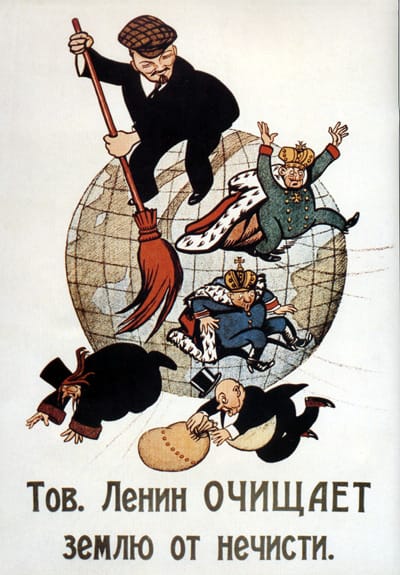
Hence, these 20th century figures were unwavering in their defense of individual freedom of conscience, especially for minorities such as the Jews. Practically, this meant a clean separation of Church from State. Lenin, writing in the revolutionary year of 1905, declared that religion must be a private affair:
Everyone must be absolutely free to profess any religion he pleases, or no religion whatever, i.e., to be an atheist, which every socialist is, as a rule. Discrimination among citizens on account of their religious convictions is wholly intolerable. Even the bare mention of a citizen’s religion in official documents should unquestionably be eliminated… Complete separation of Church and State is what the socialist proletariat demands of the modern state and the modern church. ([1905]1978, 84)
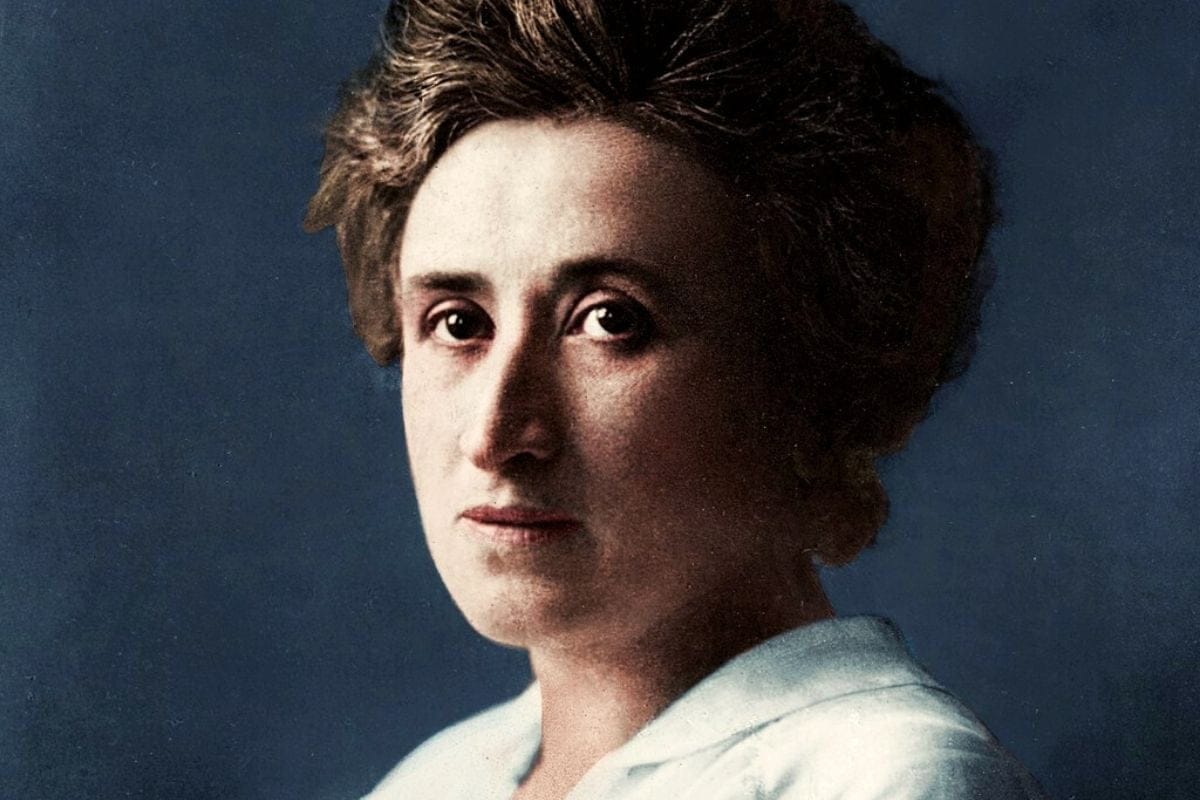
Luxemburg similarly held that religious identity is entirely personal, a question of ‘intimate convictions’ alone (1903). She demanded an end to all official religious privileges and discrimination, and that socialists everywhere oppose the persecution of “Russian Catholics, Jews, heretics and freethinkers.” (1905)
Like Marx, Lenin saw religion as a reflection of material conditions – excusing real-life deprivation with imaginary images. He called religion a kind of ‘spiritual booze’ that disoriented workers from demanding ‘a life more or less worthy of man.’ Feelings of social and economic impotence naturally produce all manner of belief in ‘gods, devils, [and] miracles,’ not to mention the equally impotent hope for a ‘heavenly reward.’ (Lenin [1905] 1978, 83-84) In a phrase, “Fear made the Gods.” (Lenin [1909] 1977c, 406) Trotsky agreed, warning that those who hope for a ‘heavenly paradise’ in the hereafter are unlikely to establish one in this lifetime (1922). All told, neither Lenin nor Trotsky were reluctant to promote their atheist views whenever possible. They often drew on 18th century philosophes to pillory religion in the harshest terms.

That said, these modern socialists also follow Marx in distinguishing political questions from theological ones. Lenin strenuously warned against criticizing mass belief in an ‘abstract, idealistic fashion,’ i.e., in a way “unconnected with the class struggle.” ([1905] 1978, 86) This was the misguided approach of bourgeois radicals. Such middle class ‘uplifters’ imagine that organized religion can be overcome merely through aggressive speeches and propaganda efforts. But this tactic risks dividing the proletariat against itself, ignoring common material interests in favor of obscure spiritual debates. For Lenin, unity in the real class struggle (building a ‘paradise on earth’) is far more important than a ‘unity of proletarian opinion’ (on the existence of Heaven above) ([1905] 1978, 87).
Luxemburg’s stance was similarly materialist: “The religion of the masses will only completely disappear … when man, instead of being dominated by the social process, will dominate it and consciously direct it.” (1903) Material agency over one’s life, and over humanity’s collective fortune, is the only thing that will render supernatural comforts obsolete. That is why, in the words of Trotsky, one cannot expect “the masses to acquire a socialist psychology under capitalism.” (2010, 108-109) Personal egotism, narrowness, and superstition will remain so long as humanity toils under a system that generates these traits to begin with.
As with Marx, the order of operations matters greatly. “Socialism does not aim at creating a socialist psychology as the pre-requisite to socialism,” but instead, counsels Trotsky, we must create the “socialist conditions of life as a pre-requisite to socialist psychology.” ([1906] 2010, 108-109) Put succinctly, Bauer is wrong. The Jews, or any other people, need not shed their religious beliefs in order to deserve political rights, nor even to fight for full human emancipation. The correct ‘psychology’ – a scientific, materialist outlook – is rather an effect of such emancipation. Religion need not be abolished, but will naturally wither away in due course. In the meantime, full civic equality, freedom of conscience, and the total separation of Church and State are the order of the day. These, on the Marxist view, are the indispensable first steps toward building worker solidarity. Anything less is mere chauvinism.
III. Popular Judaism
Thus far, it might seem that Marxism is inconsistent with continued Jewish existence. For ‘practical Judaism’ is but a label for modern greed. ‘Pious Judaism,’ meanwhile, is a spiritual salve – destined to recede into obsolescence in a future socialist society. This, however, is to ignore a third, distinct sense of Judaism, what we will call ‘popular Judaism.’ Once more, this category describes the nonreligious, and non-supernatural, expressions of Jewish culture.

Popular Judaism is a very broad category and, counterintuitively, may even include those cultural products that at first appear religious in nature. One striking example is the Haggadah for Believers and Heretics, published in 1922 by the People’s Commissariat for Education in Soviet Ukraine (Altshuler 2025). Written by the Communist Moyshe Altschuler, this was an answer to the traditional Haggadah – the central Passover text celebrating the exodus from Egypt.
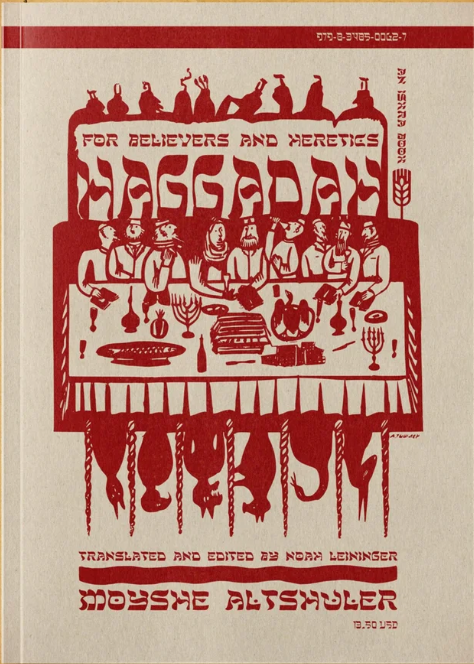
Yet this Soviet-era creation was not mere parody, a way of skewering Jewish custom from the outside. Instead, it was a sincere repurposing of traditional rituals by Jews and for Jews. Through novel poetry and prose, the book transforms orthodox liturgy, which spoke of God’s liberation of the Israelites, into new values of self-emancipation for all. “No one else will liberate us, not God alone nor a hero; with our own arms, we will liberate the world!” (Altshuler 2025, 19) In this way, the Haggadah was an authentic, popular expression of Jewish culture that was hardly ‘pious’ in nature – at least not in any theistic or supernatural sense. Far from unique, it sits alongside a whole host of secular (and even anti-clerical) cultural products throughout modern Jewish history.
The categories are undoubtedly fuzzy and somewhat porous. Nonetheless, maintaining this distinction in principle, between popular cultural expressions and supernatural belief, is important. After all, Bauer sought to deny Jewish emancipation precisely by collapsing any distinction between ‘pious,’ ‘popular,’ and ‘practical’ Judaism. For him, there really was no daylight between the insular culture of the Jews and their allegedly parasitic role in the economy. He likewise saw no real difference between an irrational Jewish faith and the Jews’ supposed incapacity to be enlightened citizens.
Hence, Bauer maintained that the Enlightenment philosopher, Baruch Spinoza was ‘no longer a Jew’ when he created his rationalist system (Bauer [1843] 1999, 193). For Jews, by definition, can neither be enlightened nor secular. [5] The leading Marxists disagree. They are unanimous that there is more to Jewish identity than supernatural beliefs alone. This is critical because it reserves a place for the continuation of Jewish culture even after human emancipation is achieved. Whereas all forms of supernatural piety will wither away in a future, emancipated society, the Marxist leaves open the possibility that non-pious Jewish identities may persist.
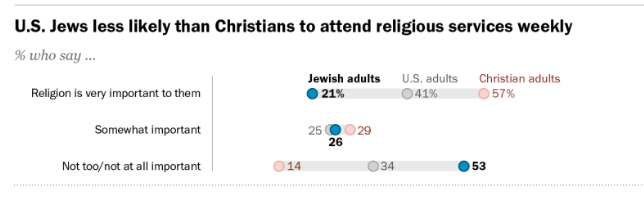
In this sense, critics like Schumer are wrong to accuse Marxism of promoting the destruction of Judaism. To claim such a thing, one must conflate (along with Bauer) the Jewish “attachment to their culture and traditions” with a particular supernatural belief system (Schumer and Molofsky 2025, 136). But there simply is no straightforward equivalence between the two. Not all Jewish culture is supernaturally-defined, and this divergence between ‘popular’ and ‘pious’ Judaism is increasingly evident with every successive generation. For example, the number of self-identified Jews in the US who claim that religion is ‘very important to them’ is only 21%. Those who believe in the biblical God stands at 26%. Jews who attend religious services are a mere 12% (Diamant 2021). These numbers speak volumes. They point to the fact that Jewish piety may ultimately dissipate while Jewish cultural identities remain. Indeed, this process of separation is already underway.
This is not to suggest that Marxism necessarily endorses cultural preservation for its own sake, or advocates for the permanent non-assimilation of all peoples. Both Marx and Engels are explicit that they are not essentialists when it comes to national culture. Instead, cultures are dynamic things. The processes of capitalist growth, especially the emergence of world markets, are already causing the ‘intellectual creations of individual nations’ to become ‘common property.’ For Marx, such cosmopolitanism, especially the fusing of regional literatures into a ‘world literature,’ is in itself something progressive (Marx and Engels [1848] 2010, 488).
Cosmopolitanism is not, however, universally inclusive. For there is no a priori guarantee that every people will be equally suited to an emerging world culture. Especially in the 1840s, Marx and Engels drew a highly controversial distinction between so-called ‘historical’ and ‘non-historical’ nations. They generally saw the Germans and Magyars as progressive peoples, at the forefront of industrial development, pioneers of bourgeois statecraft and a liberal-national culture (especially as compared to certain Slavic peoples). All of this sounds eerily similar to Bauer and his designation of the Jews as constitutionally ‘un-historical’ (ungeschichtlich) as compared to other, more ‘enlightened’ Europeans.
These early Marxist ‘rankings’ were both harsh and eminently contestable (Engels was simply wrong to predict that the Croats or Slovenes would assimilate, and lose their independent identity, in the next world war). Unlike with Bauer, however, these evaluations had nothing to do with the alleged superiority of each culture’s ‘essence’ as such. Instead, Marx and Engels were concerned with geopolitical context only. It is a question of economic development or nondevelopment as compared to other peoples, and the progressive escape from semi-feudal conditions. In a word, cultures are judged on a materialist basis rather than a spiritual one.
It is also a geopolitical question. Thus, Engels picks out certain populations of Jews as reactionary insofar as they “stubbornly retain an absurd nationality in the midst of a foreign land” – in this case, Hungary. ( [1849] 2010c, 232) But unlike Bauer, these communities are not reactionary because they are Jews. In fact, Engels adds to this same, ignoble list those Saxon populations in Hungary who, likewise, resisted modernization and the liberal-national movement. ([1849] 2010c, 232) In other words, it is the relative smallness of a people (as compared to their host culture) that often turns them ‘counter-revolutionary’ and parochial, rather than any intrinsic cultural trait or essence.
This is why Engels similarly criticizes such diverse national minorities as the Gaels in Britain, the Bretons of France, and the Basques in Spain who each, at one time, supported reactionary monarchical regimes (the Stuarts, the Bourbons, and the rule of Don Carlos, respectively) ([1849] 2010c, 234-235). The Croats, for their part, supported the Habsburg counterrevolution. Of course, one may take issue with the embarrassing inaccuracy of Engels’ analyses overall, and his tendency to treat cultures as a monolith. [6] Nonetheless it is clear that, for both Marx and Engels, material context defines a people, their aims and their overall culture. It is not, as with Bauer, a matter of free, moral (and thus culpable) choice.
In any case, by the 1890s Engels had reformed his views on culture and explicitly rejected anti-Semitism in the strongest terms possible. This was now seen as a symptom of a retrograde society, the hallmark of an underdeveloped capitalism and industrial base (Engels [1890] 2010b, 50). Anti-Semitism, he maintained, is the dying gasp of a ‘declining medieval social strata,’ fighting tooth and nail against the emergence of a modern society that has not yet fully established itself. The aristocratic anti-Semite tries to make common cause with the peasant over their shared fear of the modern market, where everyone is reduced to either capitalist or wage-laborer. Such rabble rousing is nothing more than a counterfeit ‘feudal socialism,’ promoting ‘reactionary ends under a purportedly socialist cloak.’ Genuine socialists, insisted Engels, “can have nothing to do with that.” ([1890] 2010b, 510 [7]
By this time, Engels was readily praising Jewish workers, especially in England and the United States. These were, in his estimation, among the most militant and reliable in the world labor movement. As he put it, Jewish workers are “the worst exploited and the most poverty-stricken” and also the most willing to go on strike (Engels [1890] 2010b, 51). To underline his philo-Semitism, Engels rehearsed the pantheon of leading Jewish socialist intellectuals: “Leaving aside Heine and Börne, Marx was a full-blooded Jew; Lassalle was a Jew. Many of our best people are Jews.” He adds to this list his friend “Victor Adler, who is now atoning in a Viennese prison for his devotion to the cause of the proletariat, Eduard Bernstein, editor of the London Sozialdemokrat, [and] Paul Singer, one of our best men in the Reichstag… all of them Jewish!” He ends with the bold declaration that, “if given the choice,” he too would happily “be a Jew.” (Engels [1890] 2010b, 51-52)
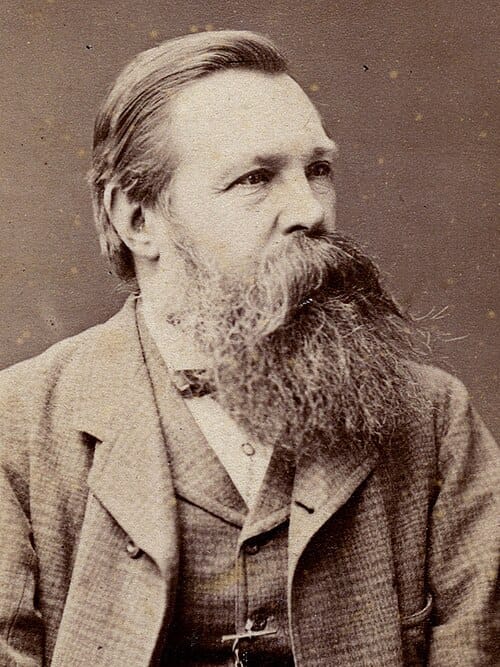
One can draw any number of conclusions from such effusive language. For one thing, this was a timely polemic against a resurgent anti-Semitism, then rife in places like Austria with the advent of the Christian Social movement. Secondly, Engels clearly accepted the Marxian distinction between so-called ‘practical Judaism,’ ‘pious Judaism’ and ‘popular Judaism.’ One can be ‘Jewish’ in the sense of hailing from a Jewish background and culture. Otherwise, how could secular radicals, the likes of Adler, Heine, and Karl Marx himself, make Engels’ list? Finally, Engels’ analysis doubles down on Marx’s anti-essentialism when it comes to cultural identity. Popular Jewish culture, and certainly individual Jews themselves, are the dynamic product of their time and place.
Much has been made of the supposed evolution of Engels’ thought from the 1840s (when he was labeling Hungarian Jews ‘non-historical’ and ‘reactionary’) to the 1890s (when he was praising Jewish labor militancy). But this supposed evolution ought not to be overstated. There is no contradiction in identifying a Jewish peasant population in Hungary as reactionary while recognizing the advanced consciousness of Jewish industrial workers in turn-of-the-century America or England. In both cases, social context is the determining factor.
Likewise, in the writings of Lenin we see no hint of an essentialist attitude toward culture, Jewish or otherwise. Neither did Lenin put any stock in the notion of race, affirming with the socialist theorist Karl Kautsky that “we do not even know with precision what race means.” Of the Jews, it was maintained that their manner of life is “far more a product of the social conditions [nécessités sociales], by which they have been influenced for centuries than a racial distinction.” (Lenin [1903] 1977d, 100)
In keeping with Marx and Engels, Lenin’s concern was only with the capacity of a culture to produce a militant workers’ consciousness. But just here, he reveals an even more inclusive attitude: While Engels in the 1840s sought to differentiate between progressive and unhistorical peoples, Lenin drew no such distinction. By 1913, his position was rather that there exists “two nations in every modern nation” (whether German, Ukrainian, Jewish, etc.) (Lenin [1913] 1977a, 32). Each people, that is, contains a dominant conservative-bourgeois culture as well as a radical-proletarian culture (what today we might call a ‘counterculture’). In Lenin’s words:
The elements of democratic and socialist culture are present, if only in rudimentary form, in every national culture, since in every nation there are toiling and exploited masses, whose conditions of life inevitably give rise to the ideology of democracy and socialism. ([1913] 1977a, 24)
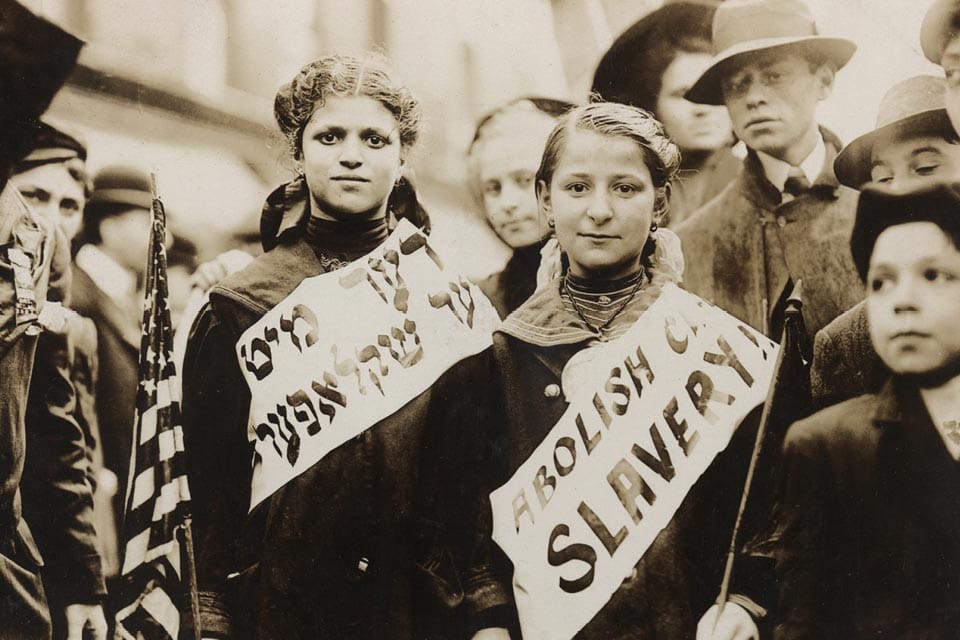
It is therefore of paramount importance, in Lenin’s estimation, not to eschew any given ethnicity, but rather to “take from each national culture only its democratic and socialist elements.” In turn, working class agitators must proclaim international unity while, in matters of outreach, ‘adapt’ themselves to all “local and national features.” (Lenin [1913] 1977a, 23-25)
Lenin, though ethnically Russian himself, engaged in constant diatribes against ‘Great Russian chauvinism’ and the unfair privileges accorded to dominant ethnic groups at the expense of oppressed minorities. For these are so many impediments to the construction of worker solidarity and world civilization. This ecumenical attitude became institutionalized following the Bolshevik Revolution of 1917. It was then that a policy of korenizatsiya (indigenization)was established to increase representation of non-Russian nationalities within their respective Soviet republics. This paralleled state support for regional and ethnic languages in the cultural sphere, including especially Yiddish (the majority language of Soviet Jews in the 1920s).
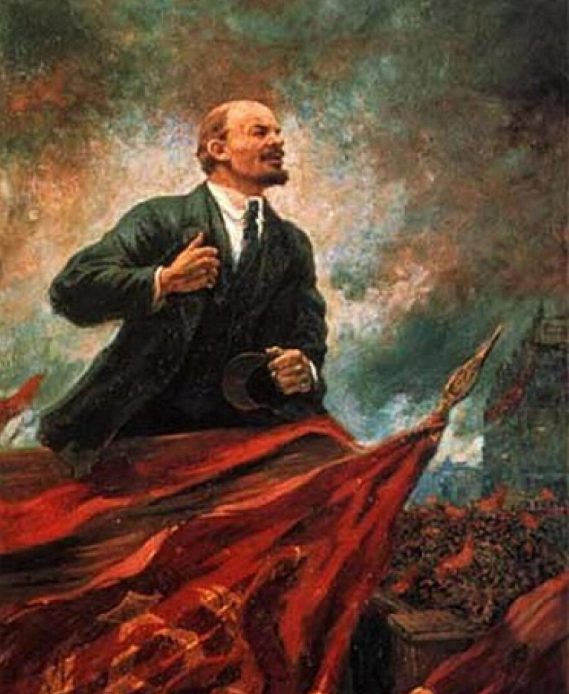
In fact, between 1917 and 1924 (the year of Lenin’s death), Yiddish was established as an official language within several regions. The Soviet state was the only country in the 1920s to have state-funded Yiddish-medium schools, publishing houses, newspapers, and even Yiddish theater, notably with the founding of The Moscow State Jewish Theater (‘GOSET’) in 1919 (Shneer 2004, 2). This embrace of ‘popular’ Jewish identity is hardly a departure from the Soviet system’s Marxian roots. To the contrary, it is in keeping with Marx and Engels’ explicit cosmopolitanism and anti-chauvinism.
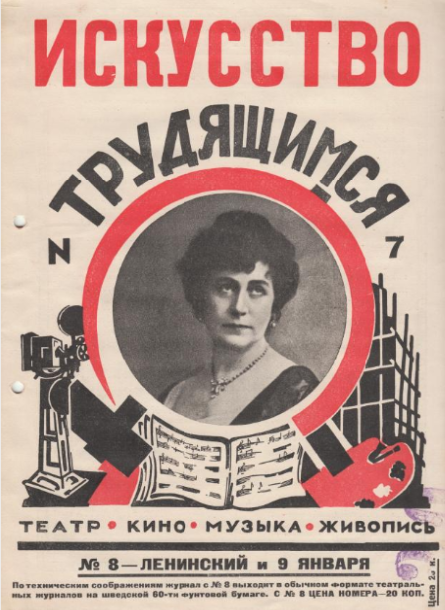
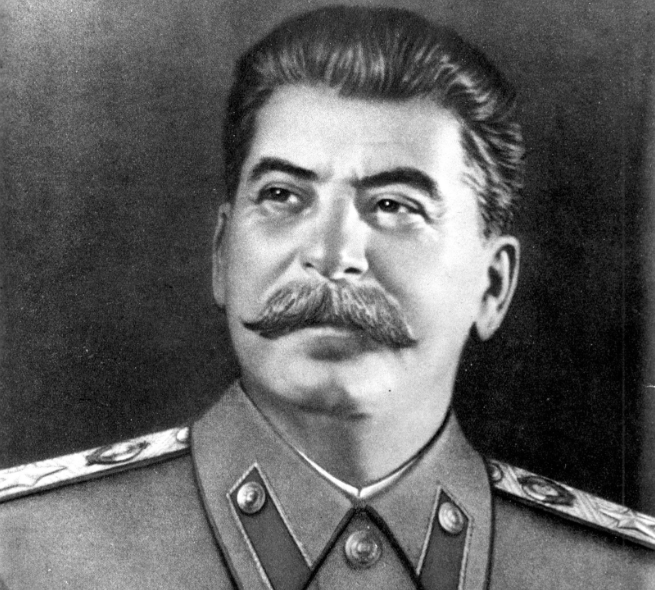
When critics charge the Soviet state with brutality toward its Jewish citizens, they are undoubtedly reacting to something all-too real. But they most likely have in mind such episodes as the Great Purge (1936-1938), The Doctor’s Plot (1951- 1953), and the Night of the Murdered Poets (1952). These grim events occurred under Stalin's rule, disproportionately (and sometimes explicitly) targeting Jewish citizens as supposedly disloyal to the state. However, they indicate, not a continuation of Marx or Lenin’s cosmopolitan attitude toward ‘popular’ Judaism, but rather its extreme antithesis and betrayal. [8]
Stalin’s campaign of terror against Jewish intellectuals as ‘rootless cosmopolitans’ was not only a poisonous bit of rhetoric; it was also deeply structural. Under the Stalinist regime, cultural Russification intensified from the 1930s, and the inclusive spirit of Lenin’s korenizatsiya policies were abandoned. Likewise, all state funding for Yiddish cultural institutions, schools, as well as publishing houses was definitively terminated by 1950 (Shneer 2004, 13). [9]
Nonetheless, the question posed in this section is not primarily an historical, but a philosophical one: Is human emancipation, on the Marxist model, compatible with the continued existence of ‘popular Judaism?’ To this, it appears that the answer is a definitive yes. At least this is true when we consider the theories (and actual policies) of Marx, Engels, Lenin, and Trotsky. Later Soviet antipathy toward the Jews, especially against Jewish intellectuals, is an historic fact beyond dispute. Nonetheless, it is a fact that cannot be attributed to Marxist thought itself.
IV. Political Judaism
Matters are more complicated when it comes to Jewish projects of national autonomy, what we may term ‘political Judaism.’ [10] Such movements were not especially prominent during Marx’s lifetime. It is thus necessary to distinguish between two simultaneous currents active during the late 19th century and early Soviet period: Zionism and Bundism. The former is of course better known today, given the founding of the state of Israel in 1948. Zionism is essentially territorial. Seeing in Europe little more than a death trap, it sought to establish an independent political state for the Jewish people, ultimately, in Mandatory Palestine. This was to be aided by the modern revival of Hebrew as the new, national language.
Bundism, by contrast, was explicitly non-territorial. The movement’s guiding principle of Doikayt (‘hereness’) demanded instead that Jews have the right to organize autonomously where they already lived (Crabapple 2025, 272- 276). As such, its lingua franca remained resolutely Yiddish. Both early Zionism and Bundism were heavily influenced by the labor movement and socialist theory. While both tendencies were largely secular, the Bund was typically more strident in its anti-clericalism – showing outright contempt for rabbis and yeshivah students whom they regarded as outside the productive economy (further evidence that ‘political Judaism’ and ‘pious Judaism’ need not coincide).
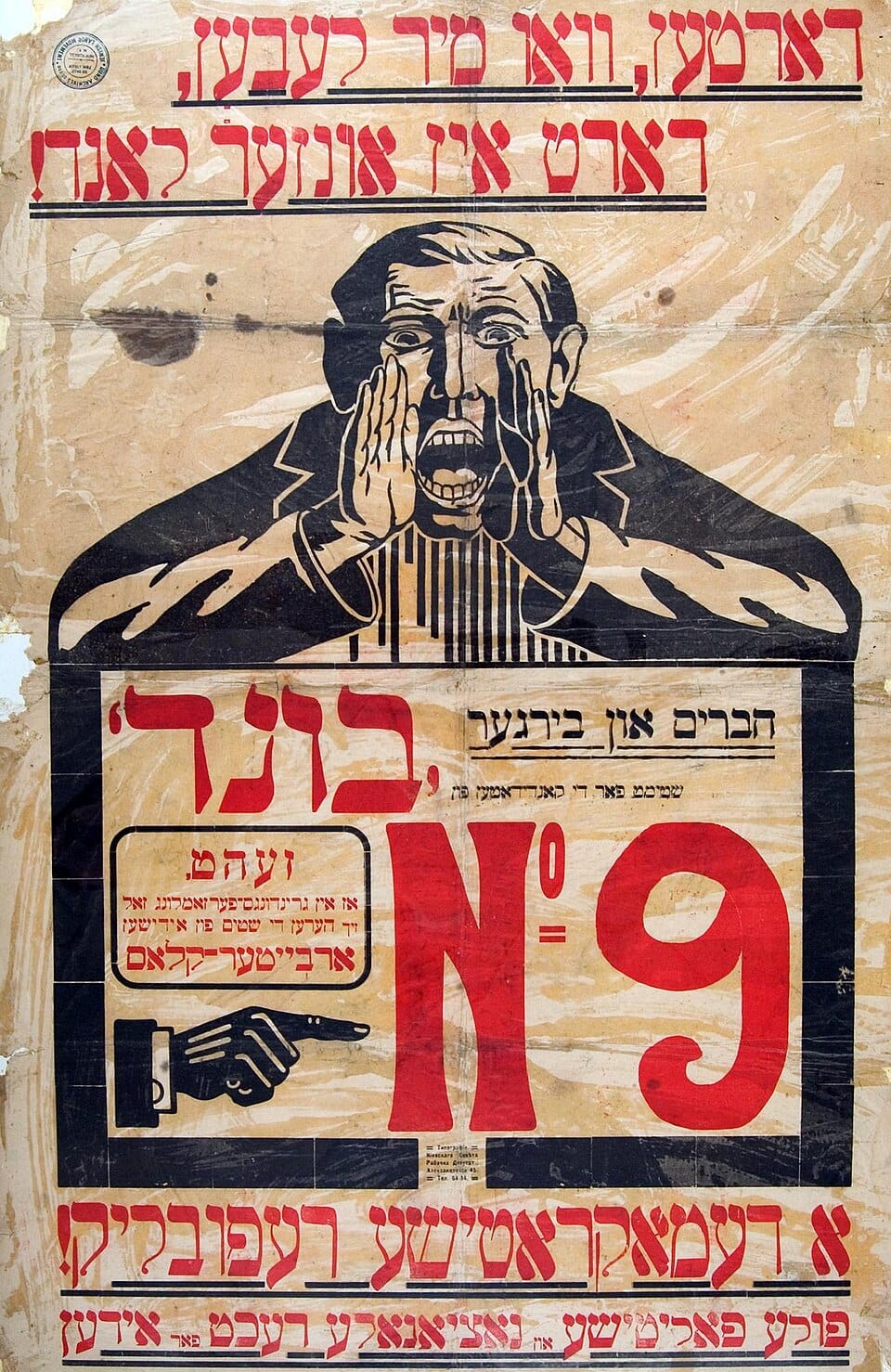
Despite their secular, socialist ideology and claimed allegiance to Marx himself, the Bundists were perennially at odds with Lenin’s Russian Social-Democratic Labour Party (RSDLP). They walked out of the second party congress in 1903 over demands for Jewish organizational autonomy. And while the Bund conditionally rejoined in 1906, it did not support the 1917 October revolution. Once more, however, the antipathy between Lenin and this strain of ‘political Judaism’ was not merely historical, but also philosophical in nature. Lenin affirmed the rights of national minorities (including the Jews) as inseparably linked with ‘the principle of complete equality.’ Yet he stopped short of the Bundist demand for so-called ‘cultural-national autonomy,’ that is, the exclusive right to organize Jewish workers in separate institutions (Lenin [1913] 1977a, 42). In this, Lenin was continuing Marx and Engels’ line, held since the 1840s: “The working men have no country.” Only “united action” can secure “the emancipation of the proletariat.” (Marx and Engels [1848] 2010, 502-503)
From their historical materialist perspective, Marx and Engels maintained that nationalist movements were (at best) a transitional phenomenon. Nationalism naturally accompanies the development of capitalism, since a common language is useful for contracts and trade beyond tiny localities. This, in turn, provokes the building up of a national culture, and often, the creation of a formal nation-state and institutions. Yet in its maturity, capitalism breaks down the distinctiveness of national cultures, and with it, those national states upon which they are founded. This was already evident in the mid-19th century:
National differences and antagonisms between peoples are daily more and more vanishing, owing to the development of the bourgeoisie, to freedom of commerce, to the world market, to uniformity in the mode of production and in the conditions of life corresponding thereto. The supremacy of the proletariat will cause them to vanish still faster. (Marx and Engels [1848] 2010, 502-503)
Lenin echoes this point almost exactly in his Critical Remarks on the National Question (1913):
Developing capitalism knows two historical tendencies in the national question. The first is the awakening of national life and national movements, the struggle against all national oppression, and the creation of national states. The second is the development and growing frequency of international intercourse in every form, the break-down of national barriers, the creation of the international unity of capital, of economic life in general, of politics, science, etc. ([1913] 1977a, 27- 28)
Now applied to 20th century Russia, Lenin argued in favor of cultural ‘assimilation’ between nationalities. This is not, however, the punitive assimilation of Bruno Bauer, where individuals are compelled to renounce their particular identities in order to gain full citizenship and equal rights. Lenin opposed such discrimination outright, just as he eschewed all special ‘privileges’ for the majority culture, i.e., the Great Russians with their “hidebound national conservatism.” ([1913] 1977a, 30)
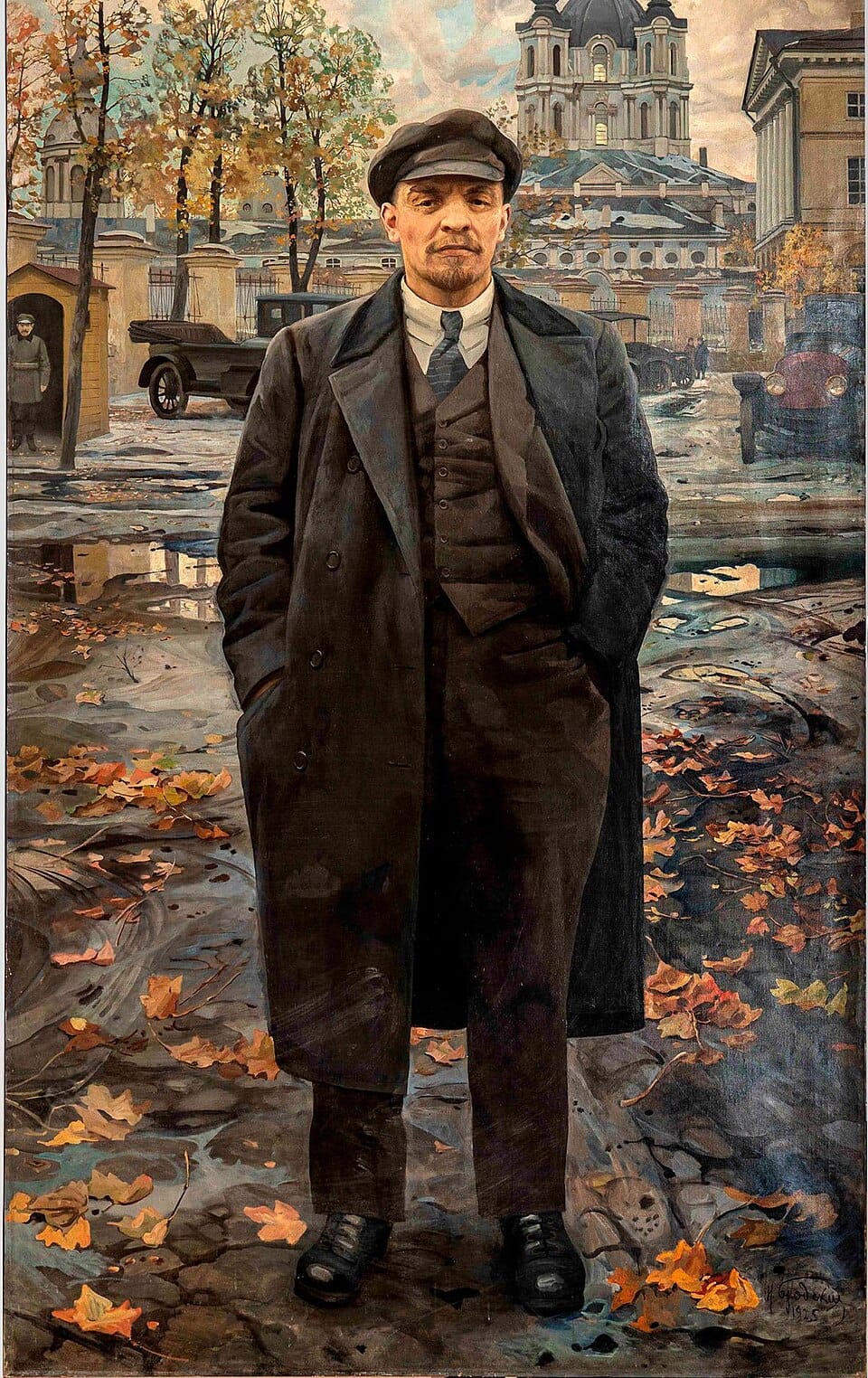
Nonetheless, he held that a softening of national differences, and the gradual fusing of peoples, is the natural result of increased trade and organization. This process is considered, by Lenin, to be “undoubtedly progressive.” ([1913] 1977a, 31) Its terminus is not the permanent nation-state, but rather, a new international order. Hence when the Bundists accused Lenin of being an ‘assimilationist,’ his response was two-fold: On the one hand, Lenin affirmed the equality of all nations and languages. Anyone who suppresses a minority’s national identity is no Marxist, nor even a democrat. On the other hand, if one demands the permanent separation of workers according to their background, they are simply a “nationalist philistine.” (Lenin [1913] 1977a, 27-28) Yet it is precisely this segregation of workers, based upon a supposed Jewish nationhood, that the Bund insisted upon.
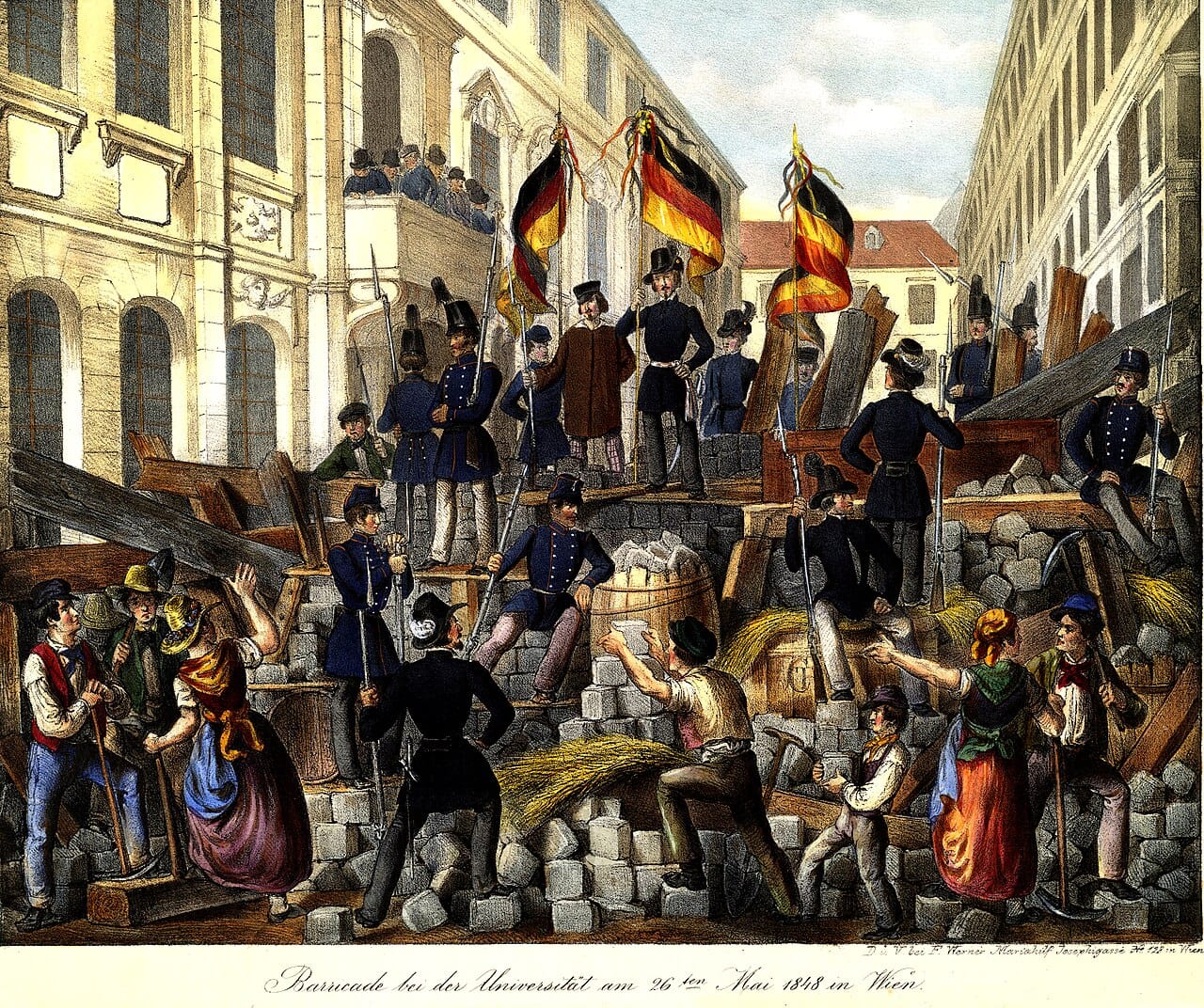
From an historical materialist perspective, whether to support a nationalist struggle is always a matter of context and timing. This was true of Marx and Engels who once counted certain Slavic peoples as ‘non-historic’ and their national projects as reactionary (including the Croats, Slovaks, and Czechs). Yet this was because, in the 1840s, these peoples were aligned with the Austrian monarchy as against emerging liberal-national movements. The Marxist stance changed in the 1860s when southern Slav independence movements were instead challenging Ottoman and Tsarist imperialism. Now many of these same groups were seen as progressive.
Much the same can be said of Marx and Engels’ shifting views on Irish, Polish, and German nationalism. None of these projects are considered good in themselves, but may be progressive or reactionary according to the times and geopolitical context. National movements are only worthy of support in case they advance the cause of freedom and modernization, hasten the breakup of old, semifeudal arrangements, and are productive of an international workers’ democracy.
This is why Lenin was, likewise, dismissive when it came to Jewish national aspirations in the 20th century (whether Bundist or Zionist). This was not due to a perceived Jewish backwardness, but rather the exact opposite of this: Lenin understood the Jews to be among the most advanced, cosmopolitan, and class conscious peoples of his day. This was at least true in the modern Western democracies and urban centers of Europe.
There the great world-progressive features of Jewish culture stand clearly revealed: its internationalism, its identification with the advanced movements of the epoch (the percentage of Jews in the democratic and proletarian movements is everywhere higher than the percentage of Jews among the population). (Lenin [1913] 1977a, 25-26)
Lenin saw Jewish citizens as already adapting to the national cultures of their host nations, speaking their languages, and taking on a militant, leadership role within the broader working class movements. In this context, it would be wholly reactionary to demand that they revert back to a ‘segregated caste,’ a condition still suffered by Jews in the backwaters of Galicia and Tsarist Russia. Only “reactionary philistines,” as Lenin called them, would aim to “turn back the wheel of history.” ([1913] 1977a, 29)
Whoever, directly or indirectly, puts forward the slogan of Jewish ‘national culture’ is (whatever his good intentions may be) an enemy of the proletariat, a supporter of all that is outmoded and connected with caste among the Jewish people; he is an accomplice of the rabbis and the bourgeoisie. On the other hand, those Jewish Marxists who mingle with the Russian, Lithuanian, Ukrainian and other workers in international Marxist organisations, and make their contribution (both in Russian and in Yiddish) towards creating the international culture of the working-class movement – those Jews, despite the separatism of the Bund, uphold the best traditions of Jewry by fighting the slogan of ‘national culture.’ ( [1913] 1977a, 26)
Lenin was skeptical that Jewish nationhood in fact existed in the modern world. Following Kautsky, he denied that a Jewish nation could persist without a defined territory (as the Bund claimed), and noted that world Jewry did not share a common language or unified literary tradition across the vast, multi-continent diaspora. He saw the Bund’s demands for separate Jewish schools as an atavism, hearkening back to the Medieval ‘ghetto,’ and not altogether dissimilar from the racial segregation of schools in the US under Jim Crow laws – albeit with more benign intentions (Lenin [1913]1977b).
Neither could Lenin support Zionism, the creation of a state dedicated to the exclusive national self-determination of the Jews alone. His universalist maxim was that the proletariat can only support ‘the negative demand for recognition’ and ‘self-determination’ of a people as against a dominant power. But this can never be “at the expense of another nation.” (Lenin [1914] 1977e, 409) This speaks to the very provisional stance of Marxism toward national liberation movements. For, again, these struggles are never embraced as a good in themselves. They are affirmed as progressive only insofar as they fight for ‘abstract’ equality and an end to special privileges. In this, says Lenin, the proletariat “are always, in every case, and more strongly than anyone else, in favour” (Lenin [1914] 1977e, 411-12) of such movements. Yet once the national movement attains real power, once it establishes its own dominant, bourgeois culture, everything changes.
Just as soon as the oppressed nation “stands for its own bourgeois nationalism,” continues Lenin, “we stand against.” ([1914] 1977e, 411-12) In other words, from the bourgeois point of view, the Marxist is a disappointing, impractical, and entirely undependable nationalist. They are ever-ready to switch sides, and defend the new, persecuted minority. This is no less the case when it comes to Jewish nationalism. Only, as we have seen, ‘political Judaism’ is already regarded by Lenin as an outdated concept by the early 20th century. The Jews, having passed through the twin crucibles of diaspora and capitalist exploitation, are already the preeminent, internationalist people. Any concessions to nationalism are, at this historical juncture, a regrettable step backwards.
Conclusion
It should now be clear that there is no simple answer to the question: “Can Judaism survive human emancipation?” At least on the Marxist model, it depends entirely on what one intends by the word ‘Judaism.’ In Marx’s early polemics against Bauer, ‘practical Judaism’ did not refer to the Jewish people at all (at least not more so than to any other people). Instead, ‘practical Judaism’ was a stand-in for profiteering, what Marx would later identify as ‘capitalism.’ As such, it certainly cannot survive full human emancipation – though, again, this is a purely semantic point rather than an ethnic or religious one.
‘Pious Judaism,’ meanwhile, cannot survive full human emancipation insofar as it promotes a supernatural, and thus alienated, view of the world. All such piety outsources human virtue and agency onto an imagined, otherworldly Being. Marx (as against Bauer) never advocated depriving the Jews of their supernatural beliefs as a condition for equal rights. The same can be said for Lenin, Trotsky, and Luxemburg. These figures nonetheless expected religion to wither away once a just society was constructed, abolishing the kinds of scarcity, fear, and insecurity that gave rise to pious faith in the first place.
By contrast, neither Marx, Engels, nor the leading 20th century Marxists held any antipathy toward ‘popular Judaism’ broadly construed. Engels praised those of Jewish descent as being overrepresented among the leadership of working-class movements. Lenin’s government actively supported Yiddish cultural institutions – from publishing houses and schools to secular, state-sponsored Jewish theater. In this sense, the charge of Marxist anti-Semitism is entirely misplaced. Popular Judaism is entirely compatible with Marxism.
Finally, the question of ‘political Judaism’ is a complex one, and hinges upon historical context. Leading Marxists did not moralize against Jewish nationalism as inherently ‘wicked.’ But they did see in both Zionism and the Bundist movement something retrograde – a retreat from the already advanced, cosmopolitan character of the Jewish working class and intelligentsia. Likewise, these Marxists could not support a Jewish state that structurally prioritized one particular identity over all others. In any case, for the authentic Marxist, no form of nationalism can ultimately survive full human emancipation. The artificial separation of peoples by nationality is only a passing, often violent phase toward the construction of a genuinely international society.
FOOTNOTES
[1] It is unclear whether Marx was truly a ‘socialist’ in 1843. His thought certainly tended in that direction, and he would explicitly outline his embrace of communism the following year in his Economic and Philosophic Manuscripts. The third manuscript, in particular, invokes many of the same themes in Zur Judenfrage, identifying communism as the “positive transcendence of private property,” the “real appropriation of the human essence,” and thus, the “complete return of man to himself as a social (i.e., human) being.” (Marx [1844] 2010b, 296)
[2] None of this is to preclude that an individual may subscribe to multiple senses of Jewish identity simultaneously. There are, for example, religious Jews who also find meaning in secular Jewish culture, literature, and theatre. The point is only that these Jewish identities are distinct in principle – evidenced by the fact that they do not always and necessarily coincide in the same individual. There are, for example, militantly atheist Jews who grew up in Yiddish speaking households, religious Jews who reject political Zionism (on religious grounds), and political Zionists who are stridently secular in their outlook.
[3] There are exceptions to this rule. This includes Eugen Dühring, a racist anti-Semite and quasi-socialist, whom Engels famously criticized in his 1877 work, Anti-Dühring (Engels [1878] 2010a).
[4] Marx could not easily have anticipated later Jewish traditions that are expressly non-supernatural and reject theism. These include certain currents of Humanistic Judaism, the Reconstructionist movement, and Jewish pantheism, notably inspired by Baruch Spinoza. For our purposes, such traditions would not count as ‘pious,’ even though they may, in a sense, be ‘spiritual.’ For while these may involve communal gathering, contemplation, and a kind of philosophical therapy, they do not emphasize faithful obedience to any transcendent Being. As such, they do not involve the same kind of ‘alienation’ that Marx, in 1843, saw in mainstream religious belief, even if such contemporary groups remain religious in form. (Engels [1878] 2010a).
[5] While Bauer occasionally praised Spinoza’s rigor, he ultimately complained that the philosopher sacrificed subjective creativity, freedom, and ‘self-consciousness’ to a merely objective Nature (i.e., ‘Substance.’) In this way, Bauer rejects the type of objective materialism that is also the hallmark of Marxist thought (Barbour 2023).
[6] Basque nationalism, for instance, has been expressed in both reactionary and revolutionary Marxist terms, and has been marked by internal ideological dissension (and often open hostility) from the late 19th century, through the period of the Spanish Civil War, and up to the present day.
[7] This economic analysis of anti-Semitism may have been true enough in the 19th century. In contemporary times, a more accurate diagnosis may come from Trotsky who associates anti- Semitism, instead, with a ‘decaying capitalism’ in advanced countries such as Germany in the 20th century (Trotsky 1945).
[8] For an excellent treatment of Stalin's counterrevolutionary impact, as well as his contemporary reception among Stalinists and anti-communists alike, see Douglas Greene's Stalinism and the Dialectics of Saturn: Anticommunism, Marxism, and the Fate of the Soviet Union (Lexington Books, 2023). In addition, special thanks is due to Harrison Fluss who graciously read an early draft of this essay, and provided insight and critical comments, especially with regards to Judaism as a "popular" and "political" formation.
[9] This is a tragic historical irony as Stalin was first appointed by Lenin as the People’s Commissar for Nationalities in 1917, tasked with integration of non-ethnic Russians into the new socialist state. His anti-cosmopolitan (and anti-Semitic) stance became clear, however, only with the death of Lenin and his subsequent political rivalry with Trotsky’s Left Opposition.
[10] NB: This category does not encompass those Jewish individuals who merely happen to be political, or who express their political views through Jewish concepts, vocabulary, or themes. Here, ‘political Judaism’ specifically refers to political formations whose principal aim is Jewish sovereignty or autonomy. Hence Zionism and Bundism are exemplary in this regard.
References
Altshuler, Moyshe. 2025. Haggadah for Believers and Heretics. Translated by Noah Leininger. Iskra Books.
Barbour, Charles. 2023. “The Political Theology and Polemical Tactics of Bruno Bauer.” The European Legacy 29 (2): 14-65.
Bauer, Bruno. [1843] 1999. “The Jewish Problem (1843).” In The Young Hegelians: An Anthology, edited by Lawrence S. Stepelevich. Humanity Books.
Birnbaum, Pierre. 2008. Geography of Hope: Exile, the Enlightenment, Disassimilation. Stanford University Press.
Couture, Jean-Pierre. n.d. “The French Debate on Zur Judenfrage: From an Anachronistic Trial to the Crisis of Secularism.” Historical Materialism. https://www.historicalmaterialism.org/article_tag/bruno-bauer/#_edn70.
Crabapple, Molly. 2025. “Here Where We Live Is Our Country: The Story of the Jewish Labor Bund.” Critical Research on Religion 13 (2): 272-78.
Diamant, Jeff. 2021. Jews in U.S. Are Far Less Religious than Christians and Americans Overall, at Least by Traditional Measures. Pew Research Center. https://www.pewresearch.org/short-reads/2021/05/13/jews-in-u-s-are-far-less-religious-than-christians-and-americans-overall-at-least-by-traditional-measures/.
Draper, Hal. 1977. Karl Marx’s Theory of Revolution, Vol. 1: State and Bureaucracy. Monthly Review.
Engels, Frederick. [1878] 2010a. “Herr Eugen Duhring’s Revolution in Science.” In Marx & Engels Collected Works, Vol. 25, Digital Edition, translated by Emile Burns. Lawrence and Wishart.
———. [1890] 2010b. “On Anti-Semitism.” In Marx & Engels Collected Works, Vol. 27, Digital Edition, translated by John Peet. Lawrence and Wishart.
———. [1849] 2010c. “The Magyar Struggle.” In Marx & Engels Collected Works, Vol. 8, Digital Edition, translated by Clemens Dutt. Lawrence and Wishart.
Hess, Moses. 2019. Rome and Jerusalem: A Study in Jewish Nationalism. Anodos Books.
Lenin, Vladimir Ilyich. [1913] 1977a. “Critical Remarks on the National Question.” In Lenin: Collected Works, Vol. 20, edited by Julius Katzer, translated by Bernard Isaacs and Joe Fineberg. Progress Publishers.
———. [1913] 1977b. “‘Cultural-National’ Autonomy.” In Lenin: Collected Works, Vol. 19, edited by Robert Daglish, translated by George Hanna. Progress Publishers.
———. [1909] 1977c. “The Attitude of the Workers’ Party to Religion.” In Lenin: Collected Works, Vol. 15, edited by Andrew Rothstein and Bernard Isaacs. Progress Publishers.
———. [1903] 1977d. “The Position of the Bund in the Party.” In Lenin: Collected Works, Vol. 7, edited by Clemens Dutt, translated by Abraham Fineberg and Naomi Jochel. Progress Publishers.
———. [1914] 1977e. “The Right of Nations to Self-Determination.” In Lenin: Collected Works, Vol. 20, edited by Julius Katzer, translated by Bernard Isaacs and Joe Fineberg. Progress Publishers.
———. [1905] 1978. “Socialism and Religion.” In Lenin: Collected Works, Vol. 10, edited by Andrew Rothstein. Progress Publishers.
Luxemburg, Rosa. 1903. “An Anti-Clerical Policy of Socialism.” The Social Democrat, August. https://www.marxists.org/archive/luxemburg/1903/01/01.htm.
———. 1905. “Socialism and The Churches.” Socialist Review. https://www.marxists.org/archive/luxemburg/1905/misc/socialism-churches.htm.
Maccoby, Hyam. 2006. Antisemitism and Modernity: Innovation and Continuity. Routledge.
Mariuma, Yarden. 2014. “Taqiyya as Polemic, Law and Knowledge.” The Muslim World 104 (April): 89-106.
Marx, Karl. [1843] 1992. “On the Jewish Question.” In Early Writings, translated by Rodney Livingstone and Gregor Benton. Penguin Books.
———. [1844]2010a. “Contribution to the Critique of Hegel’s Philosophy of Law.” In Marx & Engels Collected Works, Vol. 3, Digital Edition. Lawrence and Wishart.
———. [1844] 2010b. “Economic and Philosophic Manuscripts of 1844.” In Marx & Engels Collected Works, Vol. 3, Digital Edition, translated by Martin Milligan and Dirk J. Struik. Lawrence and Wishart.
———. [1843] 2010c. “Letter to Arnold Ruge, March 13, 1843.” In Marx & Engels Collected Works, Vol. 1, Digital Edition, translated by Clemens Dutt. Lawrence and Wishart.
———. [1842] 2010d. “Letter to Arnold Ruge, November 30, 1842.” In Marx & Engels Collected Works, Vol. 1, Digital Edition, translated by Clemens Dutt. Lawrence and Wishart.
———. [1843] 2010e. “Letter to Arnold Ruge, September 1843.” In Marx & Engels Collected Works, Vol. 3, Digital Edition, translated by Clemens Dutt. Lawrence and Wishart.
———. [1866] 2010f. “Letter to Engels, August 7, 1866.” In Marx & Engels Collected Works, Vol. 42, Digital Edition, translated by Christopher Upward. Lawrence and Wishart.
———. [1845] 2010g. “Theses on Feuerbach.” In Marx & Engels Collected Works, Vol. 5, Digital Edition. Lawrence and Wishart.
Marx, Karl, and Frederick Engels. [1848] 2010. “Manifesto of the Communist Party.” In Marx & Engels Collected Works, Vol. 6, Digital Edition. Lawrence and Wishart.
Misrahi, Robert. 1972. Marx et La Question Juive. Gallimard.
Schumer, Chuck, and Josh Molofsky. 2025. Antisemitism in America: A Warning. Grand Central.
Shneer, David. 2004. Yiddish and the Creation of Soviet Culture: 1918-1930. Cambridge University Press.
Trotsky, Leon. 1922. “The Position of the Republic and the Tasks of Young Workers: Report to the 5th All-Russian Congress of the Russian Communist League of Youth,” translated by R. Chappel. https://www.marxists.org/archive/trotsky/1922/youth/youth.htm.
———. 1945. “On the Jewish Problem.” Leon Trotsky Internet Archive. https://www.marxists.org/archive/trotsky/1940/xx/jewish.htm.
———. [1906] 2010. “Results and Prospects.” In The Permanent Revolution & Results and Prospects, translated by John G. Wright and Brian Pearce. Red Letter Press.