The Godfather, the Son, and World Spirit
Nothing stays the same
Cite this article
Landon Frim, “The Godfather, the Son, and World Spirit,” in The Godfather and Philosophy, ed. Joshua Heter and Richard Greene (Carus Books, 2023).
This essay was originally published in Better Call Saul and Philosophy (Carus Books, 2022). [Read the original PDF]
"Your father, his thinking is old-fashioned. You must understand why I had to do that. Now let's work through where we go from here."
-Virgil Sollozzo on the attempted assassination of Vito Corleone, The Godfather Part I
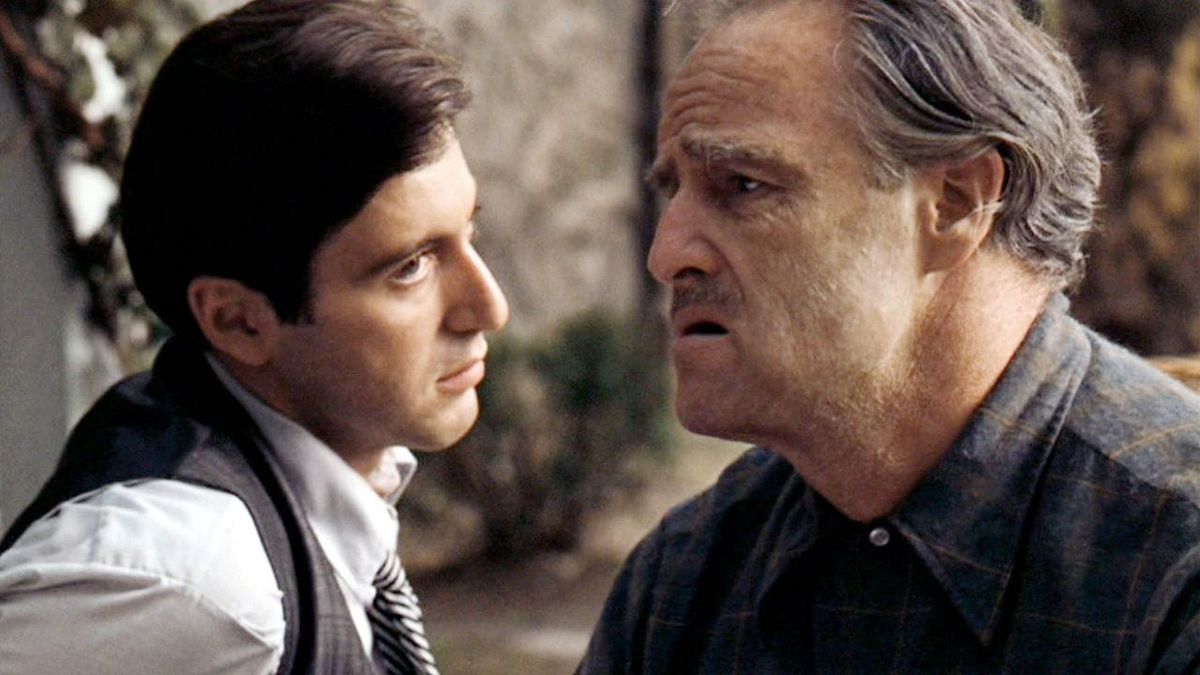
Part of what makes The Godfather such a great American drama is that it takes change so seriously. The story slogs a bloody path through the vendettas of Old World Sicily, to the petty rackets of 1900s Hell's Kitchen, to the million dollar deals of mid-century Las Vegas, Havana, and beyond. Its characters aren't static pieces of furniture on a stage, but are compelling precisely because they evolve along with their shifting environments. Throughout the series, one singular truth asserts itself: change is coming.
In this way, The Godfather movies are profoundly "dialectical." They recognize that nothing stands still. And even the most powerfully drawn characters can't freely dictate events by decree. Instead, history moves by way of negation – the contradictions of one epoch are what gives birth to the next. And within this process, new characters and personalities are called into existence.
The Mafia of the Old World couldn't last forever. Its ethos of blood feuds and honor killings, of "never going against the family," and paying tribute to the local chieftain, fell apart. This system crumbled under the weight of its own contradictions. No matter how feared or respected the local Mafia don may have been, they ultimately couldn't keep pace with modern industry and trade. Personal ties of respect and reciprocity, of honor, loyalty, and "protection," just aren't compatible with a maximum return on investment.
But the Mafia didn't disappear; It merely evolved. Outmoded, quasi-feudal traditions were finally displaced by a New World focus on profits and the bottom line. Here, the mantra is always, "It's not personal ... It's strictly business." And so the warm, personable rule of the original godfather, Don Vito Corleone, passes to the cool, more bureaucratic management of his son, Michael.
We see in The Godfather Part II, a Mafia which mimics the patterns of American big business. The Corleone's pivot from direct extortion and local racketeering to global investment, especially in the capitalist playground of pre-revolutionary Cuba. Alongside representatives of mining, fruit, and telephone firms, the Corleones plot to carve up the wealth of the tropical island nation. All the while, they are aided in their plunder by the corrupt and vicious regime of Fulgencio Batista. In the words of Corleone associate Hyman Roth, "what . .. we have now is what we have always needed, real partnership with the government."
But New World capitalism is shot through with contradictions of its own. Left out of this cozy relationship, between big business and corrupt government, is the mass of exploited working people. In a movie series which focuses on back-room deals, pinstripe suits, and high-stakes intrigue, 'the people' are rarely represented as a distinct force of their own. This abruptly changes in the most intense scenes of Part II when revolutionary crowds storm Havana. Businessmen, visiting US senators, and assorted mafiosi are forced to rapidly abandon the country along with much of their wealth. Here, dialectics – the constant march of "world spirit"-takes another decisive step forward, this time toward socialist revolution.
Why does it come to this? What is the motor of world history which transforms old, feudal-style relations into modern capitalism, and then brings market capitalism to the point of crisis and collapse? Consciously or not, The Godfather trilogy unpacks these transitions in unflinching, often brutal detail. But to truly understand this evolution of values, politics, and economy, we have to start at the beginning.
The Old World
Before Michael and Vito, was Don Francesco "Ciccio", a quintessential Old-World Mafia boss. The films introduce Ciccio in 1901, flanked by armed guards in his villa compound. He rules over the small Sicilian town of Corleone in the manner of a medieval lord. Ciccio demands that the villagers pay him personal fealty as well as financial tribute for "protection."
But one man, Antonio Andolini, refuses to pay. In response, the don has Andolini killed, prompting a spiral of violence that would lead to the deaths of Andolini's wife and eldest son. Only his youngest son, Vito, manages to escape this vicious cycle of vendetta by boarding a ship to the New World. At Ellis Island, immigration officials incorrectly transcribe the boy's name as Vito Corleone, after his hometown. Thus, the eponymous "godfather" character is born.
But Ciccio, himself, is an interesting case. It would be easy to write off his actions as the result of a spiteful and malicious nature. Alternatively, one might be tempted to exoticize the concept of "vendetta" as a peculiarly Sicilian practice. Such readings would be a mistake. For they ignore the deep, structural reasons behind Ciccio's decisions.
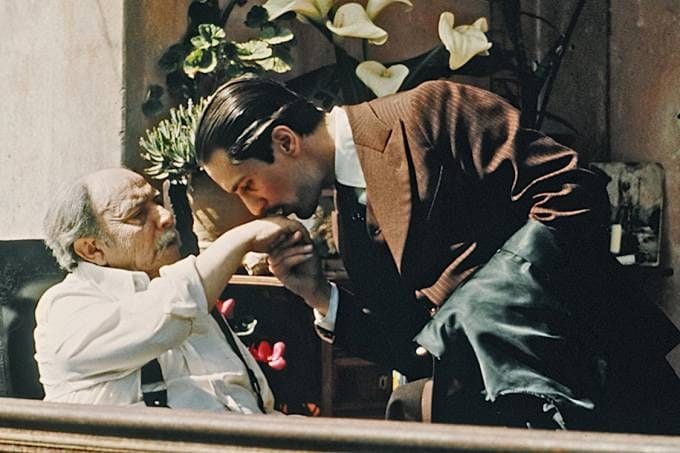
Don Ciccio's status is only held in place by violence and the implicit threat of violence. He is a parasite, producing nothing for the village of Corleone, but only skimming wealth from the labor of others. In this way, Ciccio really is in the mold of a feudal lord; they too were social parasites. The medieval aristocrat planted no crops and baked no bread, neither did they weave or forge, or build. What the old nobility did, in the name of the king or queen, was to offer "protection"' in exchange for tribute.
And it didn't matter if there was an actual threat which required this service of protection. What these social relations really amount to is direct and ruthless extortion. Those with the hired thugs (whether they carry swords and pikes, or modern rifles) have the ability to extract payment from everyone else.
Constant acts of violence are highly disruptive and generally bad for business. So the clever lord (or don) will rely more on 'soft power' to bolster their position. Ostentatious shows of magnanimity or noblesse-oblige (such as charity and public festivals) are to be met with declarations of loyalty from the common folk. That's how you know everyone's on the same page. In this premodern arrangement, where there is no modern state, no uniform laws, and no independent courts or contracts, reputation is everything. This holds true even in turn-of-the-century Sicily, where modern capitalism and the unified Italian state hadn't yet come into their own. In the words of the Italian Marxist Antonio Gramsci, "The South of Italy can be defined as a great social disintegration" (p. 178). Informal displays of respect are what hold everything together.
Likewise, signs of disrespect have to be swiftly put down. For these can be deadly. Once people stop praising the ruler's name, the ruler's utterly useless and parasitic nature is laid bare. And once the emperor (or lord, or don) is seen to 'have no clothes', it won't be long until they have no head either! That's why Don Ciccio had to make an example of Antonio Andolini when he proudly refused to pay tribute. One small crack in the veneer of the don's legitimacy could lead to a flood of nonpayment and popular rebellion. No matter how many armed thugs are at the boss's disposal, they can't take on the whole population at once.
In this context, the notion of "vendetta," or blood feud, makes perfect sense. Absent a functional, modern state with uniform laws, reputation is critical. 'Respect' is the real currency backing up everything else. So, a serious insult has to be avenged at the risk of losing face before the community. And it doesn't take long for one act of vengeance to elicit another in response, sometimes lasting for generations. Consequently, blood feuds, far from being a Sicilian peculiarity, were commonplace throughout pre-modern civilization. This was especially true among the nobility-from the 'robber barons' of the Holy Roman Empire to the Samurai class of feudal Japan. In turn-of-the-century Sicily, where capitalism and the modern, unified state were still weak, the local mafia boss occupied a similar role.
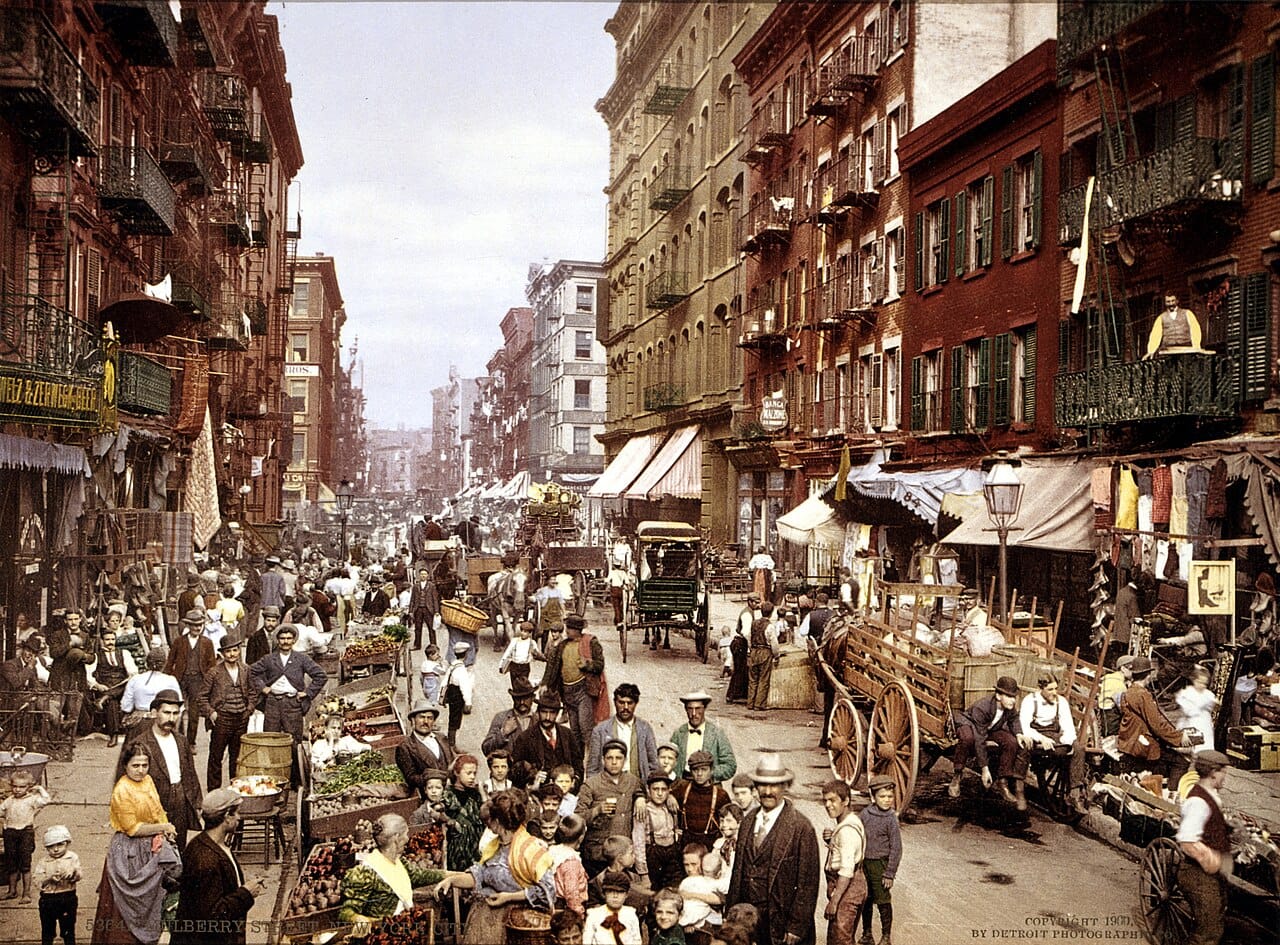
The Godfather movies show how these pre-modern relations are imported to the New World. When the young Vito Corleone lands in America, he takes up residence in the working class, immigrant neighborhood of Hell's Kitchen. There, he encounters yet another Old World-style mafioso, one Don Fanucci (The Godfather Part II) . When Karl Marx insisted that history repeats itself, "first as tragedy ... second as farce," he may as well have been referring to Fanucci.
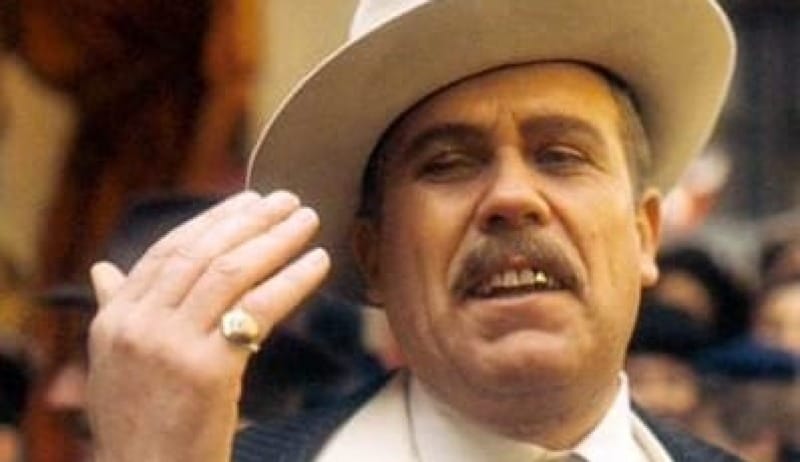
This don has all the markers of Old-World feudalism, only in exaggerated, ridiculous form. He struts around the neighborhood like a true aristocrat, sporting an ostentatious white hat, suit, and long coat. Fanucci sponsors the "festa" honoring Saint Rocco, and waves on cheers and praise from the assembled crowd, accepting tributes of food and jewelry as he goes by. Finally, he makes a grand display of pinning money on the statue of Saint Rocco to yet more popular adulation.
All the while, it's clear that Fanucci's power is outmoded and brittle. He extorts the residents of Hell's Kitchen, but doesn't have the muscle to back up all his threats. When trying to take his cut from the young Vito Corleone, Fanucci threatens to get the police involved if Vito and his crew don't pay up. This move would be unthinkable for an authentic Old World don. And later it's discovered that two bookies from the neighborhood refused to pay Fanucci altogether. Exposed for the jumped-up thug that he is, Vito arrives at the obvious question: "He's got guns. We've got guns. Why should we give him the money we sweated for?" Soon thereafter, Vito assassinates Fanucci, ultimately taking his place as the local don.
The upstart boss is certainly better at playing the role. Vito tries to be useful in mediating neighborhood conflicts and handing out charity to those less fortunate (at one point saving a widow from eviction by paying a portion of her rent). And he extends his "protection" for general declarations of loyalty, and the promise to repay these favors should the time ever come. This is an improvement over Don Fanucci's obnoxious, heavy-handed shakedowns of street vendors, store clerks, and theater owners.
But a beloved, neighborhood parasite is a parasite nonetheless. The operative question is this: How does the young Vito Corleone make his money? How does he finance his lifestyle and his ability to dole out charity to the poor denizens of Hell's Kitchen? The answer is undeniable. Vito's money is siphoned from the pockets of his neighbors. Only, this brute, economic fact is obscured by Old-World displays of personal reciprocity, "friendship," and honor.
This veil of honor is crucial for maintaining the system. It is why a mature, well established Vito refuses to take cash payment from Amerigo Bonasera when he seeks revenge on those who brutalized his daughter. Like a true aristocrat, Vito doesn't want one-time customers, but lifelong, indentured supplicants. Hence his famous response to a reluctant Bonasera:
Some day, and that day may never come, I'll call upon you to do a service for me.
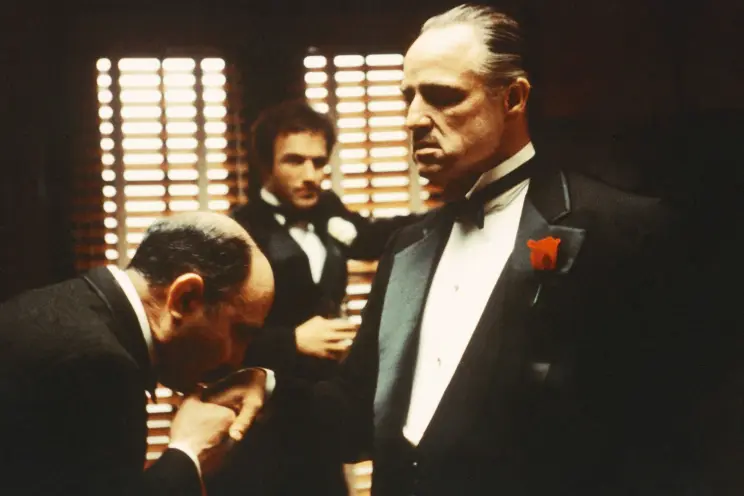
Still, this Old World manner of doing business – based on direct, personal relationships – isn't sustainable in the long-term. It can't keep pace with modern mass industry and economies of scale. And behind this ideology of friendship, honor, and respect, is the constant need for violence to back it all up. Vito Corleone's income is the result of "extra-economic" coercion. In other words, it's not a return on investment within a business; Rather, it's a physical demand for payment outside of commercial activity. Put simply, it's a shakedown.
So anyone (any future Bonaseras) who can escape this kind of direct, personal extortion will surely do so. They will find other ways to satisfy their needs for justice and security. And "escape" is far easier in America, as compared to Old World Sicily. Here, developed markets and the rule of law increasingly spell the end for the old way of doing things. The Mafia will have to evolve or die.
The New World
Vito, himself, can see the writing on the wall. He laments to his youngest son, Michael: "I never wanted this for you . . . I thought that ... when it was your time, that you would be the one to hold the strings . . . Senator Corleone, Governor Corleone." Vito knows that the future is in legitimate business and political control, not blood feuds and dodging police.
And this shift in thinking is particularly evident in the character of Tom Hagen, a non-Sicilian of German-Irish extraction whom Vito adopted as a small boy. As an adult, Tom earns a law degree and was elevated to the position of consigliere (advisor) to the Corleone family. It is this character, hand-picked by Vito, who is the constant voice of cool, deliberate reason-a foil to Michael's hotheaded, older brother, Sonny.
But old beliefs die hard. In the closing scene of Part II, set in 1941, a young Michael announces his plans to join the marines following the Japanese attack on Pearl Harbor. Sonny (a living relic of "Old-World" values) is incensed at the prospect. He has nothing but contempt for those enlisting:
Sonny: They're saps because they risk their lives for strangers.
Michael: They risk their lives for their country.
Sonny: Your country ain't your blood. You remember that.
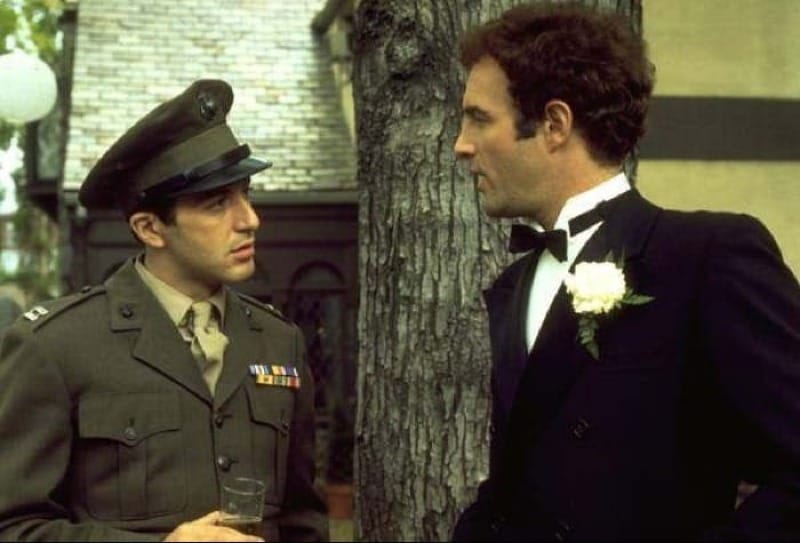
But Michael will do things his own way, signaling a shift to the New-World values of profits and patriotism over blood and clan. He fights in the war, returns a hero, and ultimately marries his long-time girlfriend, Kay Adams (a conspicuously non Sicilian outsider). The constant theme of their conversations is his promise to make the family business fully "legitimate within five years."
Yet even before this conscious shift, the "family business" has been gradually transforming. Instead of avoiding the official state, New World mafiosi co-opt, bribe, and corrupt the state by paying off cops, journalists, judges, and politicians (Captain McCluskey and Senator Geary being the prime examples of this).
Vito Corleone is said to carry politicians in his pocket, "like so many nickels and dimes." And instead of just ripping off businesses, the Corleones open up legitimate firms, like the Genco Olive Oil Company, as fronts for their illegal ventures. Even murder is spoken about in capitalist, cost-benefit terms, like when the villainous Sollozzo calmly asserts, "I'm a businessman; blood is a big expense."
Eventually, legitimate businesses are no longer mere "fronts," but instead becom the main sources of revenue. The whole model gets inverted: Crime becomes a mere adjunct to legitimate trade. This is especially true in the move out to Nevada, where the Corleones invest in Las Vegas hotels and casinos. Yes, there's still killing, blackmail, and extortion. But these acts are in the service of legal businesses and contracts not the other way around. So, casino magnate Moe Green is shot through the eye in a Vegas massage parlor. But why? It's so the Corleones can take control of his legal casino outfit.
The most dramatic example of this shift toward capitalist legitimacy comes during the communion party for Michael's son in Part II, held at his sprawling Lake Tahoe estate. One of the guests, Frank Pentangeli, makes a drunken scene. He is a high-ranking caporegime, left in charge of the family's affairs back in New York, ever since Michael and the major players moved out West. But now, the illegal rackets of the old neighborhood are an increasingly small (and embarrassing) revenue stream compared to their main interests in gaming and hospitality.
Pentangeli, who staggers around the fashionable party and drinks from a garden hose, can't even get an audience with Michael. He loudly complains, "What do I gotta do? Do I have to get a letter of introduction to get a sit-down? ... He's got me waiting in the lobby!"
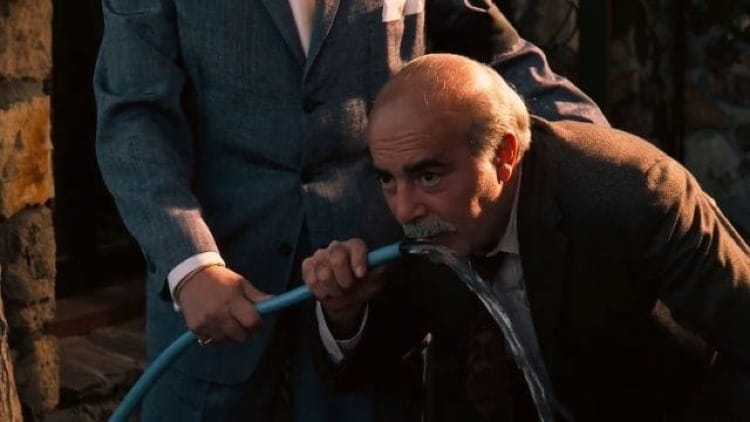
This dynamic, of the Old-World being displaced (and disrespected) by the New, is punctuated by Pentangeli's attempt to get the party band to play some traditional tarantella music; Instead, they mock him with an upbeat version of "Pop Goes the Weasel." This also foreshadows Frank's betrayal of Michael before Senate hearings on organized crime, that is, his becoming a "weasel."
Finally, in Part III, a now elderly Michael completes the transition entirely. He pours money into Immobiliare, a European real-estate firm. To get a controlling stake, Michael plans to buy out the Vatican's interest (worth $600 million). But to make this deal, he has to convince Vatican officials that he is no longer invested in the gambling business. "We've sold the casinos, all businesses having to do with gambling. We have no interests or investment in anything illegitimate." Now, even being adjacent to criminal activity is unacceptable.
If the Mafi don was once in the mold of a petty, feudal lord, he is now a calculating CEO. As Michael categorically puts it in the same Vatican conversation, "Friendship and money; Oil and water." In other words, the two don't mix. What matters is a return on investment, not pledges of loyalty, friendship, and honor. Michael perfectly embodies this modern, bourgeois ideal. In the words of the Communist Manifesto:
The bourgeoisie, wherever it has got the upper hand, has put an end
to all feudal, patriarchal, idyllic relations. It has pitilessly torn asunder
the motley feudal ties that bound man to his "natural superiors," and
has left remaining no other nexus between man and man than naked
self-interest, than callous "cash payment."
- The Communist Manifesto
The days of long coats, hats, and strutting through the public festa are over, now replaced with nondescript black suits and boardroom deals. Here, the movement is a characteristically dialectical one: Michael becomes so good-so efficient-at being "Godfather" that he transforms into something else entirely.
This change in values and style only mirrors the new economic realities: In the New World, capitalist way of doing things, money isn't taken by brute force, as an "extra-economic" shakedown. Instead, profits are taken during the normal course of doing business, the result of investments in land, materials, and most especially, labor.
Some things, to be sure, remain the same. Just like in the old neighborhood rackets, the boss makes his living by extracting wealth from the only people who actually create it – the workers.
Only now, there's no need for intimidation or breaking thumbs. Workers voluntarily agree to receive back in wages less value than they produce. That's where profits come from, after all. But the coercion here is entirely above-board, all recorded in freely signed contracts, and backed up by impartial laws, courts, and police. Workers willingly sign up to do jobs where the capitalist's cut is taken out in advance – not because anyone is threatening them with direct, physical violence, but because otherwise they'll starve. The worker can flee this or that boss, but they can't escape the capitalist class as a whole. As Tom Hagen would put it, "It's not personal ... It's strictly business."
The World to Come
The contradictions of New World capitalism are clear: Eschewing direct, brute force, the capitalist remains parasitic all the same. They extract billions of dollars of value without producing anything themselves. At the same time, they leverage their considerable wealth to shape laws and policies for their own benefit. There's no need to pay off individual cops, journalists, or judges; the whole character of the modern state is dictated by the needs of business.
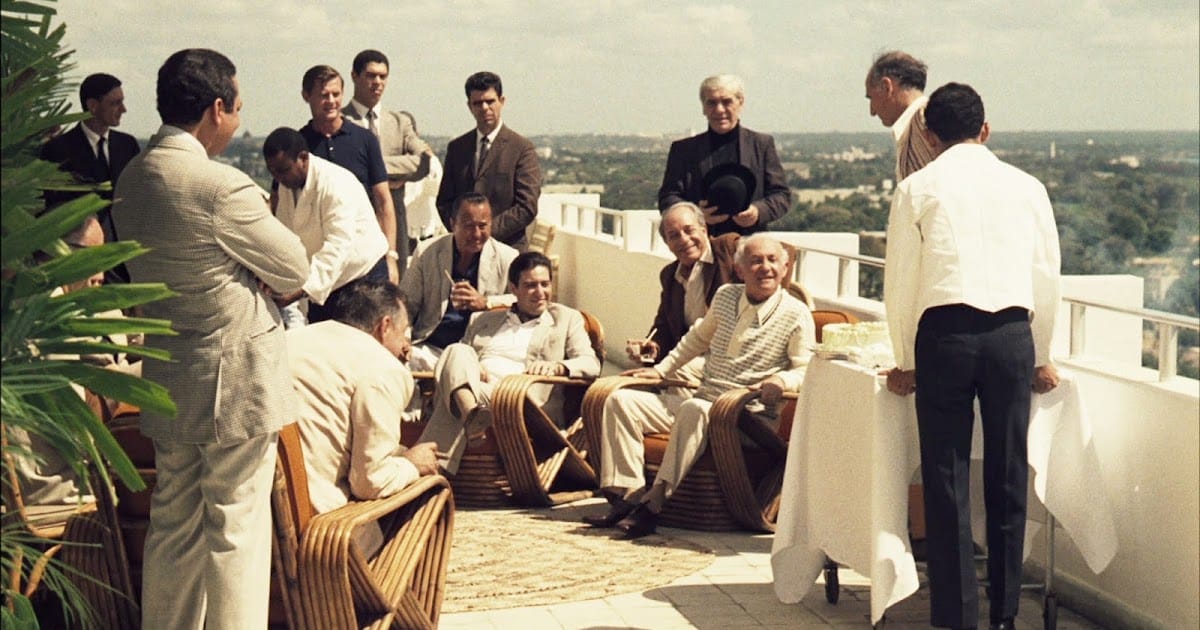
This dynamic takes on cartoonish dimensions in the capitalist paradise of pre revolutionary Cuba. Vividly depicted in Part II, we see representatives of various Mafia families assemble at the birthday party of Hyman Roth, a longtime associate of the Corleones and major player in the Cuban hotel and casino industry. In a moment of obvious symbolism, a cake with a picture of Cuba is literally carved up and divided amongst the guests.
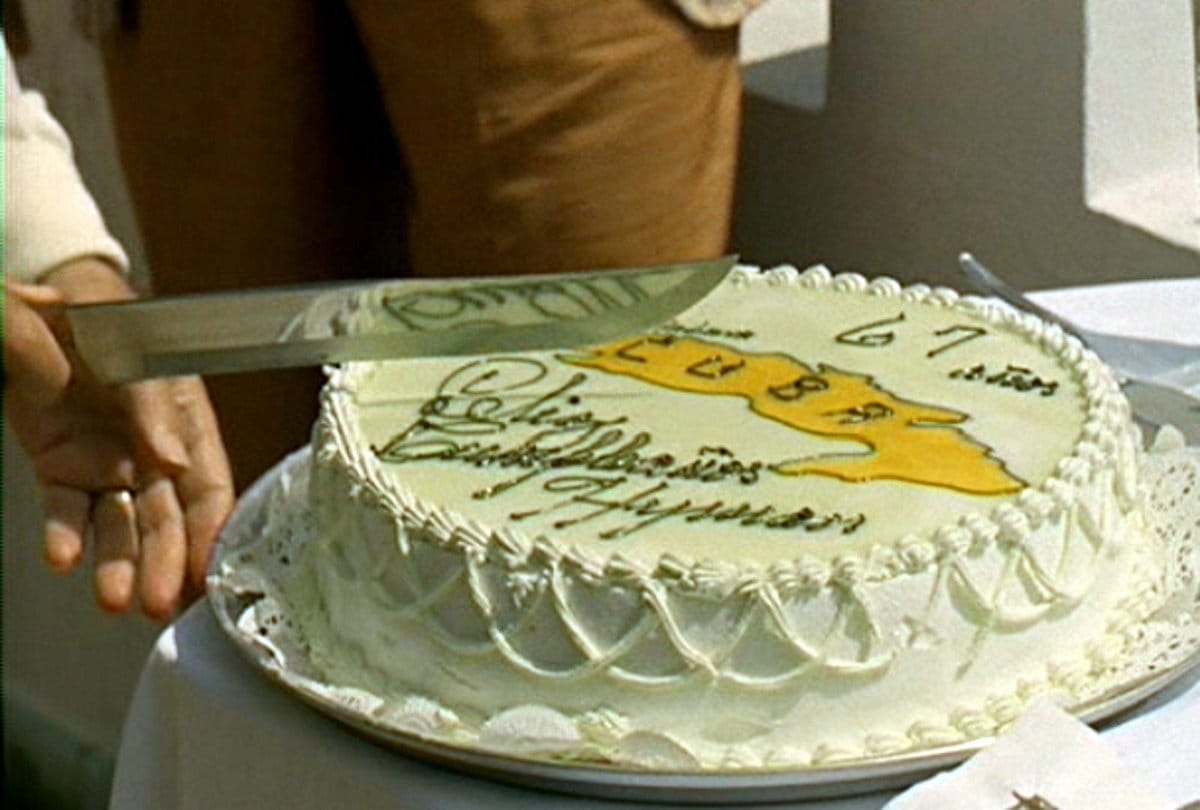
It's at this event that Roth speaks of "real partnership with the Cuban government." But his prosaic speech is indistinguishable from that of any CEO or corporate lobbyist: "This kind of government knows how to help business, to encourage it ... and has relaxed restrictions on imports." And Roth's ambitions don't end in Cuba. As he gleefully boasts to Michael, their syndicate is powerful enough to capture the heights of political power in Washington as well. "Just one small step; Looking for a man that wants to be president of the United States and having the cash to make it possible. Michael, we're bigger than US Steel."
This gathering of mafiosi is then mirrored by an official summit of "legitimate" businessmen, hosted by Cuban dictator Fulgencio Batista. Representatives of the General Fruit Company, United Telephone and Telegraph, The Pan-American Mining Corporation, and South American Sugar sit around a large wooden table in a lavish hall. Michael and Hyman Roth are, of course, in attendance as well, representing "tourism and leisure activities."
Conspicuously left out of the meetings are the laborers who sustain those very businesses. There are no fruit pickers or miners, no telephone exchange operators or hotel staff present. The great mass of working-poor have no voice here at all, and are essentially invisible. At most, news of approaching Communist rebels casts a subliminal anxiety over the proceedings. And herein lies the dialectical brilliance of The Godfather Part II. It shows the irresistible force of historical change, precisely when it's operating behind people's backs.
But the working class isn't invisible for long. On New Year's Eve 1958, Communist rebels flood into Havana, propelled by an explosive cocktail of hope and rage.
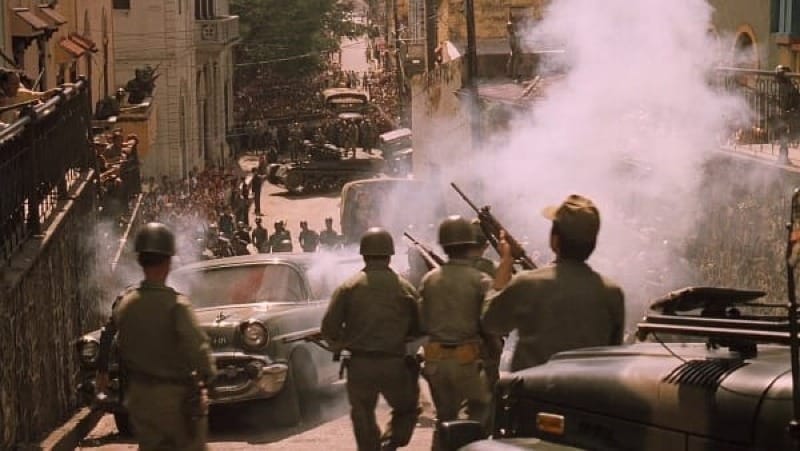
Similarly The Godfather Part I originally included a scene depicting Italian Communists marching at Portella della Ginestra, in Sicily. Cut from the final version, this scene foreshadows the events in Havana in Part II. This was response to the infamous 1947 massacre of peasants, socialists, and Communists by Right wing forces – likely supported by large landowners, fascists, Christian Democrats, and members of the Sicilian Mafia itself (Coppola, The Godfather, Deleted Scene). The scenes depict a militant working class who will no longer pit up with exploitation and victimhood.
In some sense, these events in Cuba were predictable, even inevitable. They merely resolve the contradictions of New World capitalism, where political power is monopolized by a tiny elite who, themselves, produce nothing for society. Still, the revolution comes as a violent, surprising shock to many. And Part II artfully showcases this stark divide between the objective unfolding of history and the subjective expectations of individuals on the ground.
Inside a lavish New Year's Eve gala, hosted by Batista himself, guests in formal attire saunter around the hall aimlessly. There's no energy left in the room. Batista's New Year's Eve address is received with yawns, and his toast of "Salud, Salud, Salud!" is met with an indifferent, stony silence. Outside, Rebels engage in exuberant cheers of "Freedom, Freedom, Freedom!"
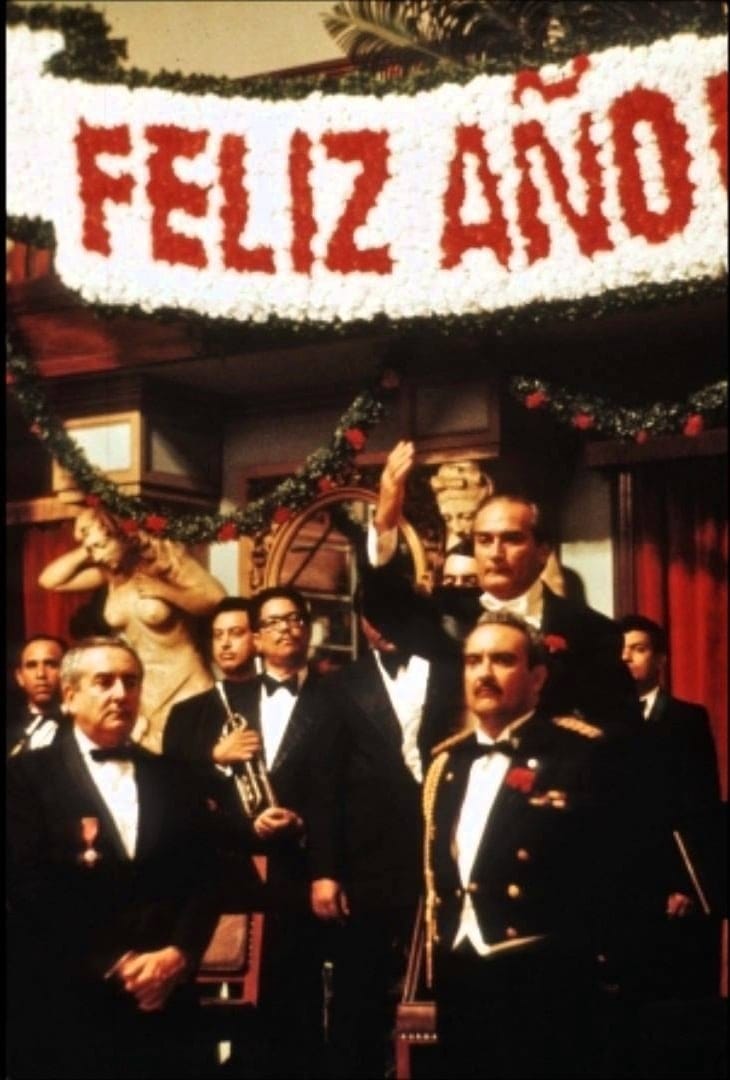
Sensing something is amiss, guests start to trickle out of the hall. Panicked senators and businessmen seek sanctuary in the American embassy. The party, in every sense of the word, is over. World Spirit is on the march, dashing the carefully-arranged plans of Roth, big business, and their government allies.
Michael, perhaps because of his dispassionate nature, can see before everyone else the way that history would unfold. He is the first one to leave the gala, while Batista is still in the middle of his speech. And even earlier, at Hyman Roth's birthday party, Michael has a moment of uncommon prescience: There's a reason why the Communists will succeed in Cuba. They're fighting for more than money.
Michael: It occurred to me: The soldiers are paid to fight; the rebels
aren't.
Roth: What does that tell you?
Michael: They can win.
We see in all this a characteristically dialectical movement of world history. First, local, communal ties of blood and family are broken up –negated – by the irresistible logic of the New World. Global capitalism reduces everything to a question of investment, profits, and cash payment. But when the contradictions of the New World reach a boiling point, when the global market leaves millions destitute and without political voice, this triggers a renewed focus on direct human needs and welfare. After all, who cares about the stock exchange when you can't even afford to eat? The negation is, itself, negated.
Only, this is not a simple retreat to a parochial past. There is no going back. The world is too connected, and the productive capacities of industry are just too great. Giant factories, air travel, and mass communications are starkly incompatible with a humanity divided up on rural estates and small villages. Instead, human needs can only be met through direct, workers' control of the existing means of production. The values of Old World, communal life don't disappear, but are transformed into the modern specter of World Communism.