Should the State Teach Ethics?
A Political Schematism


Cite this article
Landon Frim, “Should the State Teach Ethics? A Schematism,” Symposion 9, no. 2 (2022): 233–59.
This essay was originally published in the journal Symposion (2022). [Read the original PDF]
Confessional states – those with an explicit, religious identity – teach ethics as a matter of course. Moral norms may even be enforced through civil and criminal penalties. A clear example of this is Afghanistan’s “Ministry for the Propagation of Virtue and the Prevention of Vice,” re-established in 2021 after the fall of Kabul to Taliban forces. (Pal 2021) By contrast, secular states are often loath to admit that their laws emanate from some coherent philosophy or ethical theory. It’s often thought that the mark of a modern, secular state is an official ‘neutrality’ toward such speculative questions; these are instead the proper domain of private conscience. Nonetheless, it is easy to point out the innumerable ways in which secular states do, in fact, engage in systematic ethical training.
This is particularly evident in publicly funded schools. Students in the United States are often exposed to ‘anti-bullying’ campaigns endorsed by their respective districts, as well as programs to warn against premarital sex, recreational drug use, and to promote the qualities of ‘grit,’ environmentalism, and positive body image, to name just a few examples. (See, for example, the U.S. Department of Health and Human Services’ “Bullying Prevention Training Center” n.d.) In Palm Beach County, Florida, an entire section of the curriculum has long been dedicated to a study of the Holocaust and genocide – not merely as a dry recounting of historical facts, but rather as a normative attempt to warn against the dangers of racial hatred, xenophobia, discrimination, and ultra-nationalism. Such pedagogical approaches are mirrored in other school districts around the country.[1] (Staff Report 2021)

Adults are not exempt. Public sector employees, at the federal, state, and municipal levels, are routinely mandated to attend training sessions on the topics of workplace sexual harassment, the reasonable accommodation of people with disabilities, and workplace discrimination. (“U.S. Equal Employment Opportunity Commission” n.d.) In each of these cases, what at first appears to be the merely neutral instruction of positive law, good manners, hygiene, health, or decency, turns out (upon the most cursory inspection) to be grounded on a rather specific set of moral values and norms.
That all people are deserving of equitable treatment is a moral claim which may well be defended in any number of ways; It is not an uncontroversial, empirically obvious fact. That ‘the good life’ is marked by the values of toleration, egalitarianism, non-discrimination, grit, adolescent chastity, or sobriety are equally not self-evident propositions. We may wish to affirm some or all of these virtues as legitimate – even crucial – but to do so honestly means confronting what they in fact are: ethical norms. Likewise, government-endorsed programs which enshrine and promote such norms should be understood as instances of state sponsored ethical instruction. And so, the question is not whether secular states engage in ethical indoctrination (they do), but rather ought they, and if so, then in what manner?
Cast in these stark terms, such a question will provoke innumerable, nuanced responses. At the risk of oversimplification, a schematism may be useful for sorting the majority of these, and quite possibly, clarifying the strengths and weaknesses of each. There are three essential questions which a political philosophy must answer regarding the public instruction of morals. These are:
(1) Should the state explicitly promote certain ethical values over others?
(2) Should the state have ultimate justifications for the values it promotes?
(3) Should the state compel its citizens to accept these ultimate justifications?
Each question in this schematism can be seen as a ‘gate’ or conceptual hurdle, such that answering no to an earlier question (e.g., “Should the state explicitly promote certain ethical values over others?”), logically precludes considering the latter questions (e.g., “Should the state have ultimate justifications for the values it promotes?”). The result of this schematism is that it sorts political philosophies into one of four ‘camps.’ For the sake of clarity, we can tag these camps with the following designations:
The Libertarian (“No” to all three questions)
The Pluralist (“Yes” to question 1; “No” to questions 2 and 3)
The Rationalist Republican (“Yes” to questions 1 and 2; “No” to question 3)
The Rigorous Republican (“Yes” to all three questions)
The remainder of this paper will consist of delineating these four permutations and evaluating their relative strengths and weaknesses. It will be shown that just one of these positions, the ‘rationalist republican,’ stands out from all the rest. For only the rationalist republican can account for a normative politics while also safeguarding the individual’s freedom of conscience.
The Libertarian (“No” to question 1)

Like the other designations used in this paper, ‘libertarian’ is here employed as a convenient label for those answering our three questions in a given way (in this case, replying “no” to each). That is, the state should not be in the business of promoting, justifying, or enforcing, an ethical doctrine. This is not meant to be categorical statement about every libertarian thinker, and their total rejection of public moralizing as such.
To be sure, there are some self-identified libertarians, in the model of Andy Barnett, who explicitly seek to ground political libertarianism on an ethical basis (Barnett 2004) Ayn Rand, still perhaps the most recognizable libertarian thinker, wrote that the fundamental achievement of American democracy was, “the subordination of society to moral law.” Here, Rand had in mind the principle of individual rights, and specifically, the moral notion (common to Immanuel Kant) of “man as an end in himself.”[2] (Rand 1964, 109)
Nevertheless, the tendency of libertarians to balk at the official promotion of morals is well-documented. Again, we can cite Ayn Rand in advocating for the “virtue of selfishness” as against the moralizing political agendas of both the Right and Left. Her individualist egoism (including a hedonistic view of sex and marriage and the right to contraception and abortion) flies in the face of the anti-choice Religious Right. (Rand 1990, 54–55) Similarly, her brand of individual self reliance rejects what libertarians characterize as liberal social engineering, ‘enforced mediocrity,’ and economic levelling.
For Rand, traditional religious morality and modern liberalism are something of a piece – each promoting a form of slavish self-sacrifice of the individual before a faceless other (whether this be the State or God). Governments should not be in the business of promoting such a false virtue, either indirectly through social programs, or through explicit pedagogy in the school or workplace.

Retired congressman Ron Paul, famous for his libertarian politics, strikes a similar chord. In speaking about the ideal school curriculum, he insists that it “…never puts ideological indoctrination ahead of education.” (Paul 2018) Though, coming from a personally religious background – including opposition to abortion and same-sex marriage – Paul is noticeably more accepting of the exposition of Judeo-Christian values than was Ayn Rand.
Unlike government schools, and even many private schools, my curriculum addresses the crucial role religion played in the development of Western civilization. However, the materials are drafted in such a way that parents of any or no religious belief can feel comfortable using the curriculum. (Paul 2018)
Such thinking is not an aberration in contemporary libertarian thought, but is rather one of its common features. Socially-conservative libertarians, like Paul, tend to see public institutions as hostile to their sincerely held religious and moral beliefs. Their remedy is to remove all hints of liberal ideological bias within the curriculum, while ‘not censoring’ the important role that religion has played in American history and that of Western civilization at large. In other words, the state must be morally neutral so as not to conflict with the private, often religious moralities of its citizens.
Of course, a more direct strategy (also employed by Paul) is to devolve the role of education to parents, churches, and other private organizations entirely so that individuals have a choice as to where their children will learn, and what sort of values they will be imparted. Similarly, Right-libertarians may oppose federal bans on abortion and same-sex marriage; But this is only so that the authority to enact such restrictions can “devolve” to the various states or religious institutions. (Weiner 2011)
Thus, Paul promotes what he calls ‘Ed-Exit,’ (ostensibly a play on the portmanteau ‘Brexit’). Federally-governed public education should be dismantled in the face of intractable cultural, religious, and ethical divides endemic to American society.
Centralizing education at the state or, worse, federal level inevitably leads to political conflicts over issues ranging from whether students should be allowed to pray on school grounds, to what should be the curriculum, to what food should be served in the cafeteria, to who should be allowed to use which bathroom. (Paul 2016)
Note the striking formalism, and apparent ethical skepticism, at work here: Cafeteria food selection is put on moral par with church/state separation and discrimination against transgender students. Each is cast as just another irresolvable debate amongst a culturally-divided American populace.[3] Still, Paul is no moral skeptic. His merely rhetorical formalism does the work of pushing all ethical questions out of the political realm and into the (typically more traditionalist) hands of private institutions and families.
This ‘devolution’ strategy is shared by certain neo-confederate strains of American libertarianism. This includes some who have worked directly under Ron Paul, notably Murray Rothbard and Llewellyn Rockwell Jr., founder of the Ludwig von Mises Institute. The latter has been widely reported as the ghostwriter for numerous homophobic and racist pieces in Paul’s political newsletter. (Sanchez and Weigel 2008)

The push for devolution is also evident in the Right-libertarian works of Nick Land and Curtis Yarvin (a.k.a., Mencius Moldbug). Land’s essay The Dark Enlightenment (which draws heavily on Yarvin’s own thought), advances a scathing criticism of “PC culture,” the welfare state, and liberal leveling. (Land 2012) This is libertarianism taken to its (neo)reactionary limits – where the ideal government is reconceived as a private corporation, and citizens are given the right of “free exit,” but “no voice.” (Mass democracy being hazardous to individual freedom.)
The liberal welfare state – what they derisively term “The Cathedral” – is a drag on progress. Its incessant need to regulate business, and to promote equity and human wellbeing, results in the destruction of vital “feedback loops.” (Land 2012) Specifically, the nanny state intervenes to protect the inept, the incompetent, and the mediocre from suffering the market consequences of their own failures (including unemployment and poverty). Values-education in schools, and workplace seminars countering harassment and discrimination, are just so many examples of this counterproductive – and moralistic – meddling.
It is not clear to what degree libertarian thought has been infected by the authoritarian and chauvinist leanings of Rockwell, Rothbard, Land, or Yarvin. What does seem to be a libertarian consensus, however, is a general despair that the state can effectively promote unifying social values. Such attempts are seen as not only futile, but often as leading to social dissension and outright conflict.
The Cato Institute website, as if to drive the point home, hosts a “Public Schooling Battle Map” to showcase the innumerable skirmishes which arise when public institutions find themselves in the messy business of values education. Cato’s take away seems to be that values are nothing more than a zero-sum contest with no resolution in sight. As their website reads:
Americans are diverse – ethnically, religiously, ideologically – but all must pay for public schools. The intention is good: to bring people together and foster social harmony. But rather than build bridges, public schooling often forces people into wrenching conflict…Think creationism versus evolution, or assigned readings containing racial slurs. The conflicts are often intensely personal, and guarantee if one fundamental value wins, another loses.
Again, the entire problem is cast in highly formalistic and skeptical terms, as though moral divisions are simply irresolvable, brute facts of life. On this view, moral contests are not about the truth (where one side may be rationally convinced to change their position), but only about power – i.e., which political faction or identity group has captured the public institution, and so can foist their views on all others. This pessimism about reason and democracy is encapsulated by one of Søren Kierkegaard’s favored maxims: “As soon as it has come to the point that the crowd is to judge what is truth, it will not be long before decisions are made with fists.” (Kierkegaard 1997, 90 citing Friedrich Schelling)

Conceived in this way, libertarians are apt to vote for ‘exit,’ that is, the devolution of federal institutions to the states and private hands. For there is no telling when those hostile to your basic beliefs will come to power. As Jesse Walker of Reason Magazine sardonically put it, “Apparently, public institutions created with one set of values in mind can be captured by people with a different set of values. You may want to bear this in mind the next time you find yourself creating a public institution.” (Walker 2012) But if we must live with some public institutions, reasons the libertarian, better that they not be empowered to promote certain values over others; Better, in other words, to answer “no” to our first question.
Nonetheless, we may ask whether such libertarian pessimism is warranted? Are divisions over fundamental values truly irresolvable? It appears that moral progress is indeed achievable, just so long as we consider massively changing attitudes about slavery, miscegenation, civil rights, and gender equality to count as progress. (Newport 2013)
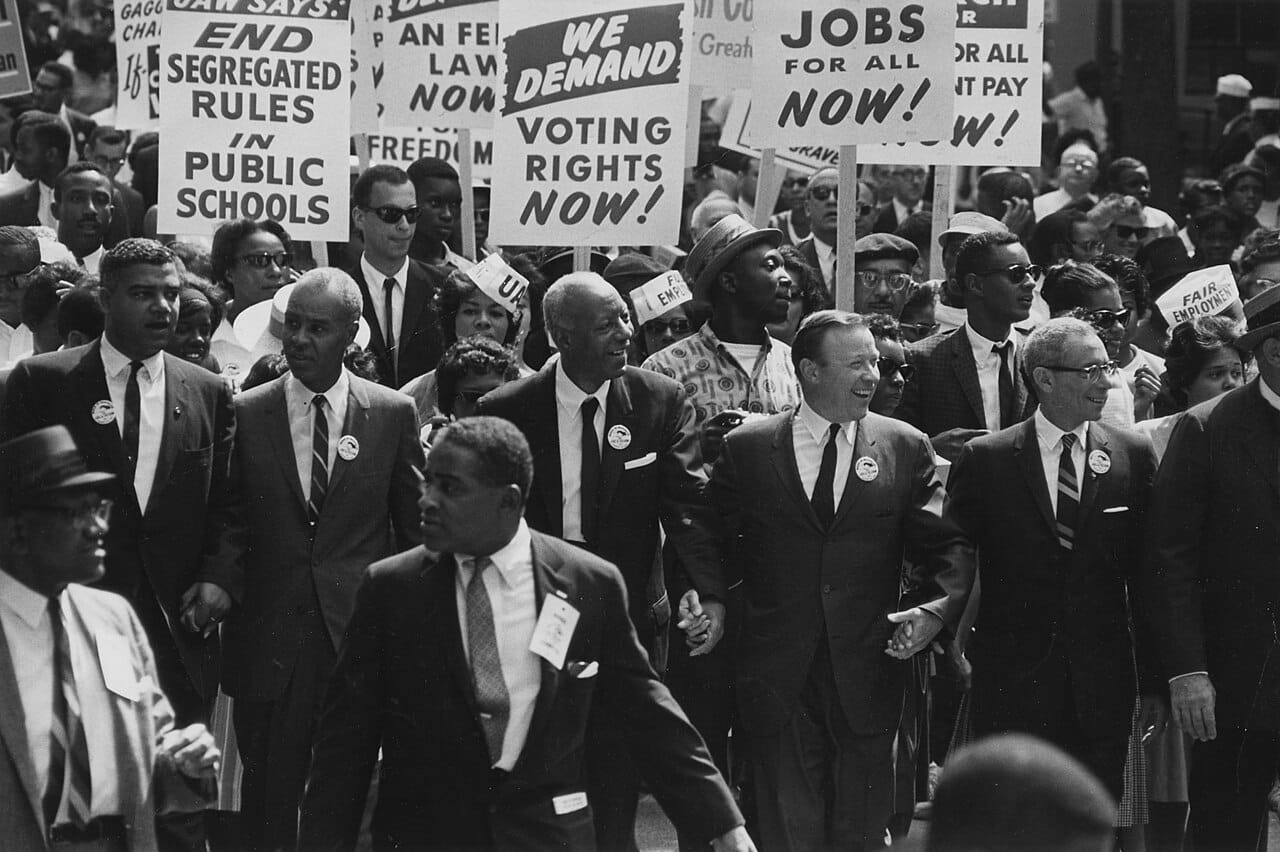
Furthermore, it appears that a major driver of these changing cultural attitudes is their inclusion in the political realm of democratic deliberation. In other words, the “Breitbart Doctrine” that “politics is downstream from culture” is very often wrong. (Meyers 2011) Legislation, elections, and even ballot initiatives can act as focal points which galvanize communities to action, engender social consensus, and even generate new cultural identities. At the very least, there appears to be a dialectical relationship between cultural norms and political movements, rather than this being a one-way street (or ‘stream’).
This fact illuminates a central tension of the libertarian position: Government is simultaneously considered to be inept at promoting unifying social values, and at the same time, supremely threatening. A rhetorical skepticism about morals suggests that ethical divisions are irresolvable and undecidable in the public sphere. Common reason and deliberation can’t select between contending values and so only brute power can impose these through coercion.
But as we have seen, such skepticism about moral truths is most often performative rather than a sincerely held belief. From Rand’s “virtue of selfishness” to Paul’s social conservatism, to Land and Yarvin’s neoreactionary ethos, libertarian politics is shot through with value statements. Only these values are never held up to democratic scrutiny. Instead, politics is neutralized so that private institutions, especially corporations, the family, and organized religion can impose their norms on their respective members.
This, of course, in no way makes values-education any less coercive or punitive. Children who are raised in a particular family or attend a parochial school will be subject to the ethos of those private and hierarchical institutions. So too will adults who are financially dependent on private-sector jobs or religious charities. Nonconformity will be met with social censure and real economic consequences. Thus, what is truly missing in the libertarian scheme is neither a conception of morality, nor mechanisms of coercion, but only democratic responsibility. For the selection and promotion of norms is placed, not in the hands of publicly elected bodies or a voting citizenry, but rather in the unaccountable hands of the rich, influential, and powerful.

Stepping back, we can take another lesson from the libertarian’s merely
performative moral skepticism: One cannot do without some conception of the
good. Without this, political activity seems to lack sufficient motivation. In the
absence of guiding values, why bother to vote or legislate at all? But if this is true,
then how can we meaningfully divorce civic education from moral education? Our
conception of ‘the good’ will always color our notion of what makes for a good law,
a good republic, and a good citizen.
To deny that the state should promote certain values over others is thus problematic; For a state’s values will regularly manifest themselves through common ordinances, budget priorities, and foreign policy agendas. Values education only makes explicit (and thus open to public scrutiny, critique, and amendment) a state’s guiding norms.
The Pluralist (“Yes” to question 1; “No” to questions 2 and 3)

Suppose, then, that we answer “yes” to question 1; The state should promote certain ethical values over others. This opens the door for considering a second query: “Should the state have ultimate justifications for the values it promotes?”
For our purposes, ‘the pluralist’ is that person who answers yes to question 1, but no to question 2. This is to say, the pluralist admits that the state inevitably affirms certain norms, and yet, should not try to ground these ideals in one, all encompassing view of reality. There are no ‘ultimate justifications,’ or in other words, there is no ‘state philosophy.’
If we go down the road of ultimate justifications, the pluralist surmises, we risk turning the state into a metaphysical schoolmaster – not only protecting citizens’ rights and welfare, but also insisting on a particular worldview from which these goods are derived. This is simply not the role of government. Worse still, professing a very specific view of existence is bound to exclude (and perhaps even provoke) wide swaths of the populace who otherwise might happily sign on to a more pragmatic moral consensus. We should respect that diverse citizens will affirm common laws and norms for equally diverse reasons.
The ‘pluralist’ category is as varied as its name suggests. It is comprised of modern liberals (including John Rawls, Isaiah Berlin, and Richard Rorty), as well as communitarian and post-secular critics of liberalism (especially Charles Taylor, Jürgen Habermas, and Étienne Balibar). But despite their substantive differences, what defines this class is a claim that sweeping, grand narratives are bad for politics.
In Rawls’ work, such well-defined, grand narratives are given the name ‘comprehensive doctrines.’ In his view, it’s not the role of the state to uphold up any one comprehensive doctrine as the ultimate truth. Instead, each citizen or community should be free to develop their own, diverse belief systems. Sincerely held beliefs about God, salvation, morality, and other ultimate questions, are a matter of personal conviction and not public policy. At the same time, when it comes to public decision making, the diversity of private opinions will be subordinated to some ‘reasonable’ liberal consensus. Public law and private conviction need not infringe upon one another’s proper domains. These constitute, to borrow a phrase, “non-overlapping magisteria.” (Gould 1999, 5)
This word, ‘reasonable,’ is of course very important for the Rawlsian pluralist. It denotes that sort of person who is willing to prioritize a tolerant and rights-based politics above their own particular belief system (especially when these conflict). The political freedoms of speech and association will supersede, for example, religious proscriptions against blasphemy and false worship.
The ‘reasonable’ Jew, Christian, Muslim, Hindu, or Atheist will, moreover, not try to base public law upon their privately-held metaphysics. Final views on truth, salvation, existence, and the good life are notoriously difficult to determine for oneself, let alone to convince a whole body politic. The continued debates amongst philosophers, and the whole bloody history of religious wars, seem to be prima facie evidence of this difficulty, what Rawls terms the “burdens of judgment.” (Rawls 2005, 54–58)
But if one’s comprehensive doctrines are subordinated to public law, they are not thereby expelled from the public domain altogether. This is what distinguishes the liberal pluralist from the libertarian. Instead, reasonable people of all stripes will find within their respective belief systems the motives for affirming core liberal values. That is, the reasonable Catholic will find Catholic reasons for defending the freedom of conscience and expression (perhaps a religious doctrine of free will); so too will the reasonable atheist (though on a totally different, secular basis). Social stability depends upon such an “overlapping consensus” of diverse individuals professing identical norms, but for non-identical reasons. (Rawls 2005, 150–209)
When it comes to the state teaching of ethics, then, the Rawlsian pluralist will offer a different sort of response as compared to the libertarian. For the libertarian, the state should not be in the business of professing moral norms at all – that’s what families, churches, charities, and corporations are for. For the liberal pluralist, however, the state should profess and promote the fundamental liberal norms (freedom of thought and expression first among them). Only, it should not profess the basis for these values because (1) such metaphysical questions are hard to resolve, and relatedly, (2) each reasonable citizen will defend these norms according to their own, diverse doctrines.
Churches, temples, and mosques are therefore not the places to challenge or displace public morality, but instead, to support it using their respective, sacred vocabularies. School curricula and workplace regulations, likewise, should promote the reasonable norms of anti-racism, respect for people with disabilities, and gender equality; Only, they must not uphold some ultimate rationale for such values (secular or otherwise).
Plausible as all this may sound, liberal pluralism quickly deconstructs itself. Rawls’ notion of the “burdens of judgment” is not merely an empirical claim about how difficult or acrimonious philosophy can be. Rather, such pluralism relies upon an extreme anti-foundationalism. In Rawls’ words, “…the correct regulative principle for anything depends on the nature of that thing...” (Rawls 2003, 25) There can be no grand, unified theory of everything. Instead, each human endeavor is subject to its own regulating principles. Politics is no exception.
The best we can do is to aim for a “reflective equilibrium” wherein general principles do not govern, but rather are reciprocal to, specific political judgments (Rawls 2005, 8, 28, 45, 72) That women should have the right to vote, for example, is not derived from the prior, speculative belief that all people have equal inherent worth. Instead, this particular judgment about voting supports the general principle, and vice versa.
All specific judgments are fallible, given new evidence and circumstances. So too, therefore, are all the general principles which mutually depend on them. In this way, politics is functionally prior to political theory. Speculation cannot conceive of the good state on its own; Instead, the continued dialogue, debate, and justificatory processes of a democracy provide the real content for our political and moral ideals. (Rawls 1999, 286–302) An ethos of epistemic humility suffuses such liberalism, hesitating to submit unique, lived experiences to the Procrustean bed of theory.
Other liberal pluralists, notably Isaiah Berlin, pushed the envelope further: If foundationalism is false, then there can be no singular view of reality which grounds all liberal norms. And if this be the case, then individual liberal values may sometimes conflict, or even stand as incommensurable to one another. “ Great Goods can collide…some of them cannot live together, even though others can... one cannot have everything, in principle as well as in practice…” (Berlin 2013, 17)

Freedom and equality, equal opportunity, meritocracy, and basic welfare are distinct sorts of goods which no singular algorithm can adjudicate; “realising ultimate harmony is a fallacy...” (Berlin 2013, 17) For in this world, “we are faced with choices between ends equally ultimate, and claims equally absolute, the realisation of some of which must inevitably involve the sacrifice of others.” (Cherniss and Hardy 2022) Philosophy cannot decide between competing goods and rights. For this we must rely on our particular, lived experiences.
To the theoretically-inclined, all of this may sound rather threatening, as though the foundation for politics has turned to sand. Yet Berlin saw this plurality of competing values as a feature, not a bug, of modern politics. It mandates a process of open debate and discussion, rather than the high-handed rule of experts, theologians, and philosopher-kings.
Still, when the only arbiter between conflicting values is the concrete situation, then Rawls’ “reflective equilibrium” rapidly morphs into Berlin’s “precarious equilibrium.” (Berlin 2013, 18–19) The internal stability of liberalism gets called into question, and with this, its supposed reasonableness. If liberal norms of freedom, equality, and toleration do not have a common grounding – if speculative ‘grounding’ is an anathema to begin with – then why should any of these norms supersede a citizen’s private, comprehensive doctrines?[4]
Why should we presume that an ancient Muslim, Hindu, or Jewish doctrine is any less obvious, less fundamental, or more subject to the ‘burdens of judgment,’ than the relatively young, mutually-conflicting (and presently contested) norms of liberal pluralism? At a time when political liberalism is under sustained attack from religious extremists, populist demagogues, and ultra-nationalists, why should we imagine liberalism to be a point of ‘reasonable’ consensus for all people?

At its most consistent, liberal pluralism declines to justify itself at all. It accepts the sheer plurality, contingency, and historicity of all belief systems whatsoever (including its own). There is no such thing as a justified, true belief – at least in any non-circular sense. In pursuing this line of reasoning, Richard Rorty sketches a figure he calls the “liberal ironist” – liberal, because they believe that “cruelty is the worst thing we do,” but at the same time, ironic, in facing up to “the contingency of his or her most central beliefs and desires…” (Rorty 1989, xv, 91)
This heroic figure sanguinely denies that there can be any privileged, “single vision” which stands “outside the various vocabularies we have used…” to do politics. But given this, they declare for an inclusive liberalism anyway. Human solidarity is not something we discover in Nature; It is not something “true” to be deduced by philosophers. Instead, it’s an “achievement” we choose to pursue. (Rorty 1989, xvi, 77)
And why should we work for such an utterly contingent achievement? For consistent pluralists like Rorty, this is simply an unforced decision on our part. The era of philosophical justification has ended, much like the era of theological justification. (Rorty never tires of equating the two.) In his words, “A postmetaphysical culture seems to me no more impossible than a postreligious one, and equally desirable.” (Rorty 1989, xvi)
What primarily moves us now, he contends, are not theoretical essays or logical proofs, but compelling works of art – novels, movies, plays, and TV programs. (Rorty 1989, xvi) Absent of any privileged ‘meta-vocabularies’ or objectivity, there is only the constant power struggle to move and to motivate – and in this, fictional appeals to the imagination are often more powerful than factual appeals to reason.
But if there is no ultimately good reason to be a liberal (or conversely, not to be a Nazi, Stalinist, fascist, or theocrat) then the state teaching of morals may appear perverse. To promote, sometimes coercively, the values of racial and gender equality, secularism, and inalienable rights – even while admitting that none of these are ‘true’ – will strike many as tyrannical.
Imagine the school assembly presenter who proudly moralizes before their adolescent audience, hands down strict rules of conduct and severe penalties for transgressing said rules; Imagine, then, that this person proudly announces that they “have no ultimately good reasons for what they say.” One person’s wry, humane irony becomes another’s arbitrary yoke.

The contemporary complaint against “liberal fascism” (Goldberg 2009) is wildly anachronistic. However, one may be forgiven for calling Rorty’s politics a type of ‘liberal chauvinism.’ For it explicitly demands that society be organized a certain way, merely because he wills it to be so. This is the consequence of his taking pluralism to its logical end. If there is nothing but a plurality of worldviews, with no objective, rational basis for choosing between them, then all we are left with is the political decision itself. The liberal, then, seems to substantiate the libertarian’s skepticism: The moralizing state coerces without justification, and cannot forge value-consensus through common reason.
Certainly, not all pluralists fall into this secular, liberal tradition. The emphasis on decision and imagination (rather than universal reason) can very well invert itself. This is the conceptual basis for the other major tendency within pluralism – that of post-secularism. Exploiting the central tensions of liberal pluralism, the post-secularist will often point to the conflict between concrete, (often religious) lived experiences, on the one hand, and secular ‘reasonableness’ on the other.
The latter, they charge, falsely presents itself as objective and universal, superseding the “integrity of different facets of life,” especially faith-based ones. Official secularism tends towards homogenization in “a single principle” so that the “door is barred against further discovery.” (Taylor 2007, 771–72, 769) Charles Taylor, a major proponent of post-secularism, goes so far as to describe the secular landscape as a sterile waste land. The irrepressible human drive toward the sacred will mean that, sooner or later, “young people will begin again to explore beyond the boundaries” of this restrictive environment. (Taylor 2007, 770)
The post-secularist sees liberal politics, itself, as implicitly relying on sacred vocabularies for its continued relevance. Jürgen Habermas gives clear expression to this view.
… I do not believe that we, as Europeans, can seriously understand concepts like morality and ethical life, persons and individuality, or freedom and emancipation, without appropriating the substance of the Judeo-Christian understanding of history in terms of salvation. And these concepts are, perhaps, nearer to our hearts than the conceptual resources of Platonic thought, centering on order and revolving around the cathartic intuition of ideas...But without the transmission through philosophy of any one of the great world religions, this semantic potential could one day become inaccessible. (Habermas 1992, 15)
Religious vocabularies are not incidental, but essential, for politics. They speak to the imagination and the heart, without which the discursive norms of liberalism become distant, impotent abstractions. Rorty’s militant decision in favor of the secular is reversed by his own premises. If what matters is the emotionally compelling, rather than the objectively convincing, what could be more powerful than fervent, religious faith?
Still, one should not overdo the supposed differences between these two pluralist tendencies. For his part, Étienne Balibar is keen to give liberal universalism its due, lest the criticism against it become, itself, too abstract and ahistorical. (Balibar 2018, 14) Meanwhile, Charles Taylor explicitly accepts the Rawlsian notion of overlapping consensus when it comes to international human rights. As he puts it, “we would agree on the norms while disagreeing on why they were the right norms, and we would be content to live in this consensus, undisturbed by the differences of profound underlying belief.” (Taylor 1999, 101)
The right to education, housing, and healthcare is less controversial if untied from theory-laden, supposedly Western concepts, of ‘human dignity’ and ‘universal emancipation.’ Wide acceptance of such rights across diverse cultures is more likely, contends Taylor, if “the [philosophical] package could be untied” from the legal norm, so that one “could be adopted alone, without the other.” (Taylor 1999, 105)
As always, the pragmatic presentation conceals a more substantive outlook. The post-secularist not only wants to triangulate agreement across cultures, but really sees diverse cultures and religions as no less universal than liberal secularism itself. Balibar, especially, sees the tradition of state secularism in France (laïcité) as tending toward its own particular, sacralized language, especially when it finds itself opposing traditional religious forms. (Balibar 2018, 20) ‘The Republic’ has come to replace Mother Church as the locus of impassioned belief and anxious defense against dangerous nonbelievers. One need look no further than the restrictions against religious clothing in public spaces in France (and the Islamophobic rhetoric surrounding those measures). French, secular republicanism, says Balibar, often manifests itself as a national, civic religion (Balibar 2018, 120) As such, it becomes rather arbitrary to call religions “particular” and secularism “universal.” (Balibar 2018, 22)

Balibar emphasizes the suffix in the word cosmopolitical, as the modern cosmopolis is marked by political negotiation, critique, and agonism as much as an inclusive universalism. (Balibar 2018, 20) The post-secularist thus ends up in a similar position as their liberal counterparts. Religious differences are seen as irreconcilable “differends” which cannot be bridged or wholly criticized from a rationalist perspective. At most, the state can act as a “vanishing mediator” between religious identities, offering immanent criticisms and pointing out tensions, but never imposing its own comprehensive doctrine from without. (Balibar 2018, 53–54, 60) In a spirit of humility, we must seek a “secularization of the secular.” (Balibar 2018, 50)
Pluralists of all kinds accept a morality-infused politics. They say “yes” to question 1. This is what separates them from the libertarian. They admit that statecraft – making laws, crafting school curricula, and setting budget priorities – necessarily involves a series of value judgments. But, at the same time, pluralists consider metaphysical certainty (i.e., certainty about the nature of reality) to be a dangerous illusion. For Rorty, as we have seen, this implies a stark decision (without justification) in favor of one, particular value system, namely, secular liberalism. For post-secularists, like Balibar, it means a conception of civility based on the play of multiple cultural identities. (Balibar 2018, 158)
But what the most consistent pluralists share in common is a denial that their politics can be ultimately justified – that their values have any objective grounding in reality as such, outside of a particular time, place, or tradition. Justification instead gives way to imagination, faith, and the political imaginary of the now. Whereas the libertarian took public reasoning out of morals, the pluralist takes Reason (if not humble ‘reasons’) out of public deliberation. But for all that, what remains is the same intractable contest of wills.
The Rigorous Republican (“Yes” to all three questions)
Suppose, then, that we cut to the chase. If we want something more than arbitrary decisionism, or the contest of imaginations and wills, then we need to get back to the Truth with a capital ‘T.’ We need an objective, governing philosophy to ground our secular politics. What’s more, it is incumbent upon the state to instill in citizens, even through coercion, the right sort of beliefs. This is the tradition of “rigorous republicanism.” (Moggach 2003a) For the purposes of our schema, the rigorous republican is one who answers “yes” to all three of our questions: (1) The state must promote certain values over others; (2) It must have ultimate justifications for said values; and (3) The state should compel its citizens to believe in these ultimate justifications.
The rigorous republican, true to their name, embodies a kind of enthusiastic consistency. If the state is in the business of teaching ethics, then it ought to have good reasons for what it teaches and enforces. If these good reasons exist, then lawful citizens should be made (in whatever ways are most effective) to embrace them. Otherwise, we are asking people to follow laws blindly, or merely to pay insincere lip-service to what is right and just.
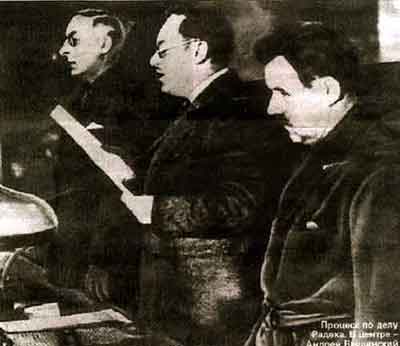
Of course, the danger of such a view is easy to detect. Rigorous republicanism demands, not merely obedience to the law, but also a form of ‘confession’ from private citizens. Unapologetically in the business of ethics, the state claims sovereignty over people’s outer actions as well as their inner beliefs. Both are equally subject to official control and censure. Rigorous republicanism, therefore, has the tendency to become despotic. As the infamous prosecutor of the Moscow show trials, Andrey Vyshinsky, boasted: “We draw no distinction between intention and the crime itself. This is an instance of the superiority of Soviet legislation to bourgeois legislation.” (Solzhenitsyn 1973, 72)
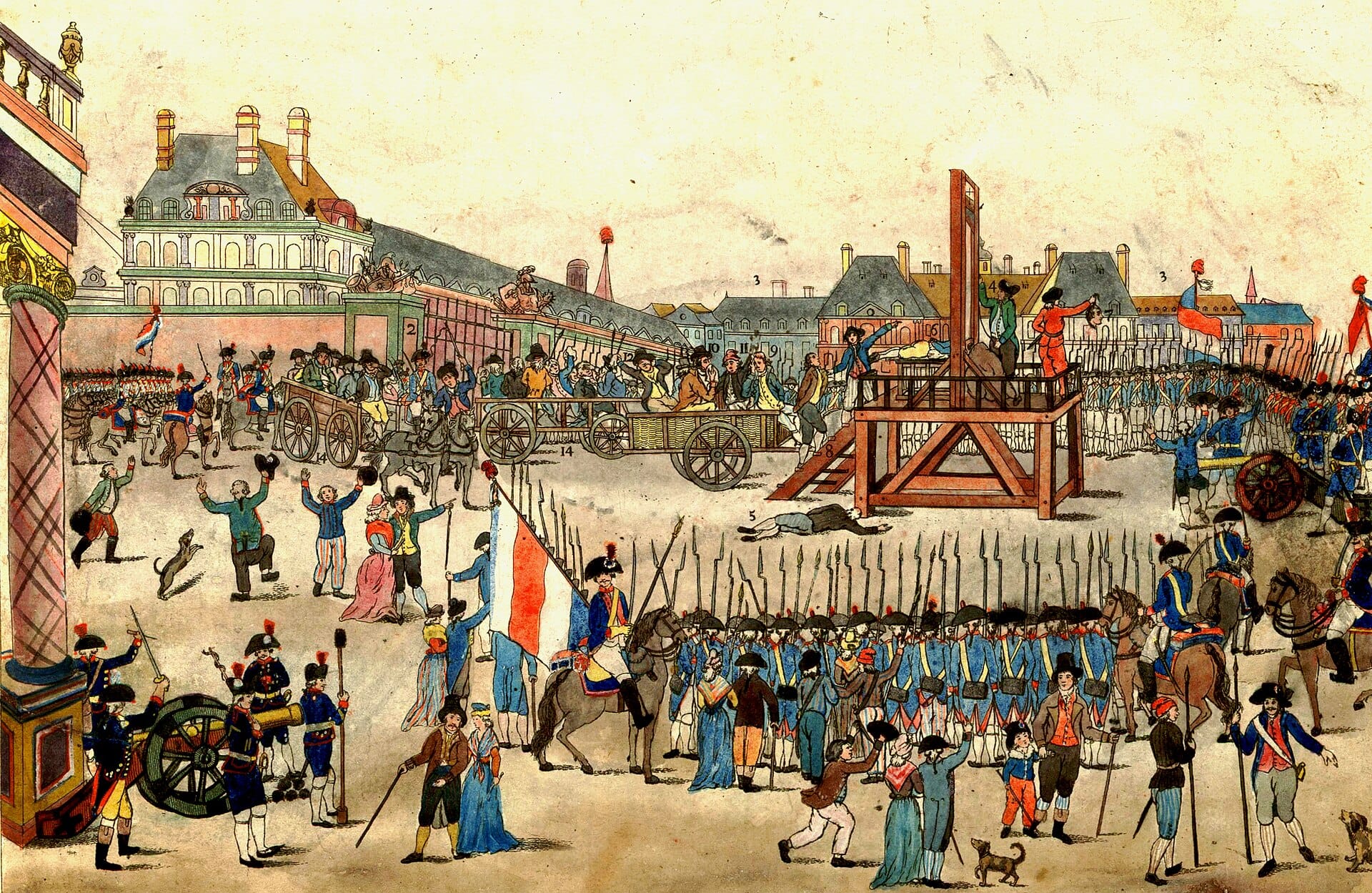
The rigorous republican position, while severe, has a long history. It was the ideology of one of the most radical parties of the French Revolution, the Hébertists, often styled as ‘the exaggerators.’ Like the also revolutionary (and better known) Jacobins, the Hébertists stood for the abolition of the monarchy, the revocation of Church privileges and property, and the displacement of what they saw as Christian superstition in favor of secular virtue. However, they went beyond the Jacobins in their level of violent hostility towards the Catholic Church. Hébertists engaged in the routine killing of priests, and even banned priestly dress in public spaces. (Fluss 2016) The point was not merely to revoke official church privileges, but also to coerce people out of their privately held beliefs. All of this indicates the potential of a supposedly ‘radical’ secularism to turn illiberal, authoritarian, and intolerant.
But what happens when the target of rigorous republicanism is not a hegemonic institution like the Catholic Church of 18th Century France, but instead, an oppressed minority? In the 19th Century, the philosopher Bruno Bauer famously argued against political emancipation for Germany’s Jews. He did so, not for traditionalist reasons of wanting to convert the Jews to the official state religion of Lutheranism, but instead, upon a strictly secular basis. A member of the ‘Young Hegelians,’ Bauer saw the republican state as the embodiment of freedom itself. He opposed all special privileges for individual groups, and for this reason, could not abide either the Christian identity of the confessional state, nor the special emancipation of the Jews ‘as Jews’ (i.e., as a particular group).
What Bauer wanted was a thoroughly secular state which embodied pure freedom itself. By its nature, the free state could not recognize this or that group or interest. As against all historical forms of hierarchy and tradition, Bauer’s republicanism stood for the limitless critique of everything according to a pristine, unbounded sense of reason. (Moggach 2022) Accordingly, the merely Christian state has no business emancipating anyone (because it is not yet, itself, free). But equally, the Jews (if they desire to remain a “people apart,” with their particular religious laws and customs) are unfit to be emancipated. (Bauer 1983b, 188, 196–97)
In any case, even if the Jews affirm their new status as secular citizens, this will only be an expedient lie for the sake of increased civil rights. Bauer claims of the emancipated Jew, “...he is and remains a Jew in spite of his being a citizen. For his narrow Jewish nature always in the end triumphs over his human and political obligations.” (Marx 1977, 41 cit. Bruno Bauer, “The Capacity of Present-Day Jews and Christians to Become Free”) What is required, therefore, is the total, social emancipation of the whole people. This goes beyond ‘equality before the law,’ and entails a full reformation of the soul. We are all to become secularized through and through before deserving equal political rights.
After this utopian vision failed to materialize in the 1848 Revolutions, Bauer turned sharply to the Right. If democracy, liberalism, and individual rights could not bring about the rule of universal reason, then what is needed is the unitary rule of a world-imperialist power. Bauer predicted the coming of a cataclysmic world war which would bring about a transnational sort of imperialism. (Moggach 2022) It is within this brave new world that society would become massified and homogenized, and only out of this political “dust” could a new, fully liberated elite emerge. Free of the traditions and constraints associated with the “old world,” this elite could finally engage in unbridled acts of creation and self-consciousness. But of course, this ecstatic “freedom” will be at the expense of those ordinary people who fail to become elite themselves. (Bauer 1983a)
If it wasn’t always clear at the time that Bauer’s rigorous republicanism accommodated reactionary politics, it became abundantly obvious in the 20th Century. The Nazi jurist Carl Schmitt embraced Bauer’s critique of traditional, conservative values; For these are merely passive. The slavish devotion to established tradition is “an irrational rejection of every intellectually conscious decision.” (Schmitt 2005, 54) What counts, for Schmitt as well as Bauer, is rather the strong individual’s free, self-creation. The sort of ‘Reason’ which can found a state is so pure and singular that it is evacuated of all determinate content or meaning. It loses its objective character and becomes an immaculate act of the will.
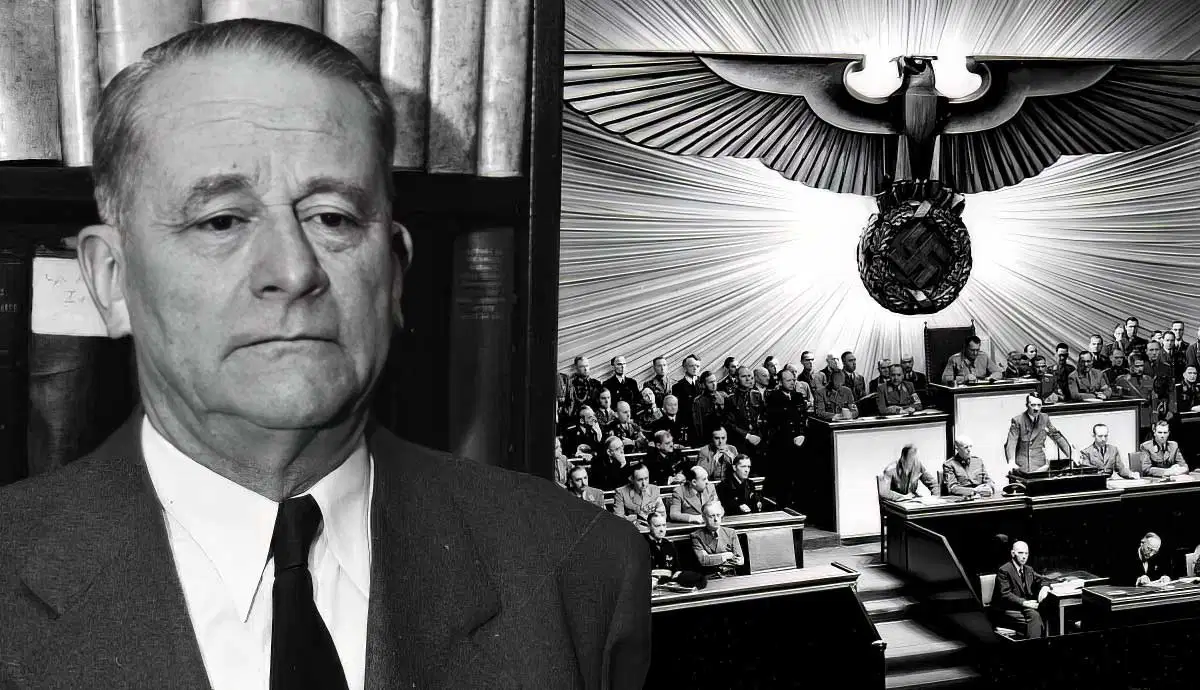
Of course, not everyone can be so free. Schmitt affirmed the Catholic doctrine of papal infallibility, but now as a secularized political concept to be applied to the state leader. Accordingly, Schmitt’s “leadership principle” (Führerprinzip) meant that the sovereign cannot be constrained by either tradition or law. The masses, for their part, must be thoroughly depoliticized and conform to the unbounded dictates of the Führer. (Gross 2007, 23, 52, 102, 167, 175–76) We have here the modern confluence of the unitary state, unbounded by tradition, and unified by the free will of a singular leader. The people express themselves politically (if at all) through their wholehearted embrace of this leader and the values he spontaneously creates. The upshot is the same as in Bauer’s 19th Century politics: a sincere unity of spirit, not mere conformity to outer law.
All of this may seem like boilerplate fascism – and it is. But these ideas are also informed by Schmitt’s critique of modern political philosophy, especially his reading of the 17th Century English philosopher Thomas Hobbes. For it was Hobbes who affirmed the supremacy of the prince to dictate matters of law as well as belief. (Schmitt 2008, 56) Yet, in a moment of high-minded generosity, Hobbes allows commoners the right to pay ‘lip service’ to the religious claims of the sovereign. Can the king (as tradition states) truly cure diseases through the laying on of hands? Who knows? All that matters is that the commoners act as if they believed; it’s simply a matter of public respect.
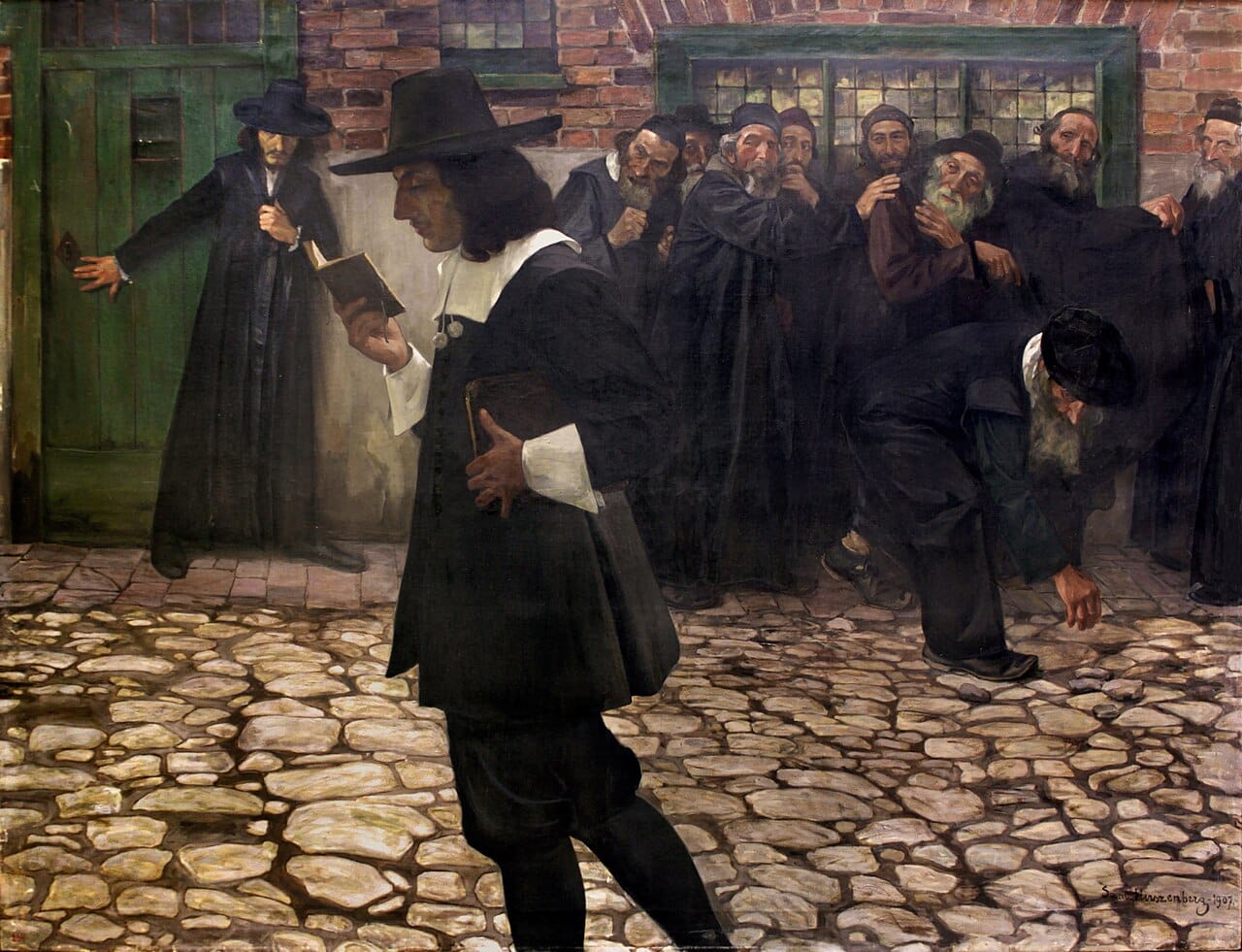
But it is precisely this modicum of toleration, this tiny space left for dissenting thought, that Schmitt identifies as self-destructive of the state. He traces the problem, in particular, to Baruch Spinoza, that “alien” Jewish philosopher who exploited the small gap left by Hobbes between outer piety and inner belief. Through this gap, Spinoza develops a whole litany of individual, liberal rights (freedom of thought, i.e. “the freedom to philosophize,” first among them). It is this separation, naively opened by Hobbes, but cunningly exploited by “the Jew” Spinoza, that corrodes the State from the inside. (Schmitt 2008, 57)
In Schmitt’s Nazi ideology, this treachery is not limited to Spinoza alone, but rather is the modus operandi of all modern, secular Jews. Hence the problem with liberal toleration for unassimilated minorities; They will always take advantage at the expense of the body politic. Aping Bauer, Schmitt insists the Jew may act like a real citizen, but privately remains a self-interested member of his own clan. (Gross 2007, 160) The Medieval blood libel is recast in political terms: The Jew sacrifices and divides the state in order to safeguard his own special interests. (Schmitt 2008, 90) The state is emasculated by excising ‘belief’ as its vital, animating force. And the Jews, who can never be more than internal aliens, destroy the unity and coherence of political life through modern doctrines of liberalism (especially the freedoms of thought, expression, and religion).
In this way, rigorous republicanism may start from a position of pure freedom, but that’s not where it ends up. For the state (that locus of freedom on earth) can only function if private citizens actually affirm its fundamental principles ‘in their soul,’ as it were. After all, action is motivated by thought. Therefore, outer loyalty can only be sustained through a conformity of inner belief. Mere ‘lip service’ isn’t enough, as a true confession must be sincere and heartfelt. Dostoevsky’s character from Demons, Shigalyev, expresses the paradox of rigorous republicanism best: “…my conclusion directly contradicts the original idea I start from. Starting from unlimited freedom, I conclude with unlimited despotism.” (Dostoevsky 1995, xix)
The Rationalist Republican (“Yes” to questions 1 and 2; “No” to question 3)
If ‘rigorous republicanism’ turns despotic, this leaves us with only one remaining permutation: One must say “yes” to questions 1 and 2, but “no” to question 3.[5] In other words, the state will promote certain ethical norms over others; it should have good, ultimate reasons for doing so; yet crucially, it must not compel its citizens to personally endorse those ultimate reasons. This is the nuanced position we will call ‘rationalist republicanism.’ The state teaches ethics but does not demand forced confession.
The rationalist republican earns their name by affirming a secular ‘state philosophy.’ This is a rationally justified worldview which motivates its various laws, policies, and priorities. Such a position will be jarring for many, and it evokes in the liberal imagination visions of thought-police, totalitarian control, and all manner of Orwellian nightmares. However, unless public laws are based on some sort of rational justification, these will be unmoored and arbitrary – precisely the deficit of the ‘pluralist’ position examined above.
Moreover, unless these ultimate justifications are codified, transparent, and available to the general public, then such a ‘state philosophy’ will be reduced to an esoteric doctrine of the political elite. Laws need a rationale, and all people subject to the law deserve to know what those supposedly good, foundational reasons are. Justification and education are thus indispensable as they are linked. Both the letter and the animating spirit of the law have to be explicable to the general public if participatory democracy is to have genuine meaning. The average citizen should know, not only what the law says, but also why.
At the same time, the rationalist republican draws a sharp line between a normative ‘civic education,’ on the one hand, and forced ‘confession’ on the other. The former is about explicating the core values of the state. In other words, what view of reality, human nature, and the good motivates our norms and policies? Forced confession is another matter entirely. This involves compelling individuals to publicly assent to this worldview. The rationalist republican eschews such coercion and maintains, as sacrosanct, the freedom of conscience.
This balanced position was first clearly articulated by the 17th Century philosopher, Baruch Spinoza. In his major political work, the Tractatus Theologico-Politicus (TTP), Spinoza outlines a potent vision of the state alongside a strict tolerance for individual, non-conforming belief. For example, he argues that the state must have undivided authority over its citizens, and not share its right to police public behavior with any private group. (Baruch Spinoza 2007, 193) [6] Spinoza had in mind, in particular, the various religious sects of his day which sought to exercise their own authority over private citizens, and so undermine state power. (Baruch Spinoza 2007, xxvi–xxvii)
This need to maintain state sovereignty, over and above private, religious interests, led Spinoza to adopt a form of ‘state religion.’ This is the doctrine known as Erastianism, an early modern theory that only the state, and not private churches, should have the right to punish sins.[7] But far from being theocratic, Spinoza’s vision was one of secular authority. Only the state can determine the proper ways citizens should behave toward one another. Interpersonal actions (what he calls “outer piety”) are a matter of public law and not private, religious censure. This means that the state must assert its own, comprehensive doctrine of the good which it promotes through civil laws and penalties. It is therefore “the duty of the sovereign authority alone to lay down how a person should behave with piety towards his neighbor, that is, how one is obliged to obey God.” (Baruch Spinoza 2007, 232)
Beyond this, the ‘state cult’ imposes no other articles of belief. As Spinoza puts it, “...the safest policy is to regard piety and the practice of religion as a question of works alone, that is, as simply the practice of charity and justice, and to leave everyone to his own free judgment about everything else.” (Baruch Spinoza 2007, 226) Still, this minimalism can be misleading. Spinoza is no pragmatist and does not reduce the public good to ‘whatever works.’ His politics are entirely grounded by a rationalist philosophy, namely the proposition that reason is “deduced from the very essence of man,” is his “greatest good,” and is also “common to all.” (Benedictus de Spinoza 1985, E4P36 Schol.)[8] The positive mission of the state is thus to allow for our common reason to flourish. Still, the state’s coercive powers only extend to the outer expressions of this rationalism, namely, acts of solidarity, charity, and justice.
This, then, is the hallmark of the rationalist republican position. It does not pretend that the state can, in libertarian fashion, remain value-neutral; and contra the pluralist, it maintains that there is a comprehensive philosophy which undergirds the law. But at the same time, unlike the rigorous republican, private belief (or ‘inner piety’) remains beyond the reach of state control. The state affirms a doctrine of the good, and even engages in public indoctrination. But whereas the state does indeed ‘teach ethics,’ it may never coerce inner belief or demand personal confession.
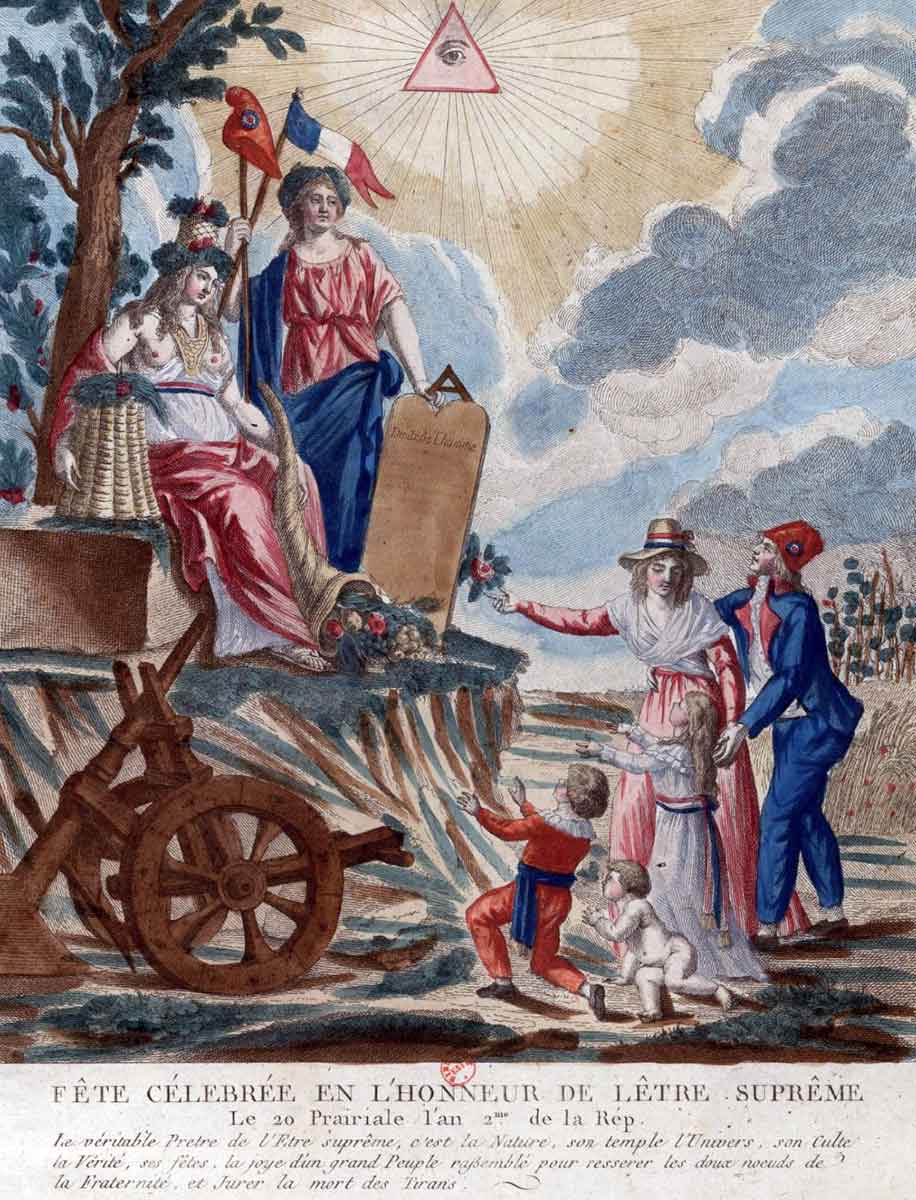
Spinoza here anticipates the position of Maximilien Robespierre, leader of the radical Jacobin faction during the French Revolution. Despite Robespierre's often blood-soaked reputation as a fanatic, his actual stance on individual liberties was far more nuanced. He opposed, for example, the Hébertist policy of attacking priests for wearing religious garb. And while Robespierre did support a state religion to displace the hegemonic (and counter-revolutionary) Catholic Church, this was likewise minimalist in nature. His “Cult of the Supreme Being” was, in true Spinozist form, primarily concerned with public acts, or “outer piety,” rather than inner belief. The 1794 decree establishing the cult speaks of “the practice of the duties of man” as the best service to the Supreme Being. These are, first and foremost: “to detest bad faith and despotism, to punish tyrants and traitors, to assist the unfortunate, to respect the weak, to defend the oppressed, to do all the good one can to one’s neighbor, and to behave with justice towards all men.” (Fluss 2016)
Limiting state authority to such outer acts was only prudent. In Spinoza’s naturalistic view, political “right” extends only as far as actual “power” allows. Big fish have the “right” to eat little ones, and so forth. (Baruch Spinoza 2007, 189, 240) But as the state hasn’t the power to control one’s inner thoughts, it therefore has no right. And moreover, it is foolish (and dangerous) to even try. For setting up laws which cannot be reliably enforced only serves to weaken the state and make it look foolish (images of the ‘emperor with no clothes’ come to mind). As Spinoza puts it, “Trying to control everything by laws will encourage vices rather than correcting them. Things which cannot be prevented must necessarily be allowed, even though they are often harmful.” (Baruch Spinoza 2007, 243) And while interpersonal communication is, strictly speaking, an outer act, it is so close to inner thought that this too should be generally free from state control. As such, the “liberty to philosophize” also includes the liberty to philosophize out loud. (Baruch Spinoza 2007, 243)
In Spinoza's view, even if speech could be strictly controlled, doing so would undermine the stability of the state. In such a case, people’s compelled speech would be constantly divorced from their true, inner thoughts. Citizens “would be continually thinking one thing and saying something else…” And this, in turn, would lead to a flourishing of deception and flattery, and undermine precisely the sort of trust needed to maintain a functioning society. (Baruch Spinoza 2007, 243– 44)
In any case, laws which censor speech most often affect the wrong sorts of people. Unscrupulous self-seekers will say whatever is expedient in order to get ahead, but only the virtuous, free-minded person will be willing to stand on principle despite dire consequences. This can only show the sovereign state in a bad light.
What greater ill can be devised for any commonwealth than for honest men to be banished like outlaws because they think differently from the rest and do not know how to hide this? What is more dangerous, I contend, than for people to be treated as enemies and led off to death, not for misdeeds or wrongdoing, but because they make a free use of their intelligence, and for the scaffold which should be the terror only of wrongdoers to become a magnificent stage on which to exhibit to all a supreme exemplum of constancy and virtue while casting the deepest reproach to the sovereign? (Baruch Spinoza 2007, 245)
Nearly a century later, in revolutionary France, Robespierre would strike a similar chord. He likewise maintained that it was imprudent for the state to try and coerce people out of their traditional, religious beliefs. Even if such beliefs are sometimes fanatical, anti-social, or hostile to the common good, repressing them will only breed resentment and obstinacy. It is a fact that much of the Catholic Church in 18th Century France (especially its upper echelons) actively sought to undermine the Revolution and reinstate the Ancien Régime. Yet, for Robespierre, this did not warrant the abolition of personal Catholic beliefs or praxis. In his words, “I see only one way of reviving fanaticism among us: it is to affect to believe in its power…Priests have been denounced for saying the Mass. They will continue to do so all the longer if you try to prevent them. He who wants to prevent them is more fanatical than the priest himself.” (Rudé 1976, 123)
This line of thinking extends to the 19th Century writings of Karl Marx and Friedrich Engels. Their communism, likewise, issued from a secular vision of the world known as ‘historical materialism.’ Such materialism is incompatible with traditional religious thought, and each in turn implies a different political outlook. All the same, Engels has only bitter polemics for those utopian-minded socialists who wish to ‘abolish’ religion outright. For this only “helps it [religion] to martyrdom and a prolonged lease of life.” (Engels 2018, 355) As he sarcastically asserts elsewhere, “...the only service, which may still be rendered to God today, is that of declaring atheism an article of faith to be enforced and of outdoing even Bismarck's anti-Catholic laws by forbidding religion altogether.” (Engels 2002)
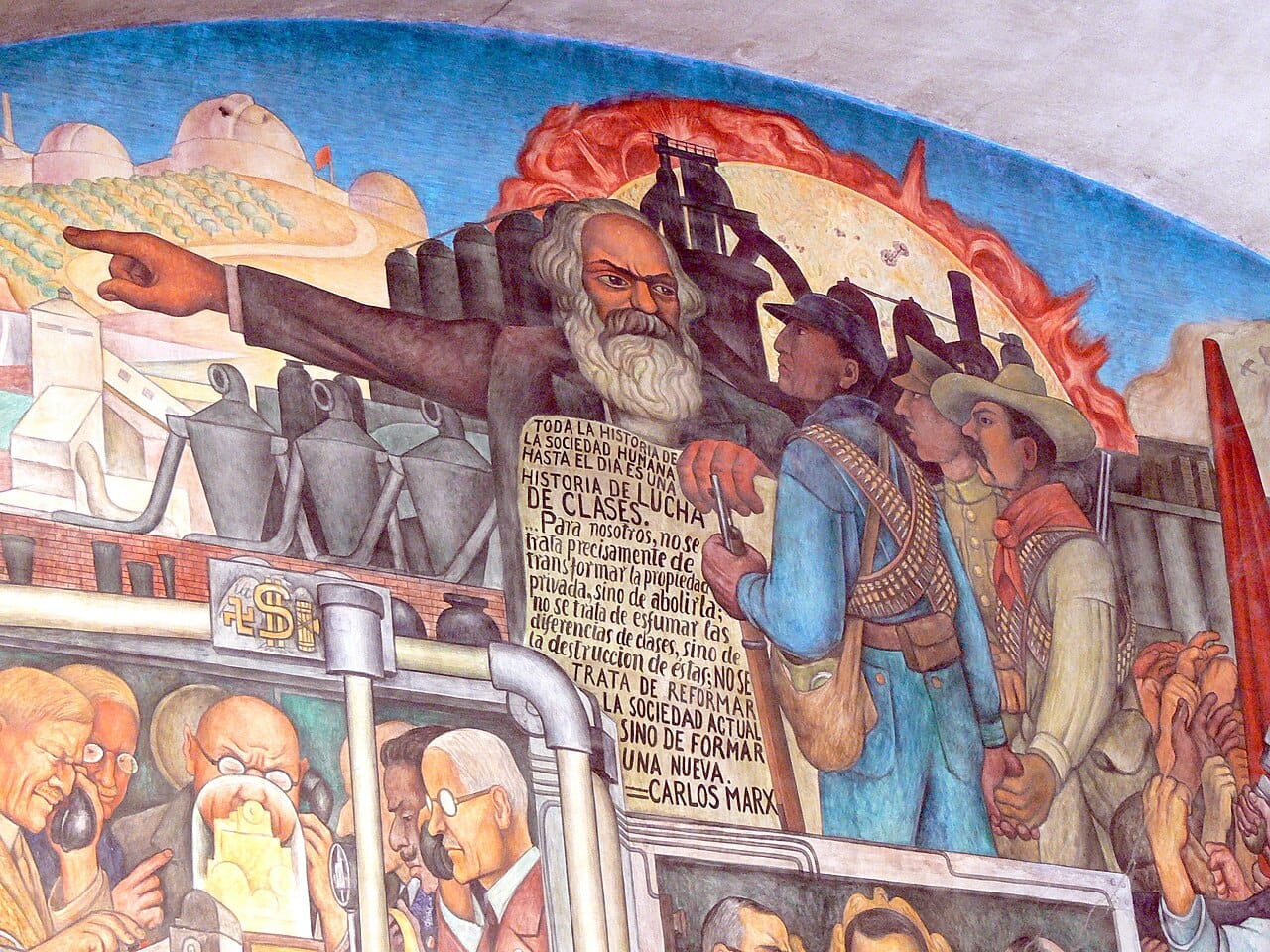
This debate over religious toleration came to a head over the so-called ‘Jewish question.’ Whereas Bruno Bauer, as we saw, demanded that the Jews give up their religion as a prerequisite for political emancipation, Karl Marx would have none of it. Here, the two versions of republicanism (rigorous and rationalist) confronted one another on German soil. In his famous polemic against Bauer, On the Jewish Question (1843), Marx insists that the equal rights of political emancipation come before (not after) a critique of religious belief. “Bauer asks the Jews: Does your standpoint give you the right to seek political emancipation? But we ask the reverse question: Has the standpoint of political emancipation the right to require from the Jews the abolition of Judaism and from all men the abolition of religion?” (Marx 1977, 42–43) In other words, for Marx, equal political rights do not require a full transformation of the soul. To the contrary, civil rights are merely the first, minimal step in establishing the sort of society where – one day – a genuinely social (i.e. ‘human’) emancipation might be possible.
Underlying this critique is the more fundamental point that social relations and material circumstances pattern individual belief. Contrary to Bauer’s ecstatic notion of reason, the intellect is not a spontaneously free self-creation. It is, rather, entirely bound up with material conditions. And it’s this insight which makes all the difference when it comes to political toleration.[9]
The rigorous republican (since unlinking reason from matter), can only see irrational beliefs as something like a willful sin for which we are morally culpable. For nothing determines the mind apart from itself, i.e., its own free will. No wonder, therefore, that Bauer insists that the state should demand fealty, not only in outer action, but also in inner belief. Anything less would be tantamount to treason. But the rationalist republican (from Spinoza through Marx and Engels) recognizes that false beliefs are not so much ‘chosen’ as they are ‘caused.’ Thus, whereas Engels has no admiration for traditional religion, neither is he interested in chastising individual believers.
Better, instead, to diagnose the material and social causes of supernatural belief. Religion exists, on this Marxist account, because we still confront a society and economy in which we are alienated – alienated from one another, from the means of production, and from the very products of our own labor. (Marx and Engels 1988, 74–75) The market renders us cogs in a machine where we work for the capitalist’s profits rather than for human needs, and so we compete with our fellow workers for scarce resources and employment rather than cooperate for the common good. This is how our worldly alienation finds its mirror-image in mythos. Our collective imagination translates powerlessness in the material world to powerlessness before an omnipotent Father. As Engels puts it, “All religion…is nothing but the fantastic reflection in men’s minds of those external forces which control their daily life, a reflection in which the terrestrial forces assume the form of supernatural forces…” (Engels 2018, 353)
Logically, then, irrational beliefs are most effectively combatted through a “social act” rather than direct, state censorship. (Engels 2018, 355) It is the democratic taking control of the economy (the forces of production and distribution) that gradually removes the compulsion to imagine some transcendent force above us, controlling us. Religion, for Marx and Engels, is not abolished but instead withers away. Here, Engels is quite clear about the order of operations:
And when… society, by taking possession of all means of production and using them on a planned basis, has freed itself and all its members from the bondage in which they are now held by these means of production which they themselves have produced but which confront them as an irresistible alien force… only then will the last alien force which is still reflected in religion vanish; and with it will also vanish the religious reflection itself, for the simple reason that then there will be nothing left to reflect. (Engels 2018, 355)
Similarly, for Marx, full human emancipation means the recognition of our own powers, and the denial of any transcendent power above us. This is fundamentally bound up with asserting our common, social control over our material circumstances. Thus, “man must recognize his own forces as social forces, [and] organize them… Only when this has been achieved will human emancipation be completed.” (Marx 1977, 57) Once more, the order of things is of paramount importance:
We no longer regard religion as the cause, but only as the manifestation of
secular narrowness…We do not assert that they [individuals] must overcome their religious narrowness in order to get rid of their secular restrictions, we assert that they will overcome their religious narrowness once they get rid of their secular restrictions. We do not turn secular questions into theological ones. (Marx 2009)
This ‘rationalist republican’ character of Marxism persisted through the 20th Century, notably in the works of the Russian revolutionary Leon Trotsky.[10] In Results and Prospects, he inveighs against the ‘shallow moralizing’ of socialist ideologues. These moralists, in the model of Bruno Bauer, see the creation of a new sort of human being – virtuous and free of egotism – as the precondition for socialist revolution. To this frame of mind, Trotsky objects that the real order of things is exactly the reverse: “Socialism does not aim at creating a socialist psychology as a pre-requisite to socialism but at creating socialist conditions of life as a pre-requisite to socialist psychology.” (Trotsky 2010, 108-9) In other words, we don’t need to become high-minded angels to end exploitation; Rather, it is the end of capitalist exploitation that allows humanity to gradually emerge from its self-imposed egotism and selfishness.
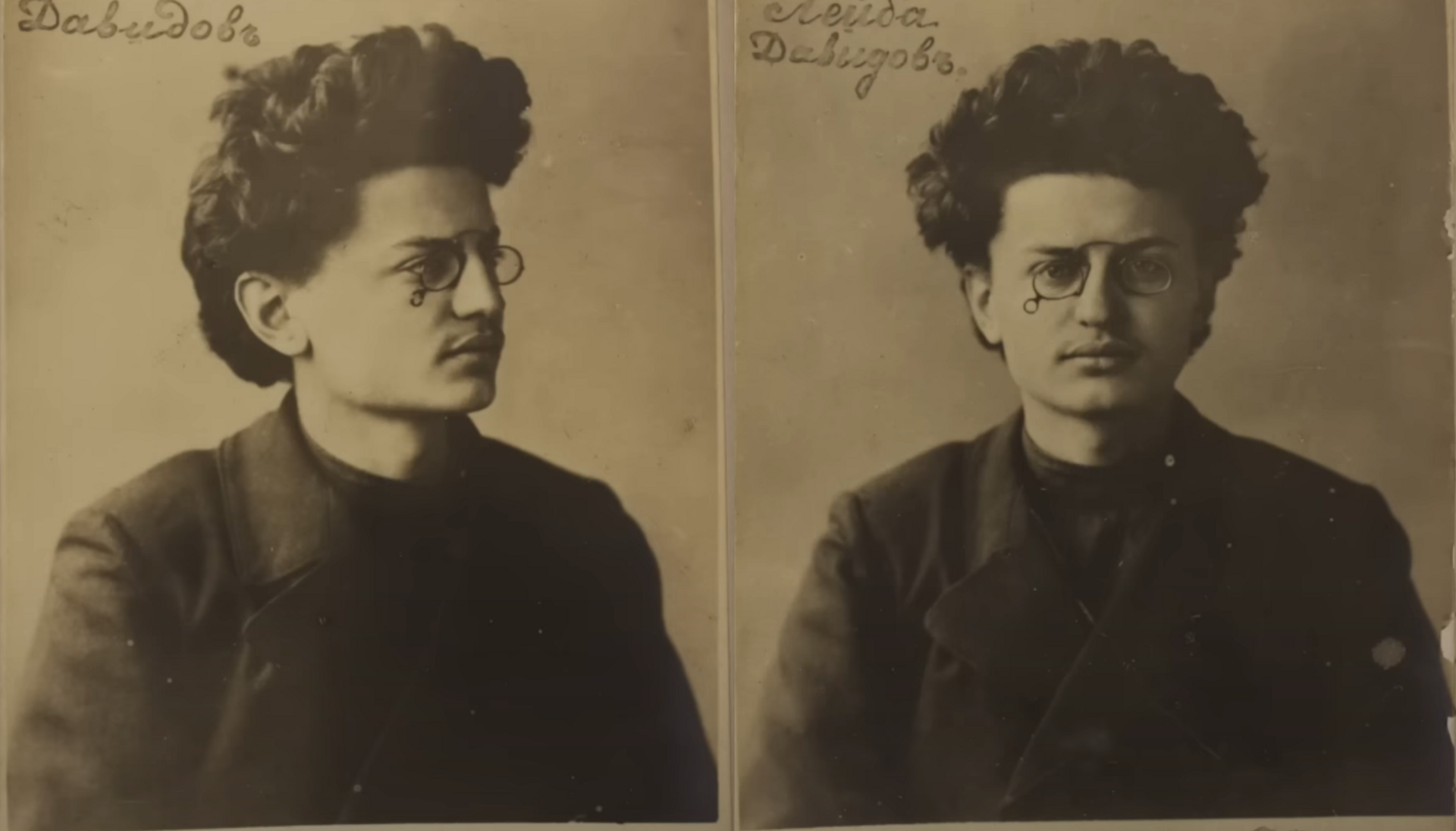
None of this implies that, for the rationalist republican, politics is divorced from belief. Ideas matter. The state must maintain some ‘comprehensive doctrine’ of reality and the good. For this is the justification and rationale for public policy. And, moreover, these doctrines can and should be widely disseminated, whether in the form of a ‘public cult’ or merely within school curricula and courses on civic education. The state does teach ethics. But because inner beliefs are often conflicted, fragmentary, and conditioned by material circumstances – and because they are, in any case, beyond the actual control of the law – then acceptance of the ‘state philosophy’ can never be a matter of coercion, punishment, or forced confession. Freedom of conscience remains intact, even though the state ceases to pretend to be value-neutral or philosophically agnostic.
But there is, finally, a deeper reason why the rationalist republican wishes to safeguard the ‘freedom to philosophize.’ This has to do with the nature and purpose of the state itself. Recall that, for Spinoza, reason is the very thing which defines humanity. (Benedictus de Spinoza 1985, E4P36 Schol.) It is that singular quality which allows humans to work together, increase their wellbeing, and flourish. (Benedictus de Spinoza 1985, E2P38 Cor., E4 Appendix 9) The state, therefore, has a very specific mission, namely, to facilitate this rational faculty among its citizens. As Spinoza puts it, “the true purpose of the state is in fact freedom.” (Baruch Spinoza 2007, 241) But for him, freedom is wholly inseparable from reason. It is the ability to order our own thoughts and actions, rather than being constantly swayed by external stimuli and passions.
This being the case, freedom of conscience is more than just prudent statecraft. Policing thought is destructive of the state’s highest function as the guardian and promoter of human reason. This is because the development of one’s rational faculties is not the sort of thing that can be directly forced. It requires, instead, the ability to experiment, reflect, revise, and make mistakes without constant fear of external coercion or censorship. As Spinoza states, “this liberty is absolutely essential to the advancement of the arts and sciences; for they can be cultivated with success only by those with a free and unfettered judgment.” (Baruch Spinoza 2007, 243) A state which does not allow reason to improve organically, which does not grant the negative freedom to form erroneous beliefs and false ideas, thereby undermines its very purpose. It blunts, not only the various products of reason (the arts and sciences), but the very capacity to reason itself.
Conclusion
Looking back at the intellectual terrain sketched above, one can discern the unique virtues of the rationalist republican position. In contrast to the libertarian and pluralist, the rationalist republican maintains that the state must both (1) promote certain ethical values over others, and (2) have some ultimate justification for those values it promotes. The law is based on a specific philosophy or worldview. Yet, in contrast to its ‘rigorous’ counterpart, the rationalist republican answers “no” to question 3: Citizens should not be personally compelled to accept the state’s philosophy as against their own conscience. As such, only the rationalist republican avoids the twin pitfalls of skepticism and despotism. The laws are based on well-founded reasons, even while individual citizens need not confess their belief in said reasons.
Furthermore, only the rationalist republican provides a sure basis for political toleration. While the rigorous republican is openly hostile to dissenting beliefs, the pluralist proves to be an ‘unreliable friend’ of the dissenting minority. In eschewing a positive, publicly intelligible conception of the good, the latter can only argue from negative premises: One tolerates dissent because one is never sure about the actual truth. Rawls’ ‘burdens of judgment’ here function in the same manner as Balibar’s focus on irresolvable cultural differences. And these are functionally similar to Rorty’s outright denial of rational justification. In each case, a humane, tolerant politics is thought to be built upon the negative claim that, when it comes to objective truth, “we simply can’t know for sure.”
But one cannot draw positive conclusions from such negative premises. A lack of objective knowledge – about nature, the good, and human nature – need not imply a tolerant politics. It more readily implies the opposite. In the absence of universal truths, what is left is nothing but the contest of free, creative wills who invent, rather than discover, what is ‘true.’ In that case, it is the strong will that prevails, entirely unconstrained by notions of the common good, equality, or toleration. For there are no objective criteria by which to judge the free, political decision.
By contrast, it is the rationalist republican that provides a positive basis for political toleration. In identifying reason as universal and essential to all individuals, it confers a specific mission to the state: to extend and empower human reason to the greatest extent possible. That is why political dissent must be vigorously defended – not because we don’t know the truth – but rather because we know that human beings are essentially rational, and that the flourishing of reason requires the liberty to sometimes get things wrong.
FOOTNOTES
[1] Palm Beach County’s “Holocaust Education Proclamation” explicitly uses the normative language of “the moral responsibilities of individuals, societies, and governments,” remaining “vigilant against hatred, persecution, and tyranny,” and that the district should “actively rededicate itself to the principles of individual freedom in a just society.”
[2] It is ironic that Rand would adopt such a Kantian moral formula given that she appears to have despised his philosophy, even referring to Kant as “the most evil man in history.” (Kelley 2001, 57)
[3] Dietary concerns can, of course, intersect with moral or spiritual beliefs. However, it appears unreasonable to equate offering a vegan, kosher, or halal cafeteria option to omitting slavery from the American history curriculum. The former merely accommodates individual student preferences while the latter involves a normative stance taken by the institution itself.
[4] Berlin, like Rawls, attempts to answer this question through appeals to “the political culture.” Yet this reasoning is circular seeing as the political culture may, itself, be steeped in faulty principles. (Berlin 2013, 18–19)
[5] Recall that each question in the series is logically a ‘gate’ for those further down the list, where answering “yes” to question 1 is the precondition for even considering question 2, etc. That is why the rationalist republican position (“yes” to 1 and 2; “no” to 3) is the only remaining combination of responses.
[6] All references to the main body of Spinoza’s Tractatus Theologico-Politicus use the Gebhardt page numbers.
[7] The modern usage of ‘Erastianism’ as denoting a subservience of the church to the secular state differs from the original intent of its namesake, Erastus (orig. Thomas Lieber). The latter was, himself, a devout follower of Zwingli’s Reformation theology and not, in any meaningful sense, a secularist. His concern had more to do with the narrower question of ‘excommunication’ within the church.
[8] All references to Spinoza’s Ethics follow the standard convention of indicating the work itself with the letter “E,” propositions with “P,” definitions with “D,” and axioms with “A,” each followed by their respective number.
[9] It is crucial to point out here that Bruno Bauer’s anti-socialism and his anti-Semitism issue from the same place. Both socialists and the Jews, he complains, are preoccupied with material concerns. By contrast, genuine liberation involves a constant overcoming of all objective, material conditions. (Moggach 2003b, 444–45)
[10] Some may object to characterizing Marxism as a species of ‘republican’ thought. After all, Marxism advocates the withering away of the state, not its supremacy over private interests or ideologies. However, the term ‘state,’ used in this way, is always meant narrowly, i.e., as “an organ for the oppression of one class by another.” (Lenin 1992, 9) But if, as in this article, we define the state as simply an “official, public administration,” then this appears indispensable to the Marxist project of organizing collective control over the means of production.
REFERENCES
Balibar, Étienne. 2018. Secularism and Cosmopolitanism: Critical Hypotheses on
Religion and Politics. European Perspectives. New York: Columbia
University Press.
Barnett, Randy E. 2004. “The Moral Foundations of Modern Libertarianism.” In
Varieties of Conservatism in America, edited by Peter Berkowitz, 51–74.
Stanford, CA: Hoover Institution Press.
Bauer, Bruno. 1983a. “The Genus and the Crowd.” In The Young Hegelians: An
Anthology, edited by Lawrence S. Stepelevich, 198–206. Cambridge, UK:
Cambridge University Press.
———. 1983b. “The Jewish Problem.” In The Young Hegelians: An Anthology,
edited by Lawrence S. Stepelevich, 187–97. Cambridge, UK: Cambridge
University Press.
Berlin, Isaiah. 2013. The Crooked Timber of Humanity: Chapters in the History of
Ideas. Edited by Henry Hardy. Second Edition. Princeton, NJ and Oxford:
Princeton University Press.
“Bullying Prevention Training Center.” n.d. Stopbullying.Gov. Accessed February
14, 2022. https://www.stopbullying.gov/resources/training-center.
Cherniss, Joshua, and Henry Hardy. 2022. “Isaiah Berlin.” In The Stanford
Encyclopedia of Philosophy, edited by Edward N. Zalta. URL =
https://plato.stanford.edu/archives/spr2022/entries/berlin/.
Dostoevsky, Fyodor. 1995. Demons. Translated by Richard Pevear and Larissa
Volokhonsky. New York: Vintage Books.
Engels, Frederick. 2002. “The Program of the Blanquist Fugitives from the Paris
Commune.” Translated by Ernest Untermann. Marxists Internet Archive.
2002. https://www.marxists.org/archive/marx/works/1874/06/26.htm.
———. 2018. Herr Eugen Dühring’s Revolution in Science: Anti-Dühring.
Translated by Emile Burns and C.P. Dutt. Classic Reprint. London: Forgotten
Books.
Fluss, Harrison. 2016. “Revisiting the Cult of the Supreme Being.” Jacobin, January 14, 2016. https://jacobinmag.com/2016/01/robespierre-rousseaureligion-
separation-church-state-kim-davis.
Goldberg, Jonah. 2009. Liberal Fascism: The Secret History of the American Left
from Mussolini to the Politics of Change. New York: Broadway Books.
Gould, Stephen Jay. 1999. Rocks of Ages: Science and Religion in the Fullness of Life. New York: Ballantine Books.
Gross, Raphael. 2007. Carl Schmitt and the Jews: The “Jewish Question,” the
Holocaust, and German Legal Theory. Madison, WI: University of Wisconsin
Press.
Habermas, Jürgen. 1992. “Metaphysics after Kant.” In Postmetaphysical Thinking: Philosophical Essays, translated by William Mark Hohengarten, 10–27.
Cambridge, MA; London: MIT Press.
Kelley, David. 2001. The Contested Legacy of Ayn Rand: Truth and Toleration in
Objectivism. New Brunswick, NJ: Transaction Publishers.
Kierkegaard, Søren. 1997. Kierkegaard’s Writings, IX, Volume 9: Prefaces: Writing Sampler. Edited and translated by Todd W. Nichol. Princeton, NJ: Princeton University Press.
Land, Nick. 2012. “The Dark Enlightenment.” The Dark Enlightenment (blog).
December 25, 2012. http://www.thedarkenlightenment.com/the darkenlightenment- by-nick-land/.
Lenin, V.I. 1992. The State and Revolution. Translated by Robert Service. London;
New York: Penguin Books.
Marx, Karl. 1977. “On the Jewish Question.” In Karl Marx: Selected Writings, edited by David McLellan, 39–62. Oxford: Oxford University Press.
———. 2009. “On The Jewish Question (1843).” Edited by Andy Blunden,
Matthew Grant, and Matthew Carmody. Marxists Internet Archive.
https://www.marxists.org/archive/marx/works/1844/jewish-question/.
Marx, Karl, and Frederick Engels. 1988. Economic and Philosophical Manuscripts
of 1844 and The Communist Manifesto. Translated by Martin Milligan. Amherst, NY: Prometheus Books.
Meyers, Lawrence. 2011. “Politics Really Is Downstream from Culture.” Breitbart,
August 22, 2011. https://www.breitbart.com/entertainment/ 2011/08/22/politics-really-is-downstream-from-culture/.
Moggach, Douglas. 2003a. “Republican Rigorism: Hegelian Views of Emancipation in 1848.” The European Legacy 8 (4): 441–57.
———. 2003b. The Philosophy and Politics of Bruno Bauer. Cambridge, UK:
Cambridge University Press.
———. 2022. “Bruno Bauer.” In Stanford Encyclopedia of Philosophy, edited by
Edward N. Zalta. forthcoming URL = <https://plato.stanford.edu/
archives/spr2022/entries/bauer/>.
Newport, Frank. 2013. “In U.S., 87% Approve of Black-White Marriage, vs. 4% in
1958.” Princeton, NJ: Gallup. https://news.gallup.com/poll/163697/
approve-marriage-blacks-whites.aspx.
Pal, Alasdair. 2021. “Taliban Replaces Women’s Ministry with Ministry of Virtue
and Vice.” Reuters, September 17, 2021. https://www.reuters.com/world/
asia-pacific/taliban-replaces-womens-ministry-with-ministry-virtue-vice-
2021-09-17/.
Paul, Ron. 2016. “Education System Broken: Let’s Try ‘Ed-Exit.’” Ron Paul Institute for Peace and Prosperity (blog). November 21, 2016.
http://www.ronpaulinstitute.org/archives/featuredarticles 2016/november/21/education-system-broken-let-s-try-ed-exit/.
———. 2018. “New Tax Plan Makes It Easier to ‘Ed-Exit.’” Ron Paul Institute for
Peace and Prosperity (blog). September 24, 2018.
http://www.ronpaulinstitute.org/archives/featuredarticles/
2018/september/24/new-tax-plan-makes-it-easier-to-ed-exit/.
“Public Schooling Battle Map.” n.d. The Cato Institute. Accessed February 14, 2022. https://www.cato.org/education-fight-map.
Rand, Ayn. 1964. The Virtue of Selfishness: A New Concept of Egoism. New York:
Signet.
———. 1990. “Of Living Death.” In The Voice of Reason: Essays in Objectivist Thought, edited by Leonard Peikoff, 46–63. New York: Meridian.
Rawls, John. 1999. Collected Papers. Edited by Samuel Freeman. Cambridge, MA:
Harvard University Press.
———. 2003. A Theory of Justice. Revised Edition. Cambridge, MA: Belknap -
Harvard University Press.
———.2005. Political Liberalism. Expanded Edition. Columbia Classics in
Philosophy. New York: Columbia University Press.
Rorty, Richard. 1989. Contingency, Irony, and Solidarity. Cambridge, UK:
Cambridge University Press.
Rudé, George. 1976. Robespierre: Portrait of a Revolutionary Democrat. New York: Viking.
Sanchez, Julian, and David Weigel. 2008. “Who Wrote Ron Paul’s Newsletters?”
Reason, January 16, 2008. https://reason.com/2008/01/16/who-wroteron-
pauls-newsletter/.
Schmitt, Carl. 2005. Political Theology: Four Chapters on the Concept of Sovereignty. Translated by George Schwab. Chicago: University of Chicago Press.
———. 2008. The Leviathan in the State Theory of Thomas Hobbes: Meaning and
Failure of a Political Symbol. Translated by George Schwab and Erna
Hilfstein. Chicago; London: University of Chicago Press.
Solzhenitsyn, Aleksandr. 1973. The Gulag Archipelago: An Experiment in Literary
Investigation. Translated by Thomas P. Whitney. New York: Harper & Row.
Spinoza, Baruch. 2007. Theological-Political Treatise. Edited by Jonathan Israel.
Translated by Michael Silverthorne and Jonathan Israel. Cambridge Texts in the History of Political Thought. Cambridge; New York: Cambridge University Press.
Spinoza, Benedictus de. 1985. “Ethics.” In The Collected Works of Spinoza, Volume
I, edited and translated by Edwin Curley. Princeton, NJ: Princeton University Press.
Staff Report. 2021. “Palm Beach County School Board To Ratify Holocaust
Education Proclamation.” BocaNewsNow.Com, October 13, 2021.
https://bocanewsnow.com/2021/10/13/palm-beach-county-schoolboard-
to-ratify-holocaust-education-proclamation/.
Taylor, Charles. 1999. “Conditions of an Unforced Consensus on Human Rights.”
In The Politics of Human Rights, edited by Obrad Savić, 101–19. London;
New York: Verso.
———. 2007. A Secular Age. Cambridge, MA; London: Belknap - Harvard
University Press.
Trotsky, Leon. 2010. “Results and Prospects.” In The Permanent Revolution &
Results and Prospects, translated by John G. Wright and Brian Pearce,
Revised Edition, 33–136. Seattle: Red Letter Press.
“U.S. Equal Employment Opportunity Commission.” n.d. Accessed February 14,
2022. https://www.eeoc.gov/federal-sector/federal-training-outreach.
Walker, Jesse. 2012. “When the Right Helps to Write the Sex Education
Curriculum.” Reason, May 7, 2012. https://reason.com/2012/05/07/
when-the-right-helps-to-write-the-sex-ed/.
Weiner, Rachel. 2011. “Ron Paul the Religious.” The Washington Post, October 14,
2011, sec. Politics. https://www.washingtonpost.com/blogs/thefix/
post/ron-paul-thereligious/ 2011/10/14/gIQAPdUFkL_blog.html?noredirect=on&utm_term =.3b5533aee01b.